How a VAV Box Controls Temperature in Commercial Buildings
A VAV box controls temperature in a commercial building by regulating how much conditioned air reaches a particular area. It connects to a central air-handling system and uses a motorized damper to vary airflow through the ductwork.
For Southwest Florida business owners, that distinction matters when one HVAC system serves several offices or rooms. Each area can have its own temperature controls, while the central equipment supplies the air.
Understanding the airflow path makes it easier to identify what a VAV box does and where it fits in your building.
How a VAV box fits into a commercial HVAC system
VAV stands for variable air volume. A VAV box, also called a terminal unit, sits in a supply duct between the central air handler and the rooms it serves. The box regulates the volume of supply air that continues through the downstream ductwork.
A commercial building can have several terminal units connected to one air handler. Each unit serves a zone, which may be one room or a group of rooms that share a temperature control. A thermostat or wall sensor provides a temperature reading for that zone.
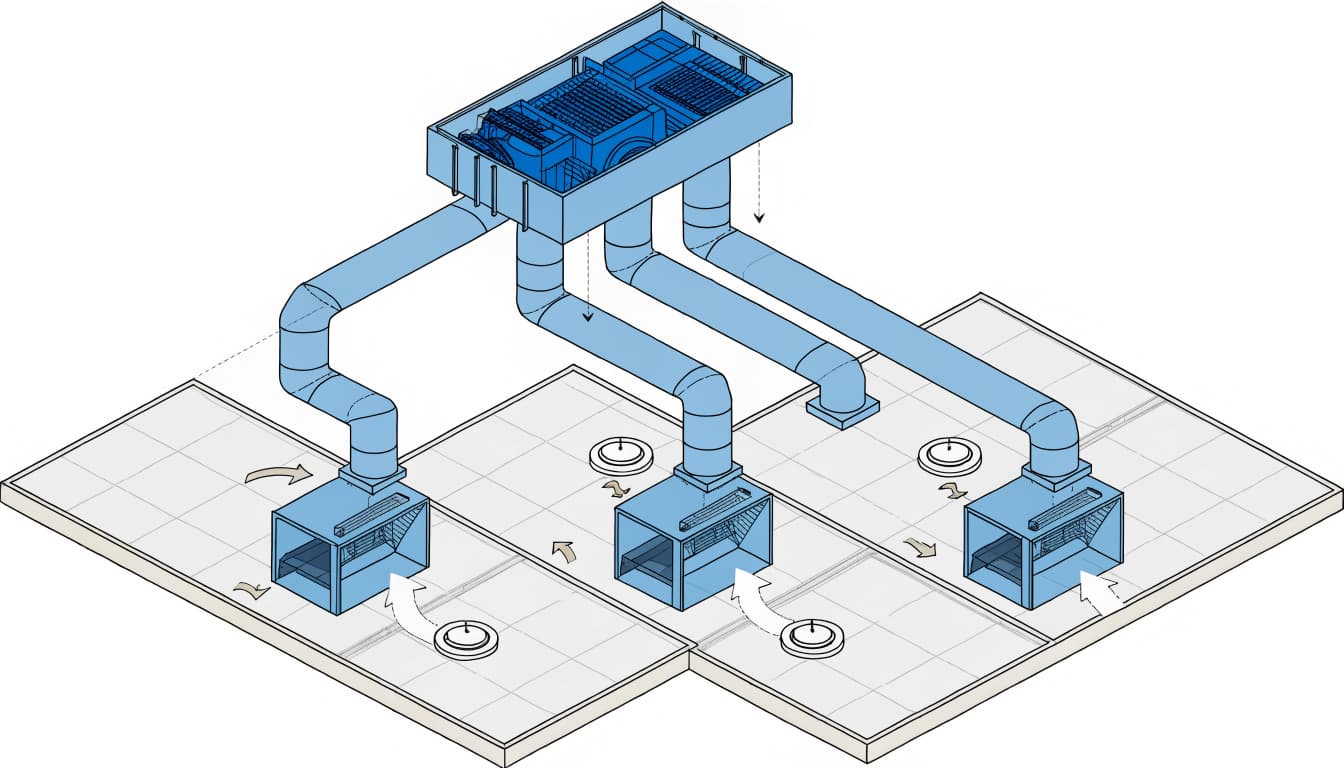
The central air handler contains the equipment that moves and conditions air for the system. Supply ducts carry that air to the terminal units, and smaller ducts distribute it to ceiling diffusers. Return-air pathways carry air back toward the central system.
A VAV box doesn't replace the air handler. Instead, it's one part of a larger system that also includes ductwork, controls, sensors, and air distribution components.
The main parts inside a VAV box
Most terminal units sit above a ceiling or in another accessible part of the building. Their appearance varies, but several components have distinct jobs.
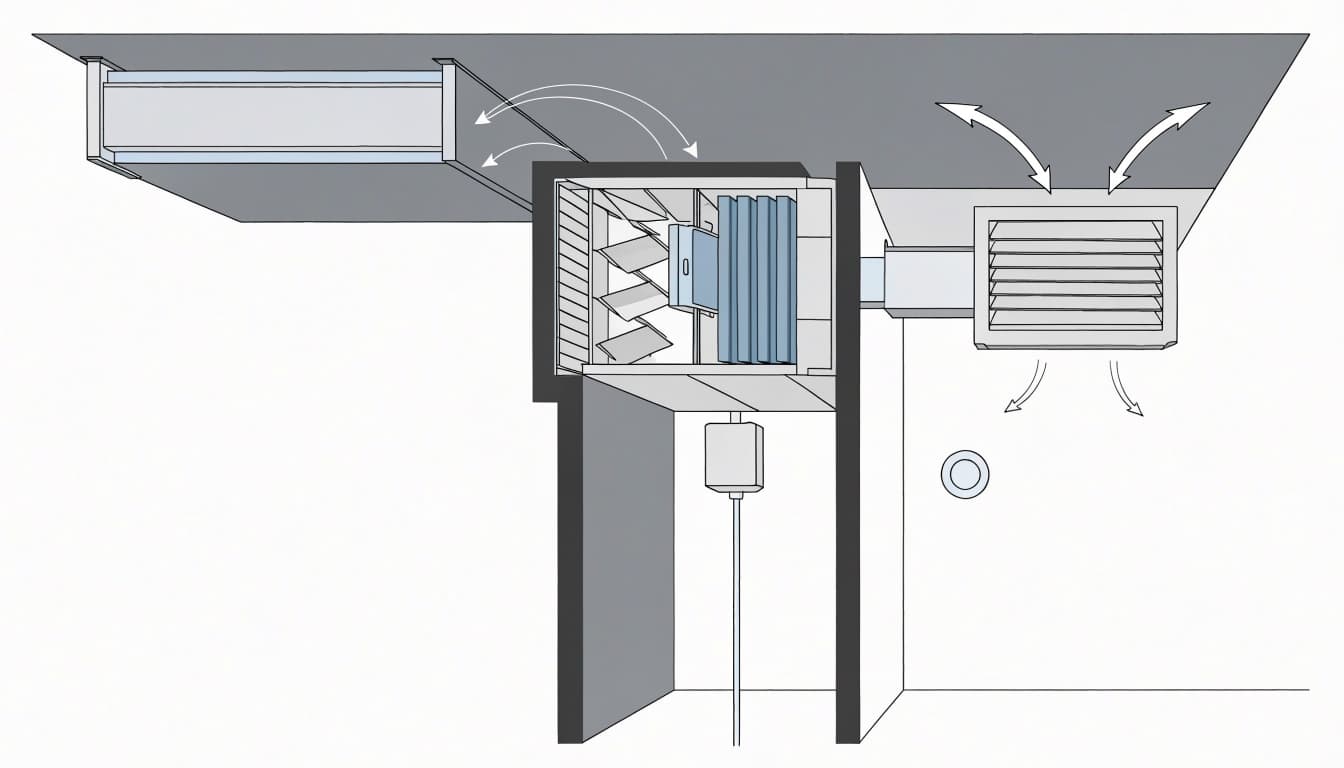
Damper and actuator
The damper is a movable blade or assembly inside the box. It changes the size of the opening available for supply air to pass through. An actuator, a small motor connected to the damper, moves it to the position requested by the controls.
The damper can operate at positions between fully open and fully closed. The available operating range depends on the terminal unit and its control settings.
Controller and airflow sensor
The controller receives information from the zone's temperature sensor and other connected devices. It also sends commands to the damper actuator. In many installations, the controller communicates with a building automation system that displays readings and settings for facilities staff.
Some VAV boxes include an airflow sensor at the inlet. The controller uses that measurement to regulate the amount of air delivered through the unit. Airflow is commonly expressed in cubic feet per minute, or cfm.
Optional reheat coil
A VAV box may have a reheat coil downstream of its damper. The coil adds heat to supply air passing through the terminal unit. Hot-water and electric coils are common options.
Not every box has reheat. A cooling-only unit can regulate supply airflow, but it doesn't have its own coil to warm the air.
How zone temperature controls connect to the box
The thermostat or wall sensor measures the temperature where it's installed. Depending on the control system, it may also provide a way to adjust the zone's temperature setpoint.
The controller receives the zone reading and can compare it with that setpoint. Its outputs operate the terminal unit's devices, including the damper actuator and, where installed, reheat controls.
The thermostat measures one location
A thermostat can report only the conditions around its sensor. Placement matters because sunlight, drafts, nearby equipment, and supply diffusers can affect the reading.
For example, a sensor beside an exterior door may experience different conditions than the rest of an office. In a shared zone, one sensor also cannot independently measure every room served by the box.
The controller manages terminal devices
A controller may be mounted on the outside of the terminal unit and connected to a wall sensor by control wiring. In a building with central automation, facilities staff may be able to view its readings and settings on a shared interface.
The controller, actuator, and sensor are separate components. A displayed temperature doesn't establish that the damper is in the requested position, so technicians may examine both the control signal and the physical equipment during service.
What cooling and reheat equipment does
The central air handler and the terminal box have different jobs. The air handler supplies conditioned air to the duct system. The terminal unit regulates how much of that air reaches its zone.
Cooling comes from the central system
In a typical single-duct VAV system, the air handler sends cooled supply air through the main duct. Each terminal unit receives air from a branch and regulates the volume passing toward its diffusers.
The VAV box itself generally doesn't contain the refrigeration equipment that cools the supply air. Service work may therefore involve either the central system or the terminal equipment, depending on the issue being investigated.
Reheat is a local heating option
Where a terminal unit has a reheat coil, the coil can add heat to the air downstream of the damper. A hot-water coil connects to a hot-water system, while an electric coil uses electrical heating elements.
A reheat box and a cooling-only box can look similar above a ceiling. Equipment records and the components connected to the unit help identify which type serves a space.
Common types of VAV terminal units
The term VAV box covers more than one equipment arrangement. Knowing the type in your building helps explain which components a technician may need to inspect.
Cooling-only and reheat boxes
A single-duct cooling-only terminal has a supply-air inlet, a controlled damper, and an outlet to the zone ductwork. It doesn't include a local heating coil.
A single-duct reheat terminal has the same basic airflow path, plus a coil downstream. Hot-water versions also have piping and a control valve. Electric versions have electrical connections and safety components.
Fan-powered terminal units
Some VAV systems use fan-powered terminal units. These contain a fan in addition to the damper and other controls. Their airflow arrangement differs from a basic single-duct box, so their service needs differ too.
A fan-powered unit may also have a heating coil. Its fan, electrical connections, controls, and accessible moving parts become part of the equipment a technician evaluates. The equipment label and building documents can help identify the terminal type.
Why ductwork matters to each zone
The VAV box sits within a network of supply and return pathways. The main supply duct carries air from the central unit, while branch ducts deliver it to individual terminal units. Downstream ducts then carry air to the diffusers serving each zone.
The physical condition of those ducts matters during an inspection. A disconnected joint, crushed flexible duct, damaged insulation, or obstructed diffuser is a different issue from a faulty terminal controller. Each part belongs to the same air path, but each may need a different repair.
Return-air pathways also form part of the building's air distribution system. Depending on the design, air may travel through return grilles, ductwork, or an above-ceiling return space on its way back to the central equipment.
After a tenant build-out or office rearrangement, the original drawings may no longer match the room layout. Keeping zone assignments and updated floor plans available gives technicians a clearer starting point for identifying the terminal unit associated with a space.
What to look for in VAV system records
A building's controls screen can show temperature readings, setpoints, and terminal-unit information. Those records are useful alongside equipment schedules, floor plans, and previous air-balancing reports.
An air-balancing report may list measured airflow at terminal units or diffusers. Comparing those records with the equipment serving the present layout gives a technician context for new measurements. The report is especially useful when offices have been divided or supply ducts have been altered.
Control records can also show schedules and overrides. An override is a setting that temporarily replaces normal automatic operation. Facilities staff should document any overrides so the next person working on the system knows which settings were changed.
For a broader review of sensors, air paths, and office conditions, our commercial office indoor air quality checklist covers additional items beyond the terminal box.
When to schedule VAV system service
A technician can inspect the terminal unit and its controls as part of a commercial HVAC evaluation. The work may include reviewing the thermostat reading, examining the actuator and damper, and measuring airflow where the system allows.
For a box with reheat, the inspection may also include the coil and its associated controls. Hot-water and electric equipment have different components, so the work depends on the unit installed.
The central system deserves attention as well. Filters, coils, blower components, condensate drainage, and duct connections all belong to the larger equipment network. Our commercial HVAC maintenance checklist outlines routine items for Florida businesses.
Keep access and records available
Before a service visit, note which rooms connect to the affected zone and when occupants noticed the issue. Equipment schedules, control screenshots, and prior balancing reports can help the technician locate the relevant components.
Above-ceiling terminal units also need accessible service space. Building staff can identify access panels and share any known restrictions before work begins.
Leave equipment adjustments to trained personnel
A VAV box may contain electrical connections, moving parts, hot-water piping, or electric heat. Damper adjustments and control changes also affect the equipment's operating settings.
At Valor Heating & Cooling, we provide HVAC repair, inspection, and maintenance in Fort Myers and Southwest Florida. You can Schedule an Estimate for an HVAC technician to evaluate your building's system.
Understanding your building's VAV system
A VAV box regulates supply airflow for a zone within a larger commercial HVAC system. Its damper, controller, duct connections, and optional reheat coil each have a separate role.
Knowing which components serve your space gives you a better starting point for discussing service. The most useful records connect the zone, its terminal unit, and the central air handler to the current building layout.
Recent Posts