Condo HVAC Replacement: What to Know Before You Start
Condo HVAC replacement starts with understanding what you own and what your building controls. Before choosing equipment, you'll need a plan for association approval, system compatibility, permits, and access to the work areas.
In Southwest Florida, humidity control and condensate drainage matter as much as cooling capacity. A written scope can also help you avoid unexpected costs or delays once installation begins.
Start by identifying the equipment that serves your unit.
1. Determine who owns the HVAC equipment
Your condo may have its own indoor air handler and outdoor condenser, or it may use equipment connected to a shared building system. Ownership and maintenance responsibility depend on your association's documents and the building's setup.
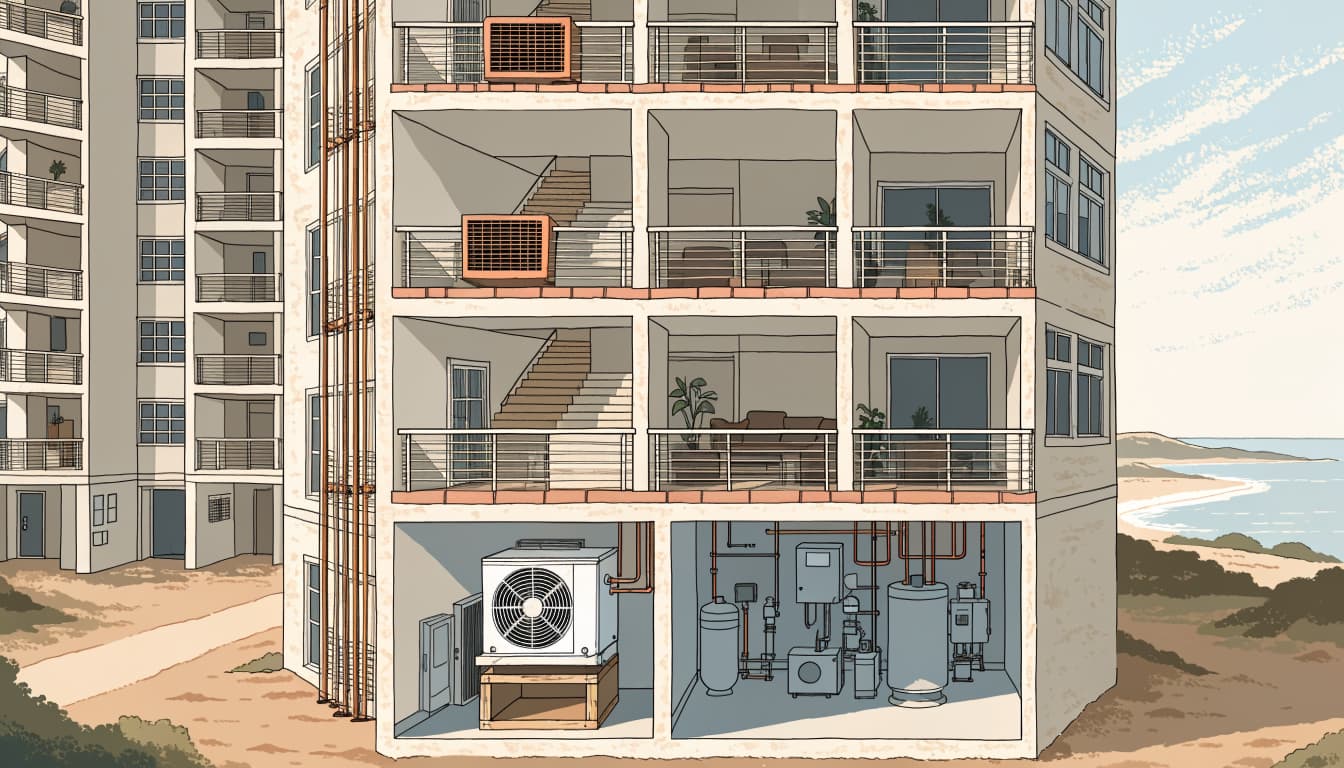
Review your declaration and association documents for the distinction between your unit, limited common elements, and common elements. Then ask management for a written explanation of which components you're responsible for replacing.
The answer may differ for each part. For example, an air handler inside your unit could connect to piping or drainage that serves more than one residence. A technician can identify the equipment, but the association's documents govern the ownership question.
If the system connects to shared building equipment, involve management before approving a replacement. Work on one component may affect other units or require coordination with the building's service contractor.
2. Discuss the project with your condo board
Contact your board or property manager before ordering equipment. Share the proposed scope, including the equipment locations and any planned changes to wiring, drainage, ducts, or exterior openings.
Ask for the association's requirements in writing. A useful request addresses the proposed equipment, contractor access, working hours, and any documents the board wants before it reviews the project.
Also ask who can authorize access to shared areas and whether the association has preferences about noise, appearance, or equipment placement. Those details can affect which replacement options fit your building.
Keep the board's response with your estimate. Association approval and a building permit are separate matters : one doesn't replace the other.
3. Plan for permits and inspections
A full AC replacement in Lee County usually requires a mechanical permit, even when the equipment goes in the same location. Lee County's guidance covers HVAC installation, alteration, and replacement, while cities such as Fort Myers may have their own permitting processes.
A licensed HVAC contractor typically handles the permit and arranges the inspection. Your proposal should identify who will take care of both, along with any associated fees.
Electrical changes may be part of the job, too. New equipment must be compatible with the circuit and disconnect serving it. Where an electrician is needed, the estimate should describe that work rather than leaving it as an open-ended extra.
Ask how inspection corrections will be handled and who pays for work outside the original scope. After approval, keep the permit and inspection records with your equipment paperwork.
4. Choose a system that fits your condo
Replacing an older unit with the same size and type can seem straightforward. However, the old equipment may not have been sized correctly, and your building's shared systems can limit the replacement choices.
Start with a load calculation
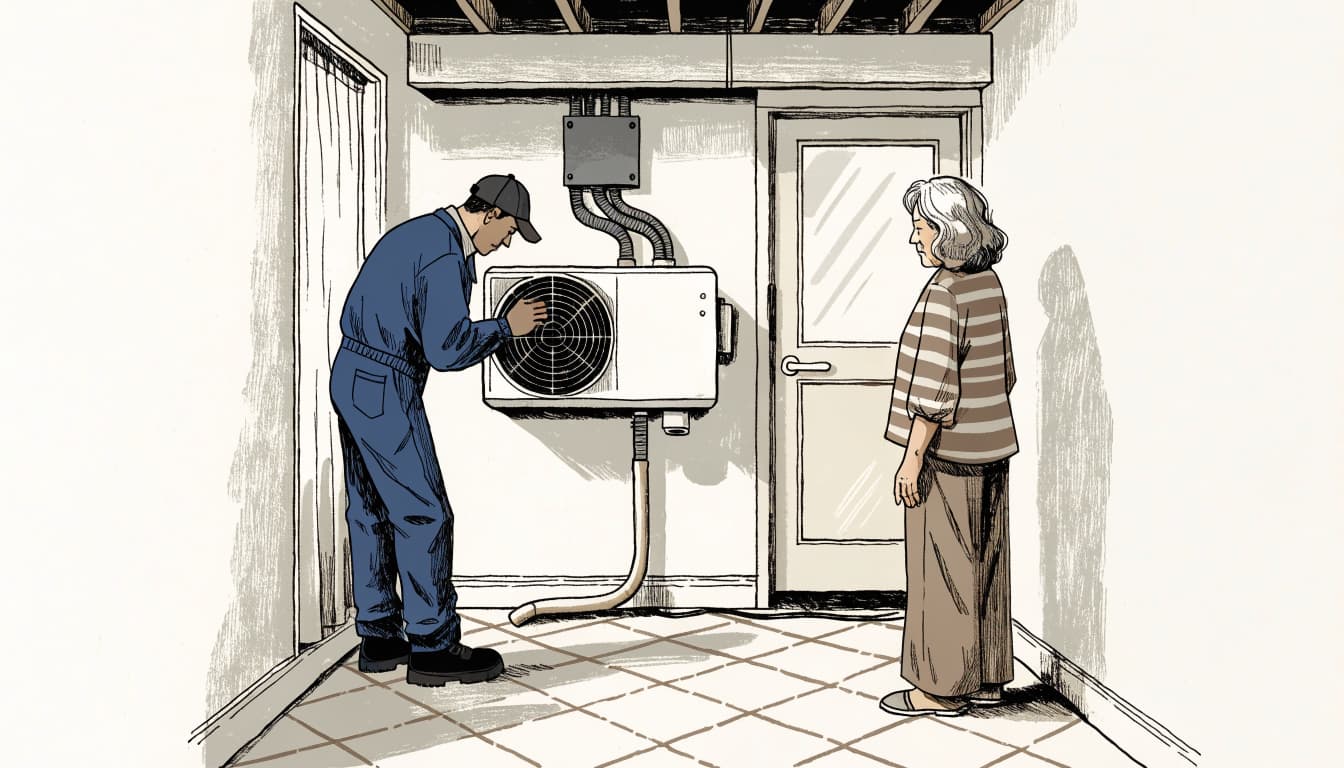
Ask for a heating and cooling load calculation rather than a recommendation based only on the old unit's tonnage. ACCA Manual J is a commonly used method. It accounts for windows, insulation, orientation, air leakage, and other conditions that affect the load.
ACCA Manual S helps select equipment to match that calculated load. Square footage alone doesn't provide enough information.
An oversized air conditioner can cool a space quickly and shut off before it removes enough moisture. In a humid Florida condo, that can leave rooms feeling cool but damp.
Match the connected components
The indoor unit, outdoor unit, refrigerant lines, thermostat, and electrical supply need to work together. If the proposal replaces only one component, ask how the new part will match the equipment that remains.
An AHRI listing for the proposed combination can help identify its rated performance. The contractor should also explain refrigerant compatibility and any effect on the warranty. Our guide to matching indoor and outdoor AC equipment covers the questions to raise.
5. Address drainage, noise, and airflow
Condo equipment sits close to finished living spaces and often close to neighbors. A replacement plan should account for water removal and sound before installation begins.
Protect against condensate leaks
Air conditioners remove moisture from indoor air, and that water needs a dependable route away from the equipment. Ask the contractor to assess the drain line, pan, and any condensate pump or float switch included in the system.
A working float switch can shut the system down if water rises where it shouldn't. The proposal should state whether drain components will be reused, cleaned, or replaced.
If you've noticed ceiling stains, water near the air handler, or repeated drain blockages, mention them during the estimate. Our article on Florida AC drain pan problems explains signs that deserve attention.
Consider sound and existing ductwork
Ask about the proposed equipment's sound rating and whether vibration isolation or updated supports are included. Placement near a bedroom, balcony, or neighboring unit can make noise an important part of the decision.
Inside the condo, damaged or poorly sized ducts can leave airflow problems in place after the equipment is replaced. Usable ductwork doesn't automatically need replacement, but the contractor should assess its condition and fit.
6. Arrange access and prepare for installation
Walk through the job with the contractor and identify every area the crew needs to reach. That may include the air-handler closet, electrical panel, outdoor equipment, or shared service areas.
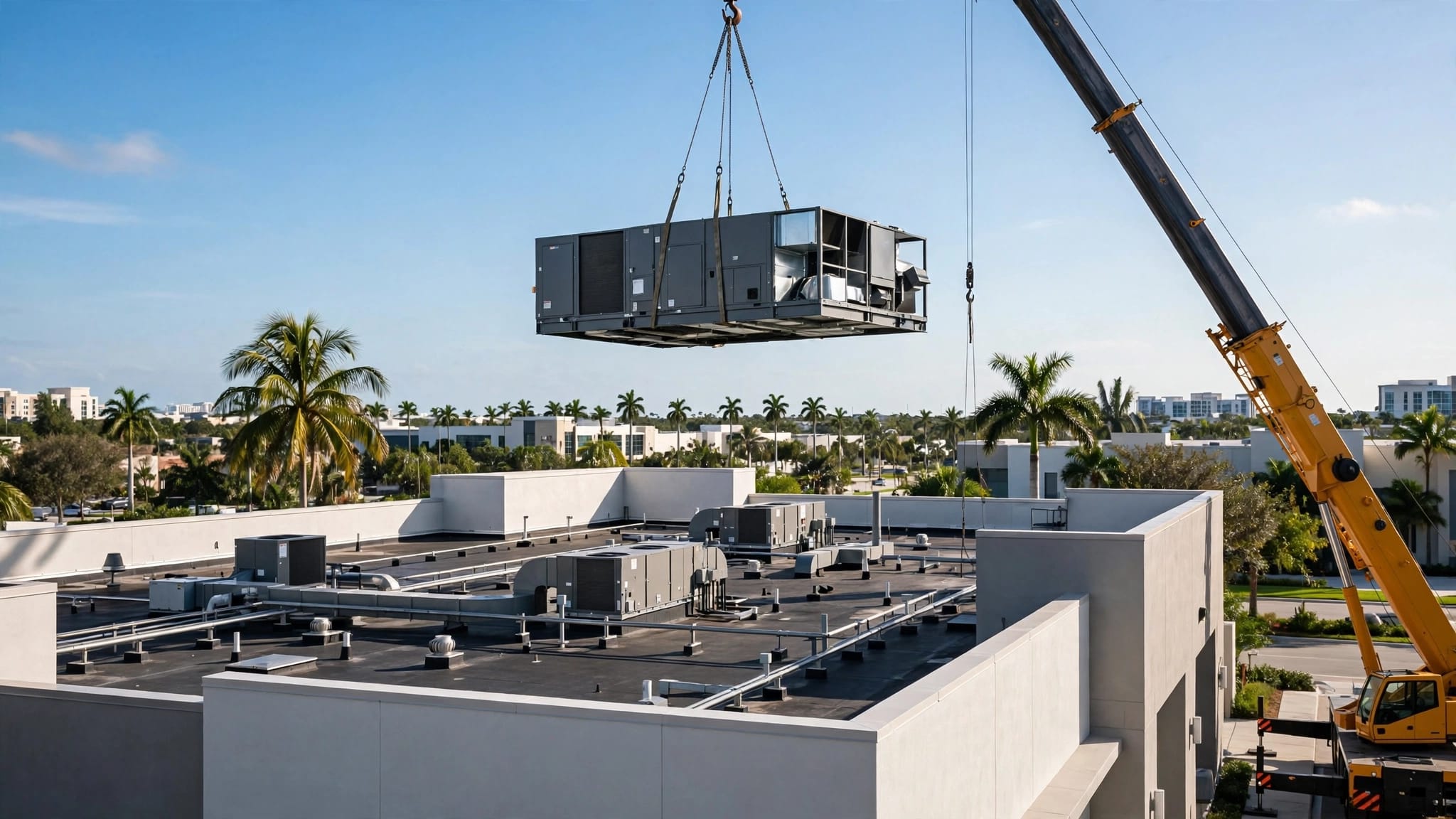
Measure tight passages and discuss how the old and new equipment will move through them. A small closet, narrow doorway, or limited elevator access can affect labor and scheduling. If the job needs a lift or other special equipment, the estimate should identify it.
Coordinate any shared-area access with management before the installation date. Also discuss expected cooling downtime and whether the work could require a shared-system shutdown. If other units may be affected, management can help coordinate the timing.
Before the crew arrives, clear the work area and protect nearby belongings. Make sure an authorized person can provide access and answer questions if the team finds a condition that changes the scope.
7. Compare the full cost, not only the equipment price
Get at least two written estimates based on the same proposed work. A meaningful comparison includes the equipment, installation materials, permit handling, and any condo-specific access costs.
Our guide to Fort Myers AC replacement costs explains factors that can affect the price. For a condo, the difference between estimates may come down to drainage repairs, electrical work, difficult access, or work on shared connections.
Ask what the price includes
The estimate should identify the indoor and outdoor model numbers, capacity, efficiency rating, thermostat, labor, and removal of old equipment. It should also describe the drain work, electrical connections, duct transitions, and startup testing included in the price.
Ask for a separate explanation of exclusions. For example, a proposal may include a standard connection but exclude repairs to concealed ductwork or damaged wiring.
Put extra work and warranties in writing
Unexpected conditions can appear after equipment is removed. Agree that the contractor will explain any added work and obtain your written approval before proceeding.
Compare parts and labor warranties separately. The paperwork should say who handles warranty service, whether registration is needed, and who is responsible for registering the equipment.
If the association is responsible for any portion of the project, settle how those costs will be handled before work begins.
8. Ask contractors the same practical questions
A detailed conversation makes estimates easier to compare. Give each contractor the same information about your condo and ask:
- What did the load calculation show, and how does the proposed capacity compare with the existing system?
- Which components will stay, and how will they work with the new equipment?
- Who handles permits, inspections, and coordination with building management?
- Does the price include drain work, electrical changes, disposal, and any special access equipment?
- What testing will you perform at startup, and who handles warranty service?
Ask for a written diagnosis if replacement follows a breakdown. A failed part doesn't always mean the entire system needs replacement, so the repair option deserves an explanation too. Our advice on choosing an HVAC contractor in Fort Myers can help you compare recommendations.
9. Keep the final project records
After installation, save the signed proposal, approved changes, permit documents, and inspection record. Keep the equipment model and serial numbers, warranty terms, and registration information in the same place.
The contractor should explain the thermostat, filter access, and any drain safety switch. Ask for the startup results as well, including airflow and other tests included in the proposal.
If you need an on-site assessment in Southwest Florida, you can Schedule an Estimate with our team. We'll review the equipment and the work involved before recommending a replacement.
Make the replacement fit your building
A successful condo HVAC replacement depends on more than choosing a new unit. Ownership, association coordination, sizing, and drainage all affect the project.
Get the scope and responsibilities in writing before installation starts. That gives you a clear basis for comparing estimates and a useful record after the work is complete.
Recent Posts