How CO2 Sensors Control Outdoor Air in Commercial HVAC
CO2 sensors help commercial HVAC controls adjust outdoor-air ventilation as building occupancy changes. In a demand-controlled ventilation system, the sensor provides information about indoor conditions so the controls can manage ventilation within the building's approved design.
For Southwest Florida businesses, that matters because outdoor air brings in heat and moisture as well as fresh air. A useful system balances ventilation needs with the equipment's ability to cool and dehumidify the space.
Key Takeaways
CO2 readings can help identify changes in occupancy and ventilation, but they don't measure every indoor air contaminant. Sensor location and calibration affect whether those readings are useful.
Minimum ventilation settings, economizer controls, and measured airflow all matter. A sensor reading alone can't confirm that the HVAC system is delivering the intended amount of outdoor air.
What CO2 Readings Tell You About Ventilation
People exhale carbon dioxide, so indoor CO2 often rises as a room fills. Ventilation can dilute that buildup with outdoor air. A meeting room's reading may therefore look different during a full afternoon meeting than it does early in the morning.
A rising reading is a reason to investigate conditions, especially if it stays elevated during normal occupancy. Possible causes include a crowded room, an incorrect operating schedule, restricted outdoor airflow, or a sensor problem.
However, CO2 isn't a complete indoor air quality score. A normal reading doesn't rule out moisture, cleaning chemicals, odors, or particles. It also doesn't prove that every room served by an HVAC unit receives enough outdoor air.
Outdoor CO2 levels and the time people spend in a room affect the reading too. For a more useful assessment, record the room, time, occupancy, sensor location, and outdoor conditions. Our commercial office indoor air quality checklist covers other conditions worth tracking alongside CO2.
How Demand-Controlled Ventilation Uses CO2 Sensors
Demand-controlled ventilation, often called DCV, uses information about occupancy or conditions in a space to manage outdoor air. CO2 sensors are one way to provide that information.
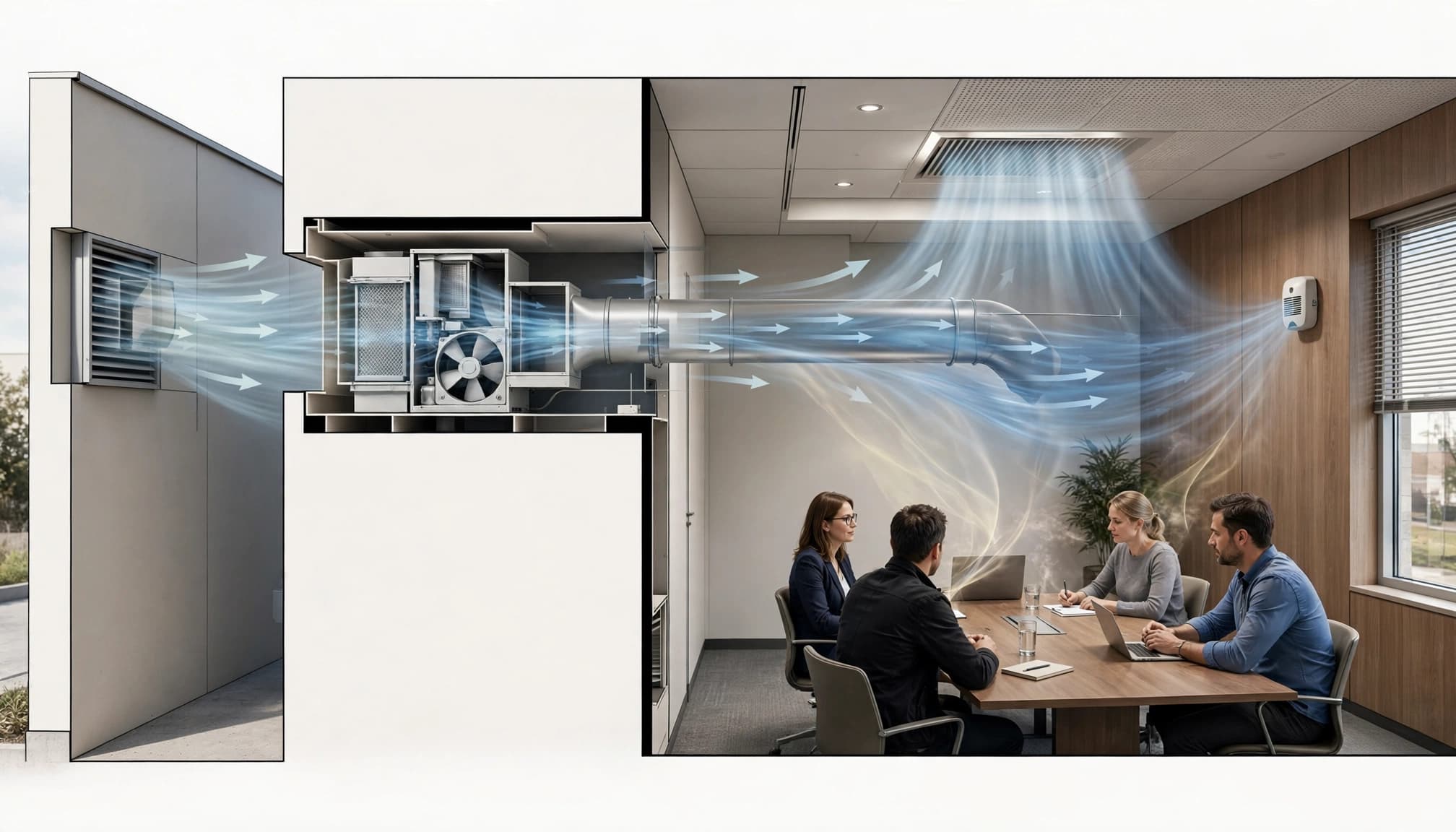
In a CO2-based system, the sensor sends its reading to a controller or building-management system. The controls use that information as part of the building's ventilation strategy, subject to the approved design and operating conditions.
A conference room that sits empty for part of the day may benefit more from this approach than a space with nearly constant occupancy. Reducing unnecessary outdoor-air conditioning can save energy, although actual savings depend on the building and its control settings.
The sensor doesn't create ventilation by itself. The HVAC equipment, outdoor-air intake, controls, and air distribution system must all work together. If a component fails, the display may show a plausible CO2 reading while the intended ventilation strategy doesn't operate properly.
Why Minimum Ventilation Settings Matter
Commercial systems need an outdoor-air design that accounts for the building and its use. Occupants aren't the only consideration: furnishings, materials, and other sources can affect indoor air even when a room has fewer people.
For that reason, a low CO2 reading shouldn't be treated as permission to eliminate outdoor air. Minimum ventilation settings should follow the approved design and the requirements that apply to the project. Depending on the system design, the required amount can account for both the space and its occupants.
A control setting also isn't the same as a measured airflow. Changes in fan operation, filters, duct resistance, and building pressure can affect how much outdoor air enters the unit.
During commissioning, a qualified HVAC or testing, adjusting, and balancing professional can measure outdoor airflow and compare it with the design documents. That measurement gives the facilities team a baseline for future service.
How Economizers Affect Outdoor-Air Operation
An economizer can use suitable outdoor conditions to help cool a building. It works with the HVAC system's outdoor-air components, but its cooling purpose differs from the occupancy-related purpose of CO2-based ventilation.
The two functions need coordinated controls. Otherwise, a facilities manager may see outdoor-air operation that doesn't appear to match the CO2 trend and assume something is broken. The equipment may be operating for a cooling need rather than responding to occupancy.
In Southwest Florida, outdoor air can carry a significant moisture load. Air that feels cool enough to be useful for cooling may still add humidity indoors. Economizer settings should account for the system design and local conditions, including the equipment's ability to handle moisture.
A technician can review the economizer alongside the DCV controls during service. That review should include temperature and humidity conditions, the equipment schedule, and any comfort complaints.
Where Commercial CO2 Sensors Should Be Placed
Sensor placement affects what the controls can learn about a space. A useful location represents the air people are breathing rather than a small area affected by a nearby air source.
Choose Representative Occupied Areas
Conference rooms, training rooms, and other spaces with changing occupancy can be good candidates for monitoring. The design should account for how each room is used and which HVAC system serves it.
Avoid relying on a sensor beside a supply diffuser or exterior door. Supply air, drafts, or frequent door openings can produce a reading that doesn't represent the rest of the room.
A sensor in a rarely occupied hallway may also miss conditions in a full meeting room. When room layouts or occupancy patterns change, revisit the locations as part of the ventilation review.
Understand Shared-System Limitations
One reading doesn't necessarily describe every zone served by a rooftop unit or air handler. A crowded room can have different conditions than an open office on the same system.
Return-air monitoring may provide information about mixed air from several spaces, but that reading can mask differences between rooms. The right arrangement depends on the system design and the questions the measurements need to answer.
Connecting Sensors to Building Controls
A wall-mounted sensor is useful for automatic ventilation only when its reading reaches a control system configured to use it. Some buildings display data through a building-management system, while others use a local equipment controller.
Confirm the Reading Reaches the Controller
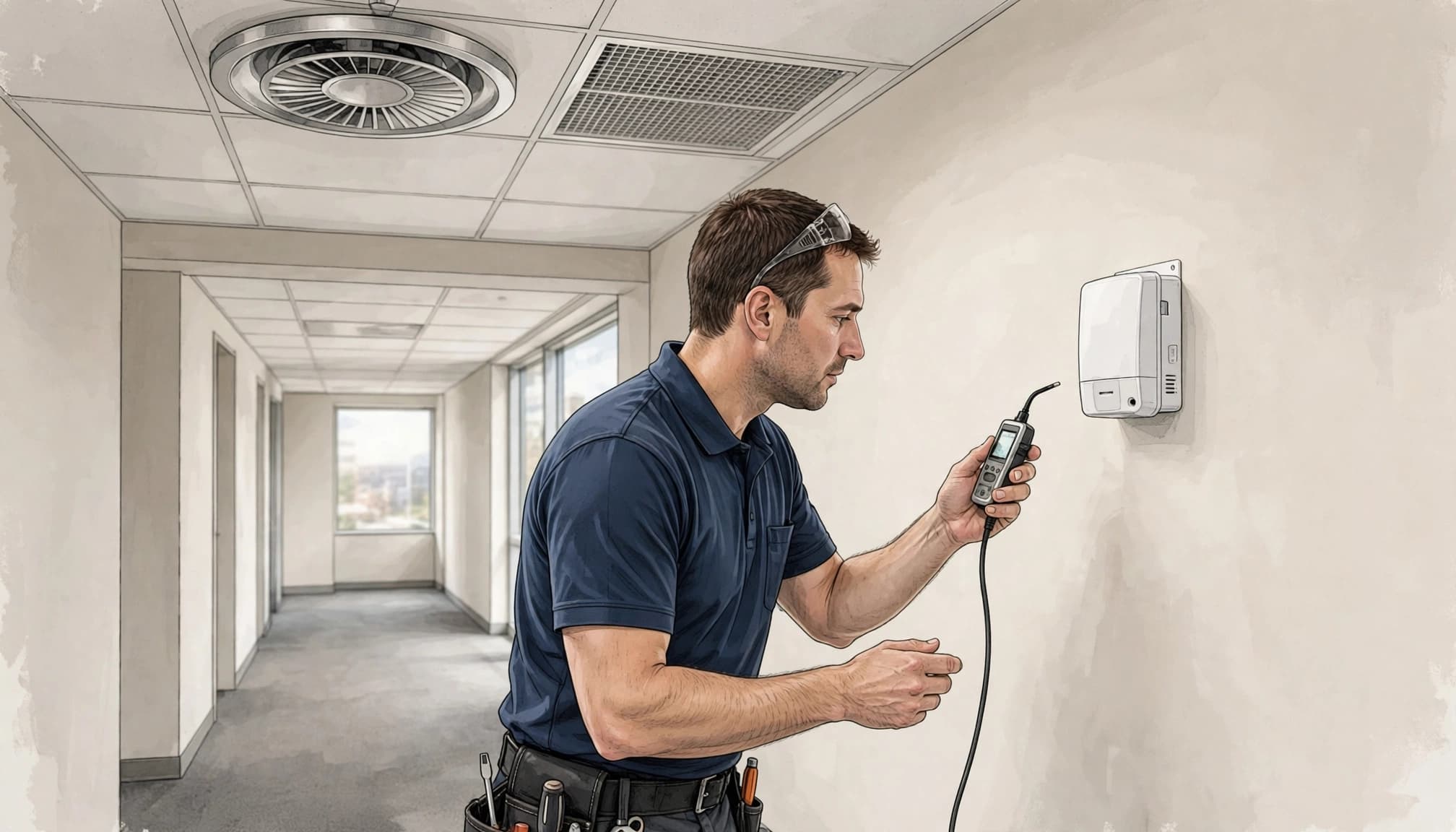
During setup, the technician can compare the value at the sensor with the value displayed in the controls. A wiring problem, communication fault, or incorrect configuration can prevent accurate information from reaching the system.
The operating schedule matters as well. A sensor may be working while the HVAC system follows a schedule that doesn't match the hours people occupy the building. Temporary overrides can cause confusion when they remain in place after an event or service visit.
Keep Records of Control Settings
Facilities staff should have a record of the sensor locations, the spaces they represent, and the approved control configuration. A written sequence and commissioning report give future technicians a starting point when diagnosing complaints.
The documentation should also describe how the system handles a failed or unavailable sensor. The appropriate response depends on the equipment and approved design, so it belongs in the building's control records.
Commissioning a CO2 Ventilation System
Commissioning connects the design on paper with the equipment installed in the building. It gives you an opportunity to find problems before staff rely on the controls every day.
Test the Sensor and Controls
A technician can compare each sensor with a calibrated reference instrument and review the location for drafts or other influences. They can also examine the displayed reading, schedules, overrides, and communication between the sensor and controller.
Testing should include the economizer and DCV functions where installed. The goal is to establish whether the system operates according to its approved design, not simply whether the sensor screen turns on.
Measure Airflow and Document Results
The commissioning record should identify the equipment and served areas, along with measured outdoor airflow and balancing results. It should also note sensor locations, operating conditions, control settings, and items that need repair.
Repeat measurements after major layout changes or ventilation work when those changes affect the design. For example, new partitions can alter air paths and leave an existing sensor less representative of the occupied space.
Maintenance and Common Control Problems
CO2 sensors and ventilation equipment need attention after commissioning. Dust, component wear, schedule changes, and building alterations can all affect performance over time.
Look Beyond the Sensor
An elevated CO2 trend can point to several issues. A damaged actuator, stuck linkage, blocked intake, or disabled control can interfere with outdoor-air operation. A crowded room or a schedule that ends too early can also change the reading.
Start with the pattern rather than a single number. Compare occupied and unoccupied periods, then look at similar rooms and the equipment serving them. Record complaints, odors, humidity, and any changes to the space.
Make Monitoring Part of Routine Service
Facilities teams can review building-management trends daily when available. Without continuous trends, monthly spot readings during representative occupied periods can help identify changes.
During annual service, compare sensors with a calibrated instrument. Include outdoor-air components and control tests in routine commercial HVAC maintenance, and keep the measured results with the service report.
Persistent musty odors, condensation, or high humidity deserve attention even when CO2 readings look ordinary. Those conditions can point to a moisture or equipment problem that a CO2 sensor cannot identify.
Frequently Asked Questions
Does a CO2 Sensor Measure All Indoor Air Pollutants?
No. It measures carbon dioxide, which can help indicate ventilation patterns associated with occupancy. It doesn't identify mold, particles, or chemical contaminants. Those concerns require their own investigation.
Can a CO2 Sensor Fix a Stuffy Room?
A sensor can provide useful information, but it can't repair a ventilation problem on its own. The cause may involve airflow, controls, occupancy, or another condition in the room.
Do All Commercial Buildings Need CO2-Based Ventilation?
Not every commercial system uses CO2-based DCV. Its suitability depends on the building, occupancy patterns, equipment, and approved ventilation design.
Keep Outdoor-Air Control Working as Designed
A CO2 sensor gives your HVAC controls useful information about an occupied space. Its value depends on representative placement, reliable controls, and an outdoor-air system that delivers the intended ventilation.
If your Southwest Florida business has persistent stuffiness, humidity concerns, or unexplained ventilation readings, we can review the equipment and controls. Schedule an Estimate with our team at Valor Heating & Cooling.
Recent Posts