Why Recessed Lights Let Hot Attic Air Into Florida Homes
Recessed light air leaks can let hot attic air enter a Florida home when gaps around or inside a fixture connect the attic to the room below. Air pressure differences can move that air through the openings, adding heat and moisture to the space your AC is cooling.
In Southwest Florida, even a small ceiling gap can be worth investigating when a room feels sticky or uncomfortable. The right fix depends on the fixture, the source of the pressure difference, and the insulation around it.
Where Attic Air Gets Through a Recessed Light
In many Florida homes, the ceiling separates the cooled living space from a hot, vented attic. A recessed light creates an opening in that ceiling for the fixture housing and wiring. If the opening isn't sealed, it can provide a path between the two spaces.
Air may pass through a gap between the drywall and the housing. Older fixtures can also have openings in the housing itself. A decorative trim ring may cover the edge of the hole without creating an airtight seal.
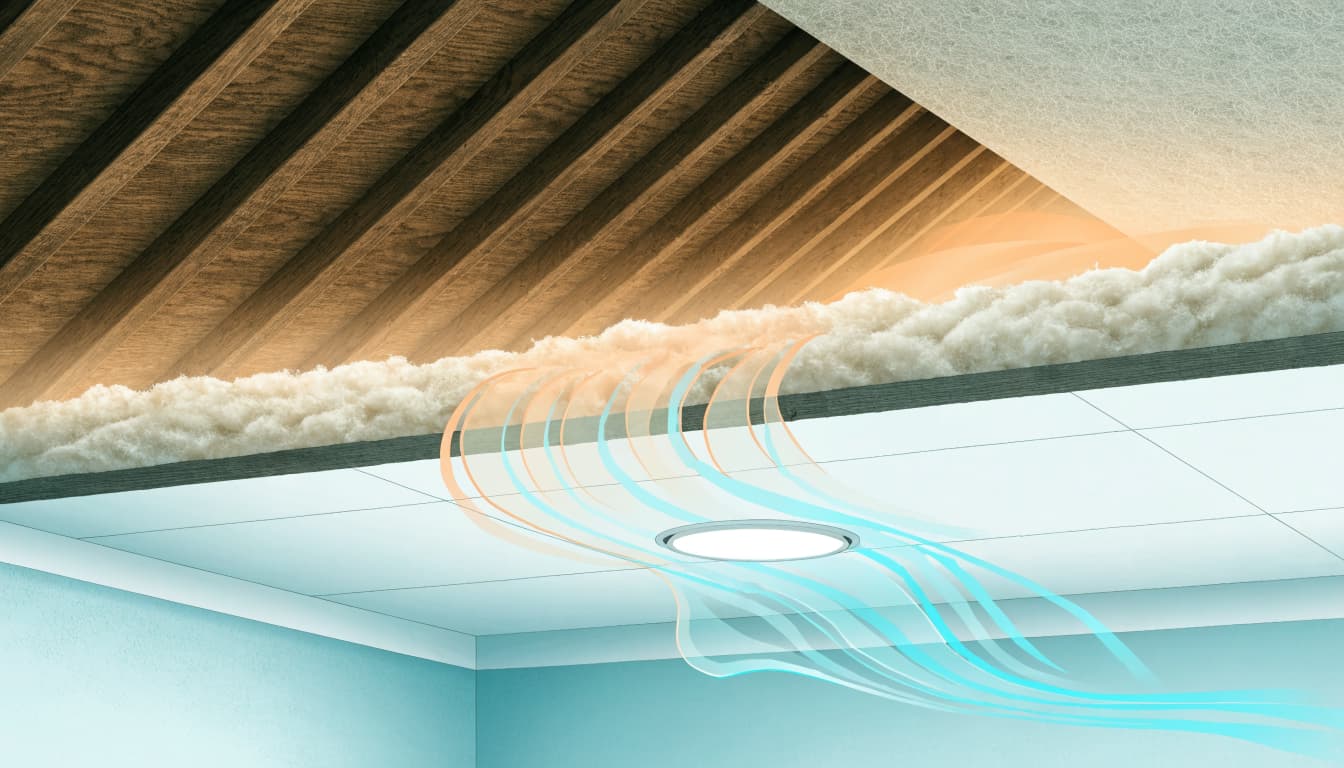
Insulation around the fixture helps slow heat transfer, but common attic insulation doesn't necessarily stop moving air. That means a ceiling can have plenty of insulation and still have openings that allow air to pass through.
The home's design matters, too. Some attics have insulation along the roofline rather than at the ceiling. In those homes, the boundary between conditioned and unconditioned space may be different, so a fixture's connection to attic air needs to be evaluated in context.
How Air Pressure Moves Air Through Ceiling Gaps
Air moves through an opening when there's a pressure difference across it. When pressure inside a room is lower than pressure in the attic, attic air can be drawn toward the room through an unsealed light.
The direction can change throughout the day. Wind, exhaust fans, duct leakage, and the way air moves through the house all affect pressure.
Exhaust Fans and Duct Leakage
A bathroom or kitchen exhaust fan sends indoor air outside. If replacement air enters through ceiling gaps, some may come from the attic. A leaking supply duct in the attic can also affect house pressure as cooled air escapes before reaching the rooms.
Return duct leaks are a separate concern. A gap on the return side can draw attic air directly into the HVAC system while it runs. That air can then be distributed through the home, even if it never passes through a recessed fixture.
Closed Doors and Room Pressure
A bedroom with a supply vent and limited return airflow can develop a different pressure from the rest of the house when its door is closed. Depending on the layout and system operation, that difference can affect airflow through gaps in the ceiling.
A draft doesn't always travel into the house. Under different conditions, conditioned indoor air can move toward the attic instead. A professional can evaluate the pressure conditions rather than assume the direction from the fixture's appearance.
Why Florida Heat and Humidity Matter
A Southwest Florida attic can get much hotter than the rooms below it, especially during sunny weather. When hot attic air enters a cooled home, the air conditioner must remove the added heat to maintain the thermostat setting.
Moisture adds another demand. Florida's humid air contains water vapor, and an air conditioner removes some of that moisture as it cools. Air leaking in through ceiling openings can add to the moisture the system has to handle.
Humid air can also create condensation when it contacts a surface that's cold enough. Repeated moisture around a ceiling opening deserves attention because wet drywall and insulation can lead to staining or other damage.
A recessed light isn't the only possible source of a moisture problem. A cold duct boot, a roof leak, or an AC drain issue can also leave a ceiling damp. Tracking indoor humidity and temperature gives you useful context, but a humidity reading alone won't identify the opening where air is entering.
Signs of Recessed Light Air Leaks
You may notice a faint draft near a light when an exhaust fan or the AC is running. In other homes, the signs are less direct. A room might feel warmer or more humid than nearby rooms, particularly during hot afternoons.
Look for patterns such as these:
- Dust collects around the trim or leaves a mark on the ceiling.
- A room feels drafty or uncomfortable when a fan or the AC runs.
- The trim, nearby paint, or drywall shows recurring moisture or staining.
- Cooling costs rise without an obvious change in household use or thermostat settings.
None of these signs proves that a recessed light is leaking. Dust can accumulate for other reasons, and a warm room may have sun exposure, inadequate insulation, or an airflow problem.
If water is actively dripping from the ceiling or pooling near the air handler, turn the thermostat off. Stay away from wet electrical equipment and call for service. Don't climb into an attic near wet wiring or handle a wet light fixture.
Airtight and Non-Airtight Fixtures: What's the Difference?
Fixture design affects whether air can move between the ceiling cavity and the room. It also affects which repair options are appropriate.
Airtight Fixtures and the Ceiling Opening
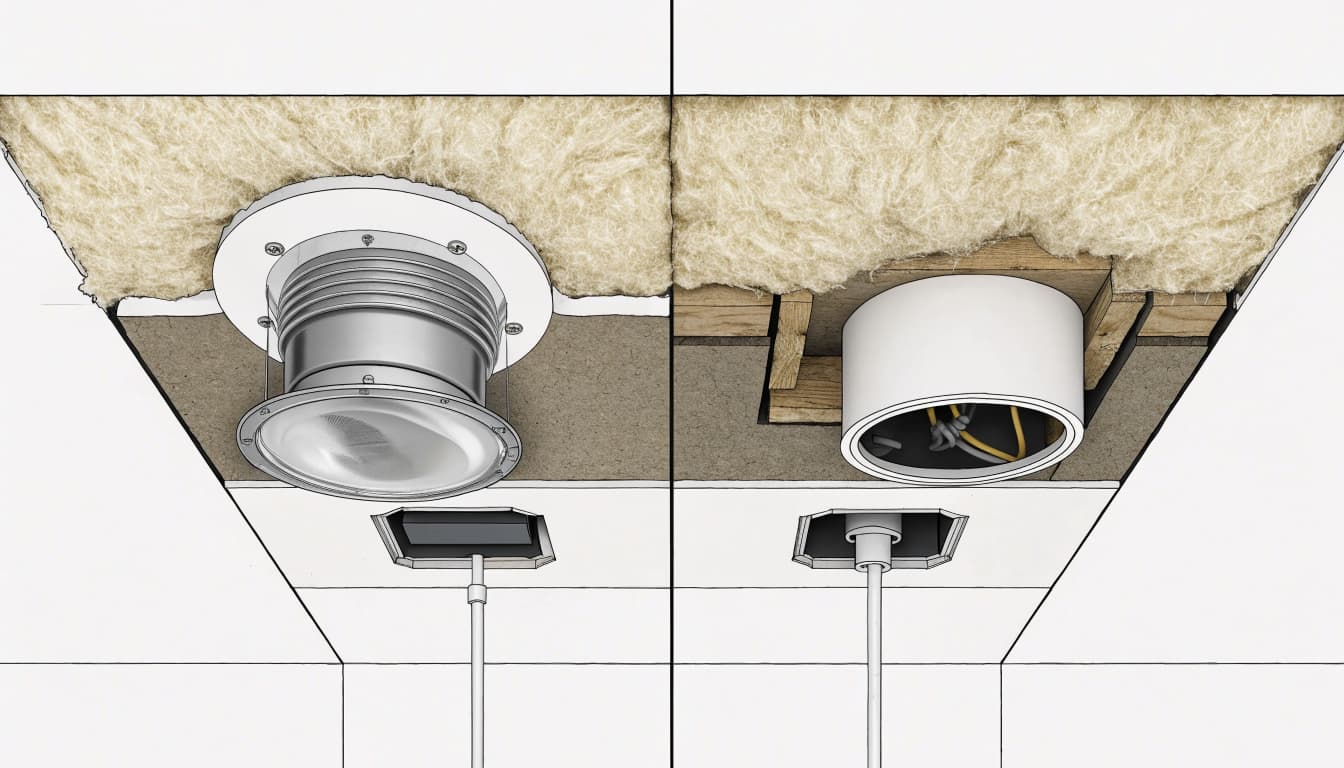
An airtight fixture is designed to limit air movement through the fixture assembly. That can reduce one route for leakage, but the area where the fixture meets the ceiling also matters. A poorly sealed perimeter can leave a path around an otherwise airtight housing.
An LED bulb alone doesn't close those gaps. It changes the light source, while the housing, trim, and surrounding ceiling determine whether an air path remains.
Insulation Ratings Address a Different Issue
A fixture's insulation-contact rating addresses its compatibility with insulation. Airtightness and insulation compatibility are separate characteristics, so an installer needs to account for both when selecting a repair or replacement.
The complete assembly matters as well, including the housing, trim, and any cover used above it. A safe solution preserves the fixture's required clearances and suits the surrounding insulation. Covering a fixture or packing material around it without regard to its design can create a heat hazard.
Options for Sealing or Replacing Leaky Lights
The appropriate repair depends on the fixture and the size and location of the opening. In some homes, a compatible sealing product or gasket can address a gap at the ceiling. In others, replacing an older fixture is the more practical option.
Seal the Air Path With Compatible Materials
A professional may be able to seal gaps around a suitable fixture with materials intended for that application. A compatible gasketed trim can also help address leakage at the room-facing edge.
Some recessed-light covers are designed to create an air barrier around compatible fixtures. The cover and fixture must work together safely, with the required clearances preserved. Generic foam, tape, or an improvised box isn't a substitute for a suitable assembly.
Sealing the visible edge also won't necessarily close openings elsewhere in the housing. That's why the repair should address the full air path, not only the portion visible from the room.
Replace a Fixture That Doesn't Suit the Space
If an older housing has multiple openings or isn't suitable for the insulation around it, a replacement assembly may be a better fit. An airtight, insulation-compatible option can address both concerns when installed as a complete system.
An electrician can assess the existing wiring and fixture. After the work, an air-leak assessment can help determine whether the ceiling opening is still allowing movement. Keep in mind that other ceiling penetrations may need attention, even when the light itself has been addressed.
When to Have the HVAC System Inspected
If several rooms feel humid or uncomfortable, the recessed lights may be only part of the picture. HVAC inspection can help distinguish a ceiling leak from a duct or equipment problem.
Look at Ducts and Airflow
A return duct leak in the attic can draw hot, dusty air into the system. A supply leak sends cooled air into the attic instead of delivering it to the room. Both can affect comfort, but they call for different repairs.
Duct insulation and condition matter, too. Our comparison of duct materials for Florida homes covers considerations for ductwork in hot attics.
A technician can assess airflow, duct condition, and system operation alongside the symptoms you've noticed. Details such as which rooms are affected and whether the problem changes when doors are closed can help narrow the inspection.
Consider a Whole-Home Air-Leak Test
A blower-door test uses a fan to create a controlled pressure difference, making air leaks easier to locate. Because the test changes pressure deliberately, airflow observed during testing doesn't automatically show which way air moves during normal operation.
If you're dealing with uneven cooling, persistent humidity, or suspected attic duct issues, you can Schedule an Estimate with our HVAC team. We can inspect the system and help identify whether an electrician or air-sealing professional is also needed.
Keep Hot Attic Air on the Right Side of the Ceiling
Recessed light air leaks begin with an opening and a pressure difference. In Florida, the air moving through that opening can bring heat and humidity into a home that's already relying on its AC.
A lasting repair starts with identifying the air path and choosing a solution that fits the fixture and insulation . Addressing related duct or airflow problems can also help your home stay more comfortable.
Recent Posts