How Many Return Air Vents Does Your Fort Myers Home Need?
One return grille can leave a Fort Myers home comfortable, while another needs several to move air properly. The difference depends on your HVAC system, floor plan, ductwork, and airflow requirements.
If you're asking how many return air vents your home needs, there's no reliable answer based on square footage alone. A licensed HVAC professional should verify the design with load calculations and airflow measurements.
Fort Myers homes face long cooling seasons, high humidity, and frequent air conditioner use. That makes balanced return airflow important for comfort, efficiency, and indoor air quality.
How many return air vents does a Fort Myers home need?
The honest answer is that your home needs enough return capacity to match the air supplied by the HVAC system. That capacity may come from one large central grille, several smaller grilles, or a combination of return openings and transfer pathways.
A small, open-concept home may work well with one centrally located return. A larger home with multiple bedrooms, separate living areas, high ceilings, or more than one floor may need several returns. Homes with additions often need a new return path because the original system wasn't designed for the extra space.
The number of grilles alone doesn't tell you whether a system is correctly designed.
| Home feature | What it may require |
|---|---|
| Small, open floor plan | One central return may provide enough airflow |
| Several closed bedrooms | Additional returns or transfer pathways may help |
| Two-story layout | Returns on both levels may improve balance |
| Home addition | A new return path may be needed |
| Multiple HVAC zones | Each zone needs properly designed return airflow |
A large grille can move the same amount of air as multiple smaller grilles when the ductwork supports it. Therefore, adding vents without checking duct size and system pressure can create a costly appearance without fixing the real problem.
Why return air vent count doesn't determine HVAC performance
Return air travels from the rooms back to the air handler. The blower then pulls that air across the filter and coil before sending conditioned air through the supply registers.
When return capacity is too small, the blower has to work against greater resistance. That can increase static pressure, reduce airflow at supply registers, and make rooms feel uneven. The air conditioner may run longer while certain areas remain warm or humid.
A professional design begins with the home's cooling load. ACCA Manual J load calculations consider factors such as conditioned square footage, insulation, windows, orientation, ceiling height, and local climate. The duct layout then needs to distribute and return the required airflow, which falls under duct design methods such as ACCA Manual D.
The existing equipment also matters. A 3-ton system, for example, needs a different airflow design than a 2-ton system. The correct return setup must match the blower, filter, coil, ductwork, and equipment capacity.
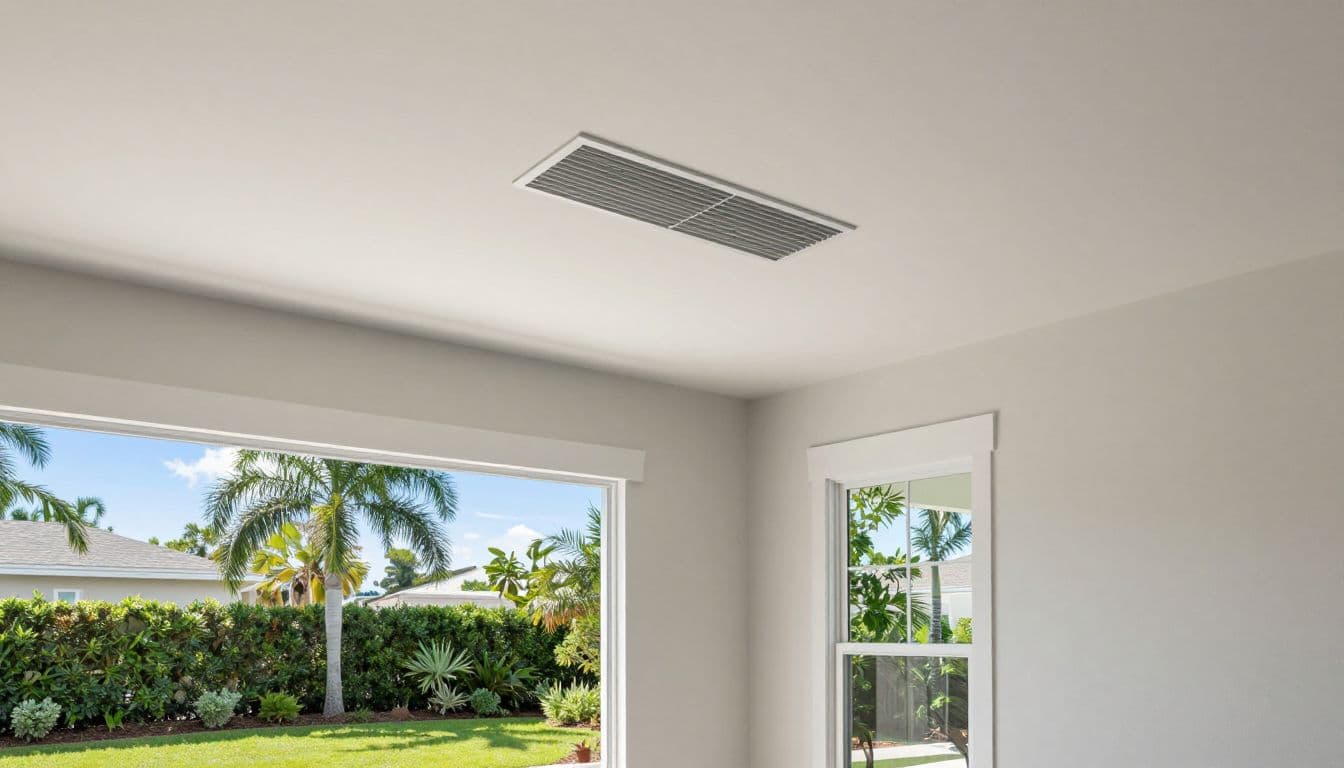
A return grille is only one part of the air path. A closed bedroom door can still create pressure problems when air has no easy route back to the system.
Airflow measurements help confirm whether the design works in real conditions. An HVAC technician may check supply and return airflow, static pressure, filter resistance, and room-to-room pressure differences. Those measurements reveal problems that a visual vent count can't find.
Where should return grilles be placed?
Placement affects how evenly your Fort Myers home cools. A return grille should pull air from the living areas that need conditioning, while allowing air to travel back without unnecessary restrictions.
Central hallways and open common areas are common locations because they connect several rooms. Ceiling or high-wall returns also appear often in Florida homes, where cooling is the main demand. However, the best location depends on the duct route and how your rooms connect.
Bedrooms deserve special attention. When a bedroom door stays closed, air can enter through the supply register but struggle to escape. The pressure may push conditioned air through gaps around the door, under the door, or through other openings. A return grille, jumper duct, or transfer grille can provide a better path when the system design calls for one.
Keep return grilles away from obstructions. Furniture, curtains, shelving, and large decorations can block the opening and reduce airflow. Leave enough clearance for the grille to draw air freely, and don't place heavy furniture directly in front of a low-wall return.
Some locations are usually unsuitable for return air, including garages, bathrooms, and cooking areas. These spaces can contain fumes, moisture, odors, or grease. A professional should determine whether a proposed location meets the home's design and applicable requirements.
During a remodeling project, don't assume you can add a return by cutting an opening in a wall or ceiling. The opening must connect to correctly sized ductwork, and the system may need balancing after the work is complete.
Signs your home may need better return airflow
A return problem often appears as a comfort complaint before it becomes an equipment issue. Your system may still run, but it won't distribute conditioned air evenly.
Watch for these signs:
- Bedrooms become warm when their doors are closed.
- Interior doors whistle, move, or resist opening while the system runs.
- Some supply registers have weak airflow compared with others.
- The air conditioner runs for long periods without lowering indoor humidity.
- The blower or ductwork makes loud rushing sounds.
- The filter becomes dirty quickly or pulls inward during operation.
- Rooms near the central return feel cooler than rooms farther away.
These symptoms can also result from a dirty filter, crushed duct, leaking connection, failing blower motor, blocked coil, or an improperly sized system. Adding another return grille may help, but it won't correct every cause.
An HVAC inspection can separate a return-air issue from an equipment or ductwork issue. If your system makes unusual noises or struggles to cool, HVAC repair and inspection can identify the source before you invest in a redesign.
Return grille size, filters, and everyday maintenance
The size of each return grille matters as much as the number of grilles. Small openings can create high air velocity and noise when they carry too much airflow. Larger grilles may move air more quietly, but their connected ducts still need the right diameter and layout.
The filter opening also needs attention. A filter that is too small, too restrictive, poorly fitted, or overdue for replacement can reduce return airflow. Follow the equipment manufacturer's replacement schedule, then adjust it when pets, construction dust, or heavy household use load the filter faster.
Homeowners can support proper airflow with a few routine habits:
- Keep return grilles free of furniture, rugs, curtains, and stored items.
- Check that the filter fits tightly without bending or collapsing.
- Replace the filter on the schedule recommended for your system.
- Vacuum dust from the grille surface when buildup appears.
- Keep interior doors open when practical if rooms lack a dedicated return path.
- Ask for static-pressure and airflow checks during routine maintenance.
High-efficiency filters aren't automatically better for every system. A filter with a high MERV rating can restrict airflow if the return system and equipment aren't designed for it. Your technician can recommend a suitable filter rating after checking the system.
You should also inspect returns after replacing flooring, installing cabinets, or rearranging furniture. A grille that worked well before a renovation may become partially blocked afterward.
When a Fort Myers HVAC professional should evaluate your returns
A professional evaluation is especially useful when you're replacing an air conditioner, finishing a room, adding square footage, or dealing with recurring hot spots. The technician should review the load calculation, equipment capacity, duct sizes, grille sizes, filter location, and airflow readings together.
Ask for measurements rather than a recommendation based only on the number of bedrooms. The goal is balanced airflow with acceptable static pressure, not the highest possible vent count.
A qualified technician can also determine whether the best correction is a new grille, a larger return duct, a transfer pathway, duct sealing, system balancing, or equipment replacement. Valor Heating & Cooling provides professional HVAC service in Fort Myers for installation, inspections, maintenance, and repair.
If you're planning an HVAC replacement or remodeling project, you can Schedule an Estimate to review the return-air design before work begins.
Conclusion: Balance matters more than the number of vents
Your Fort Myers home may need one return grille or several. Square footage alone can't determine the answer because equipment size, duct design, room layout, door positions, and airflow all affect the result.
Keep every return unobstructed, replace filters regularly, and pay attention to pressure problems or uneven cooling. Before adding vents, have a licensed HVAC professional verify the design with load calculations and airflow measurements. The right return air vents are the ones that give your system a clear, balanced path back to the air handler.
Recent Posts