Why Your AC Air Handler Sweats in Florida
A damp air handler can turn a routine trip to the utility closet into a worry about water damage. In Southwest Florida, air handler sweating deserves a closer look, especially if moisture keeps returning or reaches the floor.
Your AC removes water from indoor air every time it cools. That water should leave through the condensate drain, not collect around the cabinet. The first clue is where the moisture appears.
What air handler sweating means in a Florida home
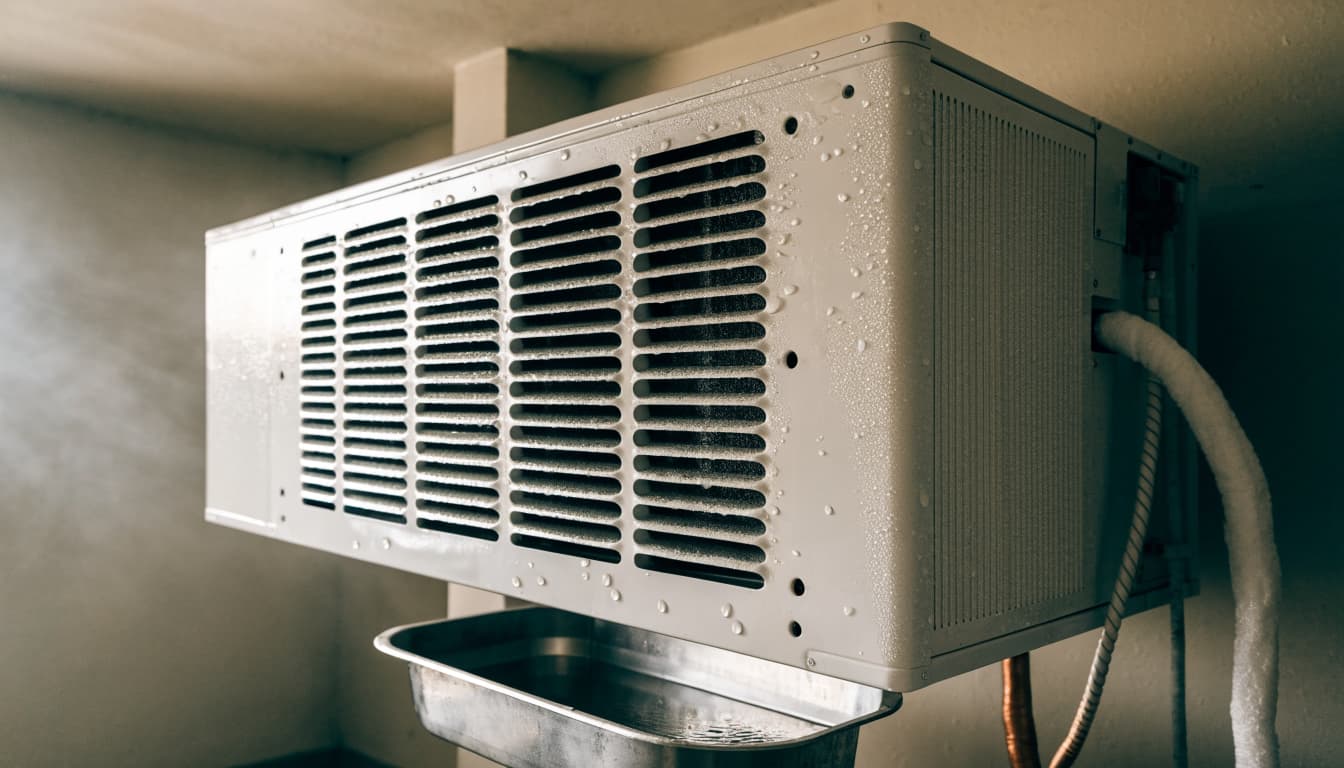
Air handlers often sit in garages, closets, or attics where the surrounding air can be warmer and more humid than the air inside the unit. When humid air touches a cold surface, water vapor can form droplets. Still, a damp cabinet alone can't tell you which condition caused it.
Condensation belongs inside the system
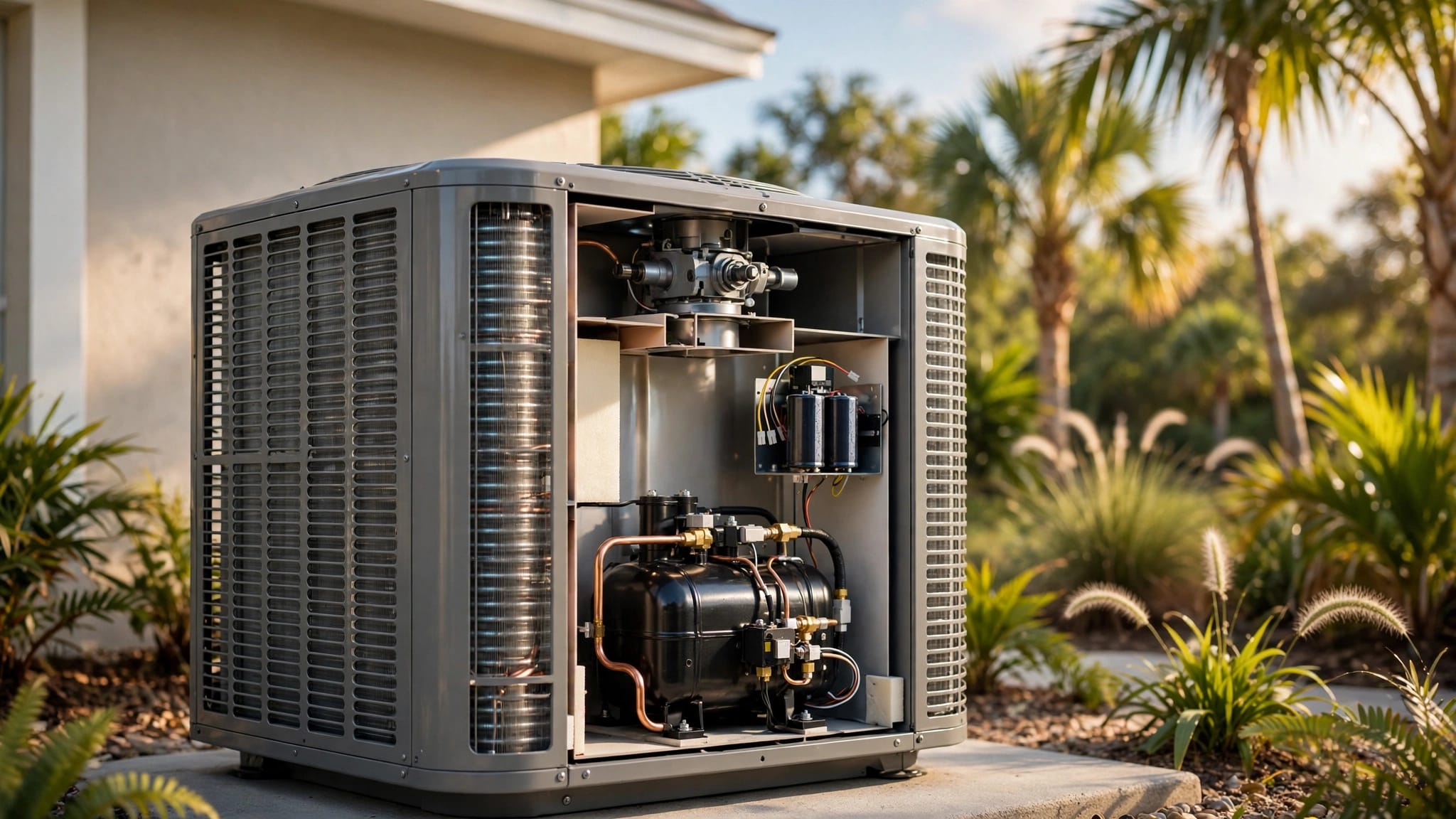
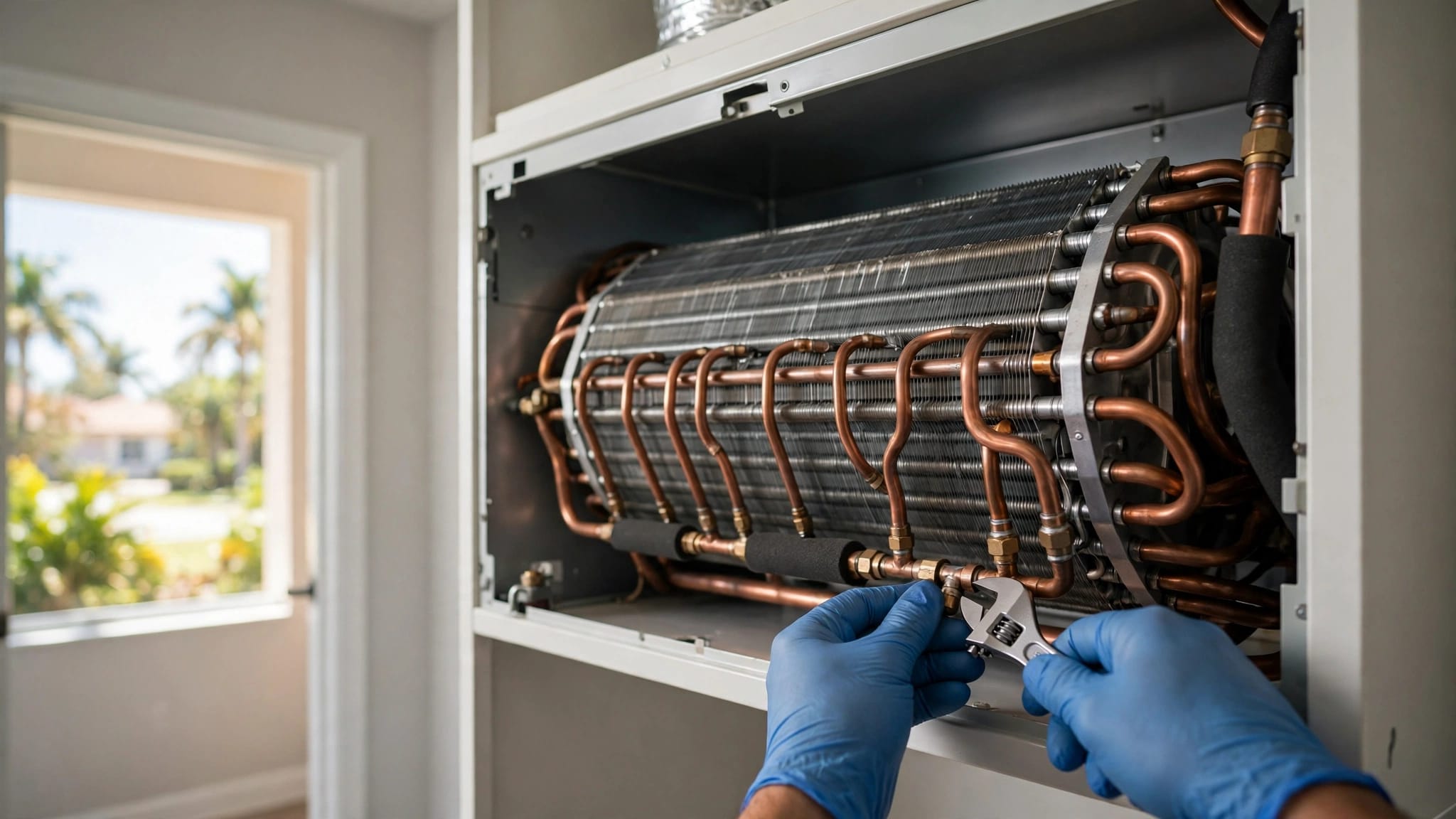
As indoor air passes over the cold evaporator coil, moisture collects on the coil and drips into a pan. From there, it travels through a drain line. Longer cooling runs can produce more condensate, which is why drainage matters so much in Fort Myers homes.
The pan, AC condensate trap, and drain line must all move that water away. Condensation on the coil is expected. Water escaping the designed drainage path isn't.
Cabinet moisture has several possible causes
A cold cabinet surface exposed to humid air may develop droplets. Missing insulation or an air leak might contribute, while a drain problem may leave nearby surfaces wet for a different reason. The location, timing, and amount of water help a technician distinguish among them.
Avoid assuming every wet spot comes from a clogged drain. Likewise, don't dismiss cabinet moisture as ordinary Florida humidity if it keeps returning.
Normal condensation versus a warning sign
Your AC can produce substantial water without anything being wrong. The distinction is whether that water stays contained and drains away.
What you may see during normal operation
If you can safely see the condensate outlet, intermittent drainage while the AC runs can be expected. Moisture forming on the indoor coil is also part of cooling, although the coil usually isn't visible without opening the cabinet.
A dry floor and a clear drainage path are reassuring signs. A small amount of moisture on an accessible cold surface may disappear as conditions change, but persistent cabinet sweating still merits attention.
Signs that call for a closer look
Puddles, dripping cabinet seams, stained ceilings below an attic unit, and a full auxiliary drain pan are warning signs. Musty odors or an AC that shuts itself off can point to a drainage problem, although neither confirms the cause.
A damp cabinet and a backed-up drain can look similar at first. Water on the floor tells you the moisture is no longer staying where it should.
How Florida humidity adds to the problem
Southwest Florida's warm, moist air raises the chance that a cold surface will collect droplets. Where the air handler sits matters too: a garage or attic may expose the cabinet to different conditions than an interior closet.
Humid air can reach cold surfaces
When moist air meets a surface below its dew point, some water vapor turns into liquid. That helps explain why cabinet seams, exposed metal, or nearby cold lines may look wet during humid weather. It doesn't prove the cabinet is defective.
If the area around the unit feels unusually damp, check for an obvious source of outdoor air, such as an open garage door. Don't seal cabinet joints or modify duct connections based on appearance alone.
Indoor humidity offers another clue
Rooms that feel sticky despite cooling suggest the system may not be removing moisture effectively. A thermostat set to fan "ON" can also keep air moving across a wet coil between cooling cycles. Setting the fan to "AUTO" is a reasonable basic check.
If the house remains clammy, common causes of indoor AC humidity problems include airflow and equipment issues. A humidity reading helps describe the symptom, but an inspection is needed to identify its source.
Why restricted airflow deserves attention
Air must move across the evaporator coil at the right rate. When airflow is restricted, system temperatures and cooling performance can change. In some cases, the coil may ice over, then release extra water as it thaws.
Filters and vents are the easy starting points
A dirty filter is a common, homeowner-visible airflow restriction. Check whether it needs replacement and use the size and type specified for your system. Also look for return grilles blocked by furniture or supply vents covered by rugs.
Weak airflow at several vents is useful information to share with a technician. Don't assume the filter is the only issue if a fresh one doesn't help.
Deeper restrictions need testing
A dirty coil, blower problem, or duct restriction can also affect airflow. Those conditions aren't easy to confirm from cabinet moisture alone. A technician may check the blower, coil, ducts, and airflow measurements before recommending a repair.
If you see ice on an accessible refrigerant line, avoid running the AC as usual while waiting for service. Don't chip away ice or open the air handler to look for it.
Insulation and air leaks around the cabinet
The air handler has cold components that need separation from warm, humid surroundings. Damaged insulation or gaps at connections can make that separation less effective.
Check visible insulation without disturbing it
Look at accessible insulated refrigerant lines and exposed duct connections for obvious gaps, loose covering, or wet spots. A line with damaged insulation may collect water on its exterior. Cabinet insulation can also matter, but checking inside requires removing panels.
Leave internal insulation, electrical compartments, and refrigerant connections to a qualified technician. Surface moisture doesn't establish which part, if any, needs sealing or replacement.
Air leaks can complicate the picture
An air leak near a cabinet or duct connection may let humid surrounding air reach colder surfaces. A leaky return path can also draw air from a garage or attic into the system. Either possibility requires inspection rather than a guess based on droplets.
Air handler sweating that returns after the surface dries is worth documenting. Note whether it appears along a seam, beneath a line, or near the drain connection. Those details can help narrow the inspection.
Drainage problems can look like sweating
Condensate often runs through a narrow PVC line. In a system that operates for much of the year, dust and buildup can slow drainage. Water may then appear near the cabinet even when its outer surface isn't the original source.
Watch the pan and drain outlet
Visible standing water in an auxiliary pan, repeated drips, or a wet floor calls for prompt attention. Some systems have a float switch that shuts off cooling when water rises. A shutdown is a warning, not a fix for the blockage.
For more on recurring buildup, see why AC drain lines keep clogging. The drain line is only one possibility: the pan, trap, slope, or a condensate pump, if your system has one, may also need checking.
Don't treat every wet cabinet as a drain clog
Trace what you can see without opening equipment. Does water appear below a drain connection, or are droplets spread across the cabinet? Is the floor wet only after a long cooling run?
Those observations are useful, but they aren't a definitive diagnosis. Pouring chemicals into an unfamiliar drain or repeatedly resetting a float switch can leave the underlying problem unresolved.
Safe checks before you call for service
A few observations can help you describe the problem without exposing yourself to electrical parts or damaging the system.
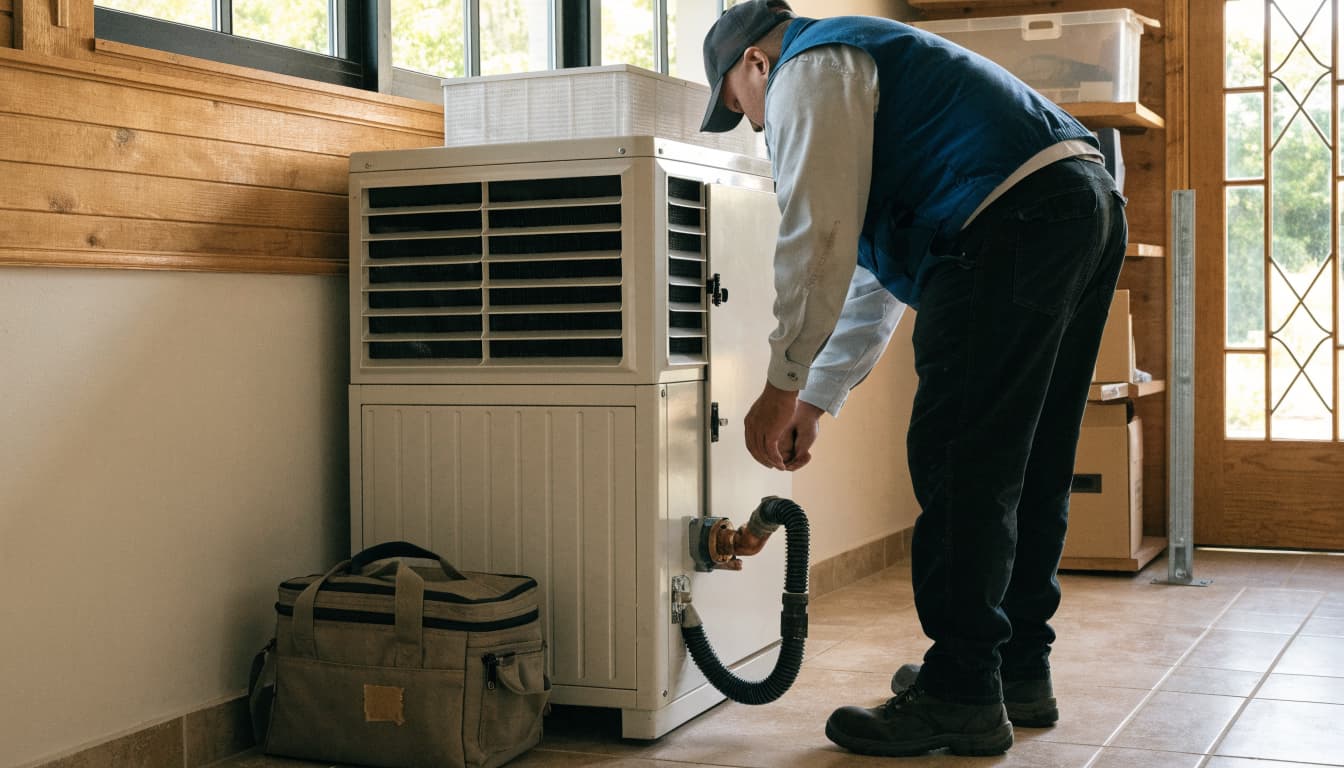
Start with accessible parts
Check the filter, clear blocked vents, and confirm the thermostat fan is set to "AUTO." From a safe position, look for water around the cabinet, visible drain piping, and an accessible secondary pan. Take a photo of the wet area before it dries.
For other homeowner-safe AC maintenance, stay outside sealed components and electrical panels. Never remove a cabinet cover to follow a leak.
Respond promptly to active water
If water is actively overflowing, turn the cooling system off at the thermostat and arrange service. Keep clear of wet electrical equipment. For an attic unit, check the ceiling below for staining, but don't enter an unsafe attic to inspect the air handler.
A dry cabinet after one check doesn't rule out an intermittent problem. Note when the moisture returns and whether cooling, airflow, or odors change at the same time.
When to call an HVAC technician
Arrange an inspection when cabinet moisture keeps coming back, water reaches the floor, the auxiliary pan fills, or cooling stops unexpectedly. Ice, weak airflow, and a persistent musty smell also deserve professional attention. Active overflow is more urgent because water can damage nearby materials.
A technician can inspect the coil and cabinet, check airflow, and evaluate insulation or air leakage. They'll also examine the condensate pan, trap, drain slope, and float switch as appropriate. HVAC repair and inspection in Fort Myers can establish whether the moisture comes from surface condensation, drainage, or another system issue.
If your Southwest Florida air handler is dripping or shutting down, Schedule an Estimate with Valor Heating & Cooling. Describe where you see water and whether the system is still running.
Key Takeaways
- Condensation on the indoor coil is expected; water spreading outside the drainage path needs attention.
- Humidity, airflow restrictions, insulation gaps, air leaks, and drainage faults are possible contributors, not diagnoses from appearance alone.
- Check accessible parts safely. Turn off cooling and arrange service if water is actively overflowing.
Frequently Asked Questions
Is a little moisture on the air handler normal in Florida?
The AC normally makes condensate inside the system and drains it away. Humid air can also leave droplets on an exposed cold surface. If the cabinet stays wet, drips, or leaves water nearby, have it checked rather than assuming the moisture is harmless.
Can a dirty filter make an air handler sweat?
A dirty filter can restrict airflow and affect temperatures around the cooling coil. It may contribute to moisture or icing problems, but it won't explain every wet cabinet. Replace a dirty filter with the correct type, then seek service if the symptom continues.
Why did my AC stop when I found water?
Some systems use a float switch to stop cooling when condensate rises. A blocked drain is one possible reason; the pan, pump, or another drainage component may also need attention. Don't keep resetting the system while water remains.
The Bottom Line
Florida humidity makes condensation common, but a wet air handler deserves more than a glance. Where the water goes matters most: the coil should drain through the designed path, leaving the surrounding area dry.
Check what you can access safely. If moisture returns, spreads, or interrupts cooling, an inspection can identify the cause before the water causes more trouble.
Recent Posts