Signs Your AC Capacitor Is Failing in Fort Myers Homes
When an AC capacitor starts to fail, your system usually gives warning signs before it quits. In Fort Myers, those warnings can show up faster because the heat never gives your cooling system much of a break.
You may hear clicking, humming, or a weak startup at the outdoor unit. You may also notice warm air, short cycling, or cooling that comes and goes without warning.
That small part does a big job, so once it weakens, comfort slips fast. The sooner you know what to look for, the easier it is to catch the problem before the outdoor unit stops completely.
Why Fort Myers weather wears out capacitors faster
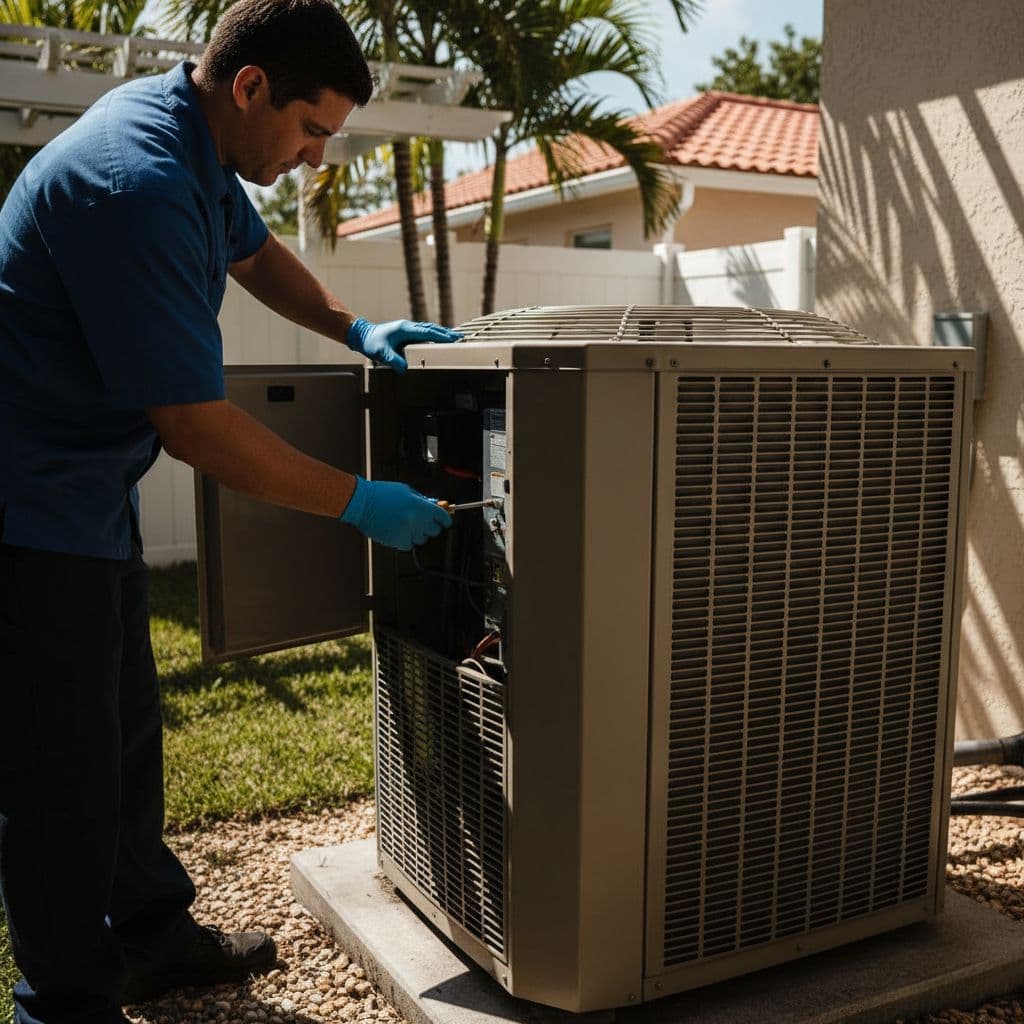
A capacitor helps start the compressor and fan motor, then keeps them running with the right electrical boost. If it gets weak, the whole system feels it.
Fort Myers puts that part under steady stress. Long cooling seasons mean more starts and stops. Heavy afternoon demand means the system often runs for hours. Heat, humidity, and salty coastal air add even more strain. Over time, that mix can wear out the internal components and corrode the terminals.
A capacitor can fade slowly or fail all at once. Either way, the AC has to work harder to keep up. The extra strain often shows up first as a noisy startup or a unit that hesitates before it runs.
If your system has been battling a lot of hot-weather use, the capacitor may be one of the first parts to weaken. That is especially true when the outdoor unit sits in direct sun or near salt air from the coast.
Common warning signs of a failing AC capacitor
A weak capacitor rarely fails quietly. It usually leaves a pattern you can hear or feel.
| Symptom | What you may notice | Why it points to capacitor trouble |
|---|---|---|
| Hard starting | The outdoor unit hesitates before turning on | The motor may not get enough boost to start |
| Clicking sounds | You hear a click, then nothing happens | The system tries to start, then stalls |
| Loud humming | The unit hums but the fan or compressor does not move | The motor wants power, but the start help is weak |
| Warm air indoors | Air blows, but it feels warm or only mildly cool | The compressor may not be running right |
| Short cycling | The AC turns on and off in short bursts | The system cannot stay powered long enough to cool the home |
| Intermittent cooling | It works for a while, then cooling drops off | The capacitor may be failing under load |
| Outdoor unit will not start | The condenser sits there with no real action | A failed capacitor can stop startup completely |
One of the earliest clues is a delayed start. The fan may twitch, or the unit may sound like it wants to run but cannot get moving. After that, the clicking and humming become easier to notice.
A weak capacitor can also hide behind other comfort complaints. You might think the AC needs more refrigerant or a new thermostat, but the real issue is at the outdoor unit. If the system keeps trying and failing, the capacitor deserves a close look.
A capacitor can weaken for weeks before it fails completely. The first clue is often a noisy start, not a dead system.
The signs matter because they tend to get worse in hot weather. A unit that still cools in the morning may struggle by late afternoon. In Fort Myers, that difference often shows up fast.
How a weak capacitor acts on hot Fort Myers afternoons
A failing capacitor does not always fail the same way twice. That is why the symptoms can seem random.
In the morning, the AC may start normally. By late afternoon, it may click, hum, or take a second try. That pattern matters because the part can hold up under light demand, then fail when the system is under the most stress. Some homeowners hear the outdoor fan spin slowly or stop halfway. Others notice the indoor air feels fine for a while, then gets warm again after a short break.
Those swings are common when the capacitor is losing strength. They also explain why the problem can be mistaken for a thermostat issue or an airflow problem. If the symptoms come and go, the part is probably getting worse, not better.
A failing capacitor can also show up after a storm or power flicker. The system may restart once, then struggle the next time it cycles on. That kind of uneven behavior is a clear sign that the start-up circuit needs attention.
When the problem turns into a bigger breakdown
A bad capacitor can look a lot like another AC problem. That is part of what makes it tricky.
A bad contactor can cause startup trouble. A tired fan motor can sound rough. A compressor issue can also leave the system humming without cooling. Still, the pattern tells a story. If the outdoor unit keeps trying to start, then stops, the capacitor is often involved.
The indoor blower may keep running even when the cooling side is weak. That can make the house feel like it has airflow, even though the air never gets cold. Warm air from the vents is a common complaint when the compressor is not getting the help it needs.
A complete shutdown can happen too. One day the system limps along. The next day the outdoor unit will not start at all. That does not always mean the capacitor is the only problem, but it does mean something in the start-up circuit needs testing.
Airflow problems can confuse the picture. A dirty filter can make cooling weak, but it usually does not cause repeated humming at the condenser. If the blower runs and the outdoor unit stays silent, the issue is more likely electrical than airflow-related.
This is where a proper diagnosis matters. A technician can test the capacitor, check the fan motor, and confirm whether the compressor is pulling the right load. For a careful check, Fort Myers HVAC repair and inspection services can find the real cause instead of guessing.
What to do when you suspect capacitor trouble
Capacitors can hold a dangerous charge even when the AC is off, so this is not a safe DIY repair. If the outdoor unit keeps humming, clicking, or failing to start, turn the system off and leave the panel closed.
- Turn the thermostat to off.
- If the unit is making repeated start-up noises, switch off the breaker too.
- Call a licensed HVAC technician for testing and replacement.
If you smell burning, see smoke, or hear a sharp electrical crack, shut the system down right away. Then wait for help. Pushing the system to keep running can stress the fan motor or compressor and turn a small fix into a bigger one.
A technician can confirm whether the capacitor failed or whether another part caused the trouble. That matters because replacing the wrong component wastes time and money. If the issue is caught early, the repair is often simpler.
If you want the unit checked before the next hot afternoon, Schedule an Estimate and get a professional diagnosis.
How to reduce the chance of another early failure
No capacitor lasts forever, but a few habits can lower the odds of another early breakdown. The goal is to keep the system from working harder than it needs to.
Start with airflow around the outdoor unit. Keep grass, weeds, and debris back from the cabinet. Clear space helps the condenser release heat more easily. When the unit can breathe, it puts less stress on the electrical parts inside.
Maintenance matters even more in Southwest Florida. Coastal air can leave salt on outdoor components, and humid weather can speed up corrosion. A seasonal service visit helps catch loose wiring, worn parts, and heat damage before they turn into a no-cool call. That is why scheduled AC system tune-ups are worth it here.
A few warning signs that point to maintenance needs include a louder startup than usual, longer cooling cycles, and a system that seems fine one day but weak the next. If those problems show up after a heat wave or storm, do not wait for a complete failure.
Regular care will not stop every part from wearing out. It does, however, give you a better chance of catching a weak capacitor before it leaves you with a hot house and a dead outdoor unit.
Conclusion
A failing capacitor often starts with small clues, then turns into a bigger problem if you ignore them. In Fort Myers, heat, humidity, and salt air can push that decline along faster than many homeowners expect.
Humming, clicking, hard starts, warm air, and short cycling all deserve attention. When the outdoor unit keeps acting tired, the safest move is to shut it down and let a professional test it.
The sooner you catch the problem, the better chance you have of protecting the rest of the system. A small electrical part can cause a big comfort issue, but it usually gives you a warning first.
Recent Posts