What to Do When Your AC Fails Again After Repair
A working air conditioner can stop feeling reliable the moment it quits again after a repair. In Southwest Florida, where heat and humidity build fast, a repeat failure can make your home uncomfortable within hours.
When an AC fails after repair , don't assume the first technician did poor work. The system may have an unresolved issue, a separate failed component, restricted airflow, an installation problem, or age-related wear that showed up after the original repair.
Start with safety, then gather clear information for the HVAC professional who returns to diagnose it.
Shut the System Down When Warning Signs Appear
Some repeat AC problems can wait for a scheduled visit. Others need urgent attention because continued operation could damage the equipment or create a safety issue.
Call for urgent help when you notice danger signs
Turn the system off at the thermostat and seek professional help right away if you notice a burning odor, smoke, sparks, a buzzing electrical sound, or a breaker that trips repeatedly. Don't keep resetting the breaker or try to open the unit.
Water pooling around the indoor air handler also needs prompt attention. A clogged condensate drain can damage ceilings, floors, insulation, and nearby electrical parts. Stay clear of wet electrical areas.
Hissing near refrigerant lines, oily residue at fittings, loud grinding, metallic banging, or high-pitched screeching also call for a fast service visit. Don't attempt to tighten fittings, add refrigerant, or remove panels.
A system that trips a breaker more than once has an electrical problem that needs diagnosis, not repeated resets.
For sudden cooling loss, electrical concerns, or unsafe noises, contact 24/7 emergency HVAC service in Fort Myers instead of waiting through a hot night.
Turn it off without taking risks
Set the thermostat to "Off." If you can safely reach the breaker panel from a dry area, you may turn off the AC breaker. However, don't touch the panel if water is present, if you smell burning, or if you see damaged wiring.
Keep family members and pets away from the indoor unit and outdoor condenser. Then make a note of what happened before the system shut down. That information helps the technician narrow the diagnosis faster.
Safe Checks You Can Make Before Calling
A few simple checks can rule out common interruptions. They don't replace a professional inspection, but they can help you describe the problem accurately.
Check the thermostat and circuit breaker
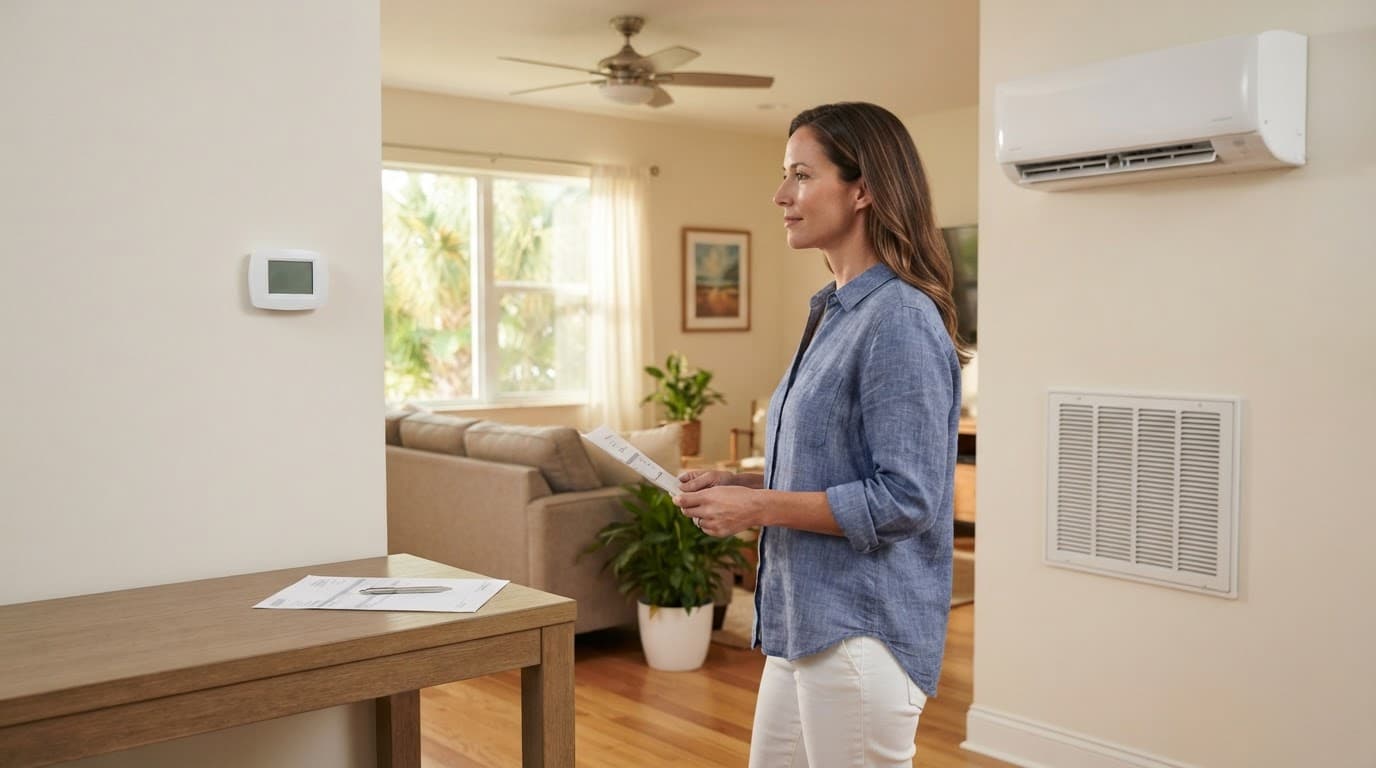
Confirm that the thermostat is set to "Cool" and that its set temperature is below the current room temperature. Replace batteries if the screen is blank. Some systems also have a short restart delay, so give it several minutes after adjusting the thermostat.
Next, look at the breaker panel. If the AC breaker is tripped and there are no safety concerns, reset it once by moving it fully to "Off," then back to "On." If it trips again, leave it off and call for service.
Don't remove the panel cover, test wiring, or replace a breaker yourself. Electrical diagnosis belongs to a qualified HVAC or electrical professional.
Look at the filter, vents, and outdoor unit
A clogged filter can choke airflow, freeze an evaporator coil, and make the system run longer without cooling well. If the filter is visibly packed with dust, replace it with the correct size and type.
Walk through the home and open supply vents that have been closed. Move furniture, curtains, and rugs away from return grilles. Outside, clear loose leaves and grass clippings around the condenser without taking off its protective panels.
If the unit still blows warm air, runs constantly, or shuts off soon after starting, stop restarting it. Those symptoms need more than a filter change.
Why an AC Fails After Repair More Than Once
An AC repair often restores a failed part, but it may not expose every problem in the system. A second breakdown doesn't automatically mean the prior repair was wrong.
The original root cause may still be present
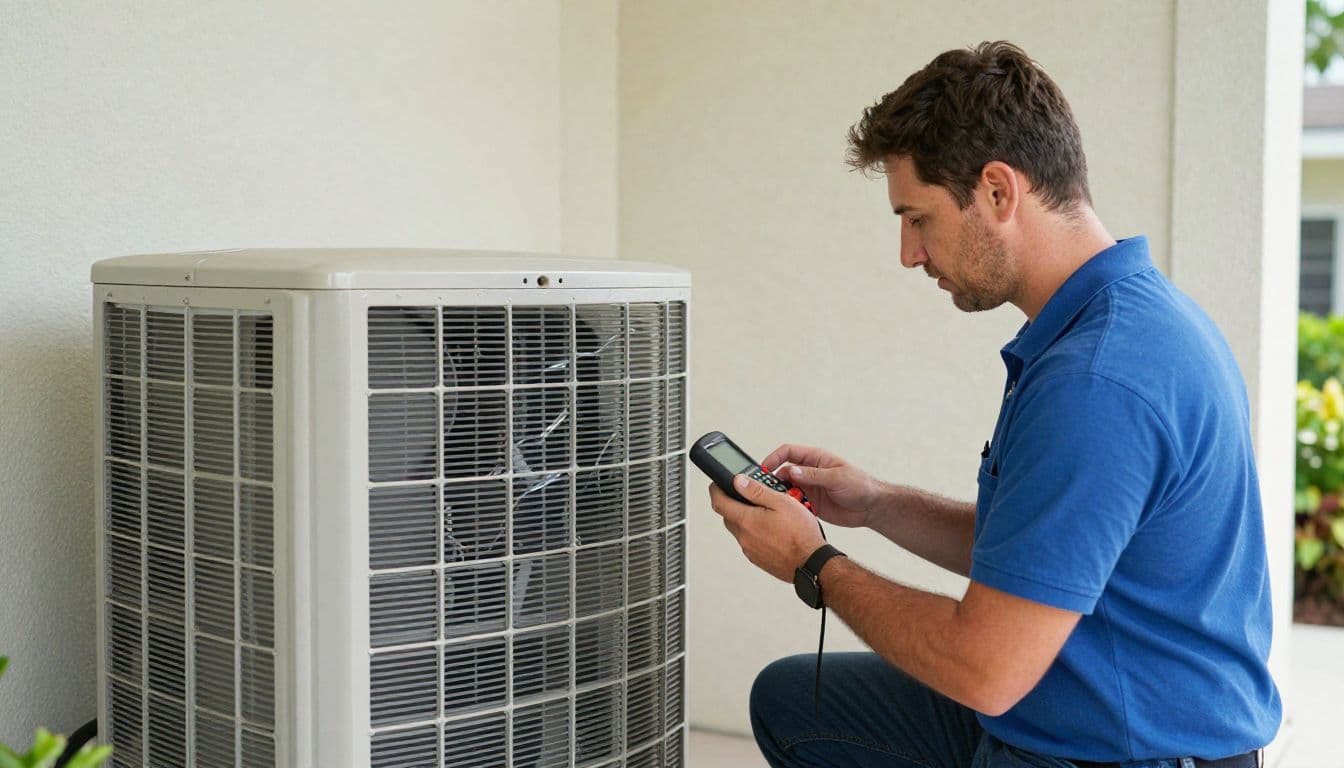
For example, a technician might replace a failed capacitor and get the outdoor unit running again. Yet a weak condenser fan motor, poor airflow, or an aging compressor can still place too much strain on the system.
Low airflow causes similar trouble. A dirty coil, blocked return, undersized ductwork, or heavily soiled filter can make the evaporator coil freeze. After the ice melts, the AC may appear to work, then fail again during the next humid afternoon.
When an AC fails after repair within hours or days, ask the technician to look beyond the replaced part. The goal is to find what caused the part to fail or what separate fault is now affecting operation.
Another part or installation issue may be involved
Older systems often develop failures in sequence. A relay, contactor, blower motor, drain safety switch, or thermostat can fail independently of the original repair. Coastal conditions in Lee County can also speed up corrosion on outdoor electrical connections and coils.
Installation details matter, too. Incorrect refrigerant charge, poor drainage, duct leaks, mismatched equipment, or loose electrical connections can cause repeat performance problems. These issues need proper testing tools and should never become a homeowner DIY project.
Give the Technician a Better Starting Point
Clear details can save time and prevent guesswork. Before the appointment, write down what the system did, when it happened, and what changed after the repair.
Record symptoms, timing, and recent work
Note whether the AC stopped cooling during the hottest part of the day, ran but blew warm air, froze up, leaked water, or made a new sound. Include the thermostat setting, outdoor weather conditions, and whether the breaker tripped.
Keep your original invoice, work order, estimates, and any photos you took from a safe distance. The invoice should identify the repaired part, date of service, and company that performed the work.
Photo by Jose Andres Pacheco Cortes
A technician also needs to know if you changed the filter, had a power outage, noticed drainage problems, or had recent construction near ducts or the outdoor unit. Small details can point to the real issue.
Request a written diagnosis before approving work
Ask the technician to explain the failed component and what testing supports that conclusion. A written diagnosis should separate the current problem from the previous repair when possible.
Useful questions include:
- Is the repaired part failing again, or has a different component failed?
- What could have caused the original part to fail?
- Does the system have airflow, refrigerant, drainage, electrical, or ductwork concerns?
- What repair options are available, and what could happen if you wait?
- Is the equipment safe to run while you decide?
A professional should be able to explain the findings in plain language. If the answer remains unclear, a second opinion is reasonable, especially before approving a major repair.
Review the Repair Warranty or Service Guarantee
Call the company that completed the original repair before paying another contractor for the same concern, unless you have an urgent safety issue. Many HVAC repairs include a parts warranty, a labor warranty, or a service guarantee, but the terms vary.
Ask what coverage applies to the repeat failure
Have your invoice ready and ask how long the warranty lasts, which part it covers, and whether labor is included. Find out whether a diagnostic fee, after-hours charge, or return visit falls outside the original agreement.
A warranty may cover a defective replacement part but not a newly failed component. It also may not cover damage from flooding, electrical surges, neglected maintenance, or an unrelated system issue. Get the answer in writing if a repair falls outside coverage.
Keep the discussion focused on facts
Avoid assuming fault before a technician tests the system. Instead, explain the timeline: when the repair occurred, when the cooling failed again, and which symptoms returned or changed.
If the diagnosis identifies a different problem, ask for an itemized estimate before authorizing more work. This gives you a clear record of costs and helps you compare repair choices fairly.
Decide When Another Repair No Longer Makes Sense
A second failure can be a warning that the system needs a larger conversation. The right choice depends on the unit's age, repair history, condition, and the cost of restoring dependable cooling.
Consider the condition of the whole system
For an AC that is 10 to 15 years old or older, repeated repairs deserve a close review. Rising repair costs, uneven temperatures, humidity problems, frequent breakdowns, and an outdated refrigerant can all affect the decision.
Replacement may also make sense if the compressor or coil has major damage. Still, don't choose based on age alone. A well-maintained system with a minor issue may have useful life left.
Use a Fort Myers AC repair or replacement guide to compare the repair cost with the system's likely needs over the next few years.
Get a complete estimate for the next step
If replacement is on the table, ask about equipment sizing, ductwork, drainage, permits, electrical updates, labor coverage, and manufacturer warranty terms. A lower upfront price can leave out work your home needs.
After the urgent issue is under control, Schedule an Estimate to discuss repair options or a properly sized replacement system for your Fort Myers or Lee County home.
A Repeat Failure Needs Answers, Not Guesswork
When your AC stops working again, protect your home first. Turn the system off for burning smells, electrical trouble, refrigerant concerns, water damage, or alarming noises, then call for qualified help.
A written diagnosis , your repair invoice, and clear warranty questions can turn a frustrating second failure into a practical decision. Reliable cooling starts with finding the actual problem, not replacing parts at random.
Recent Posts