AC Fan Setting: On vs Auto for Florida Humidity
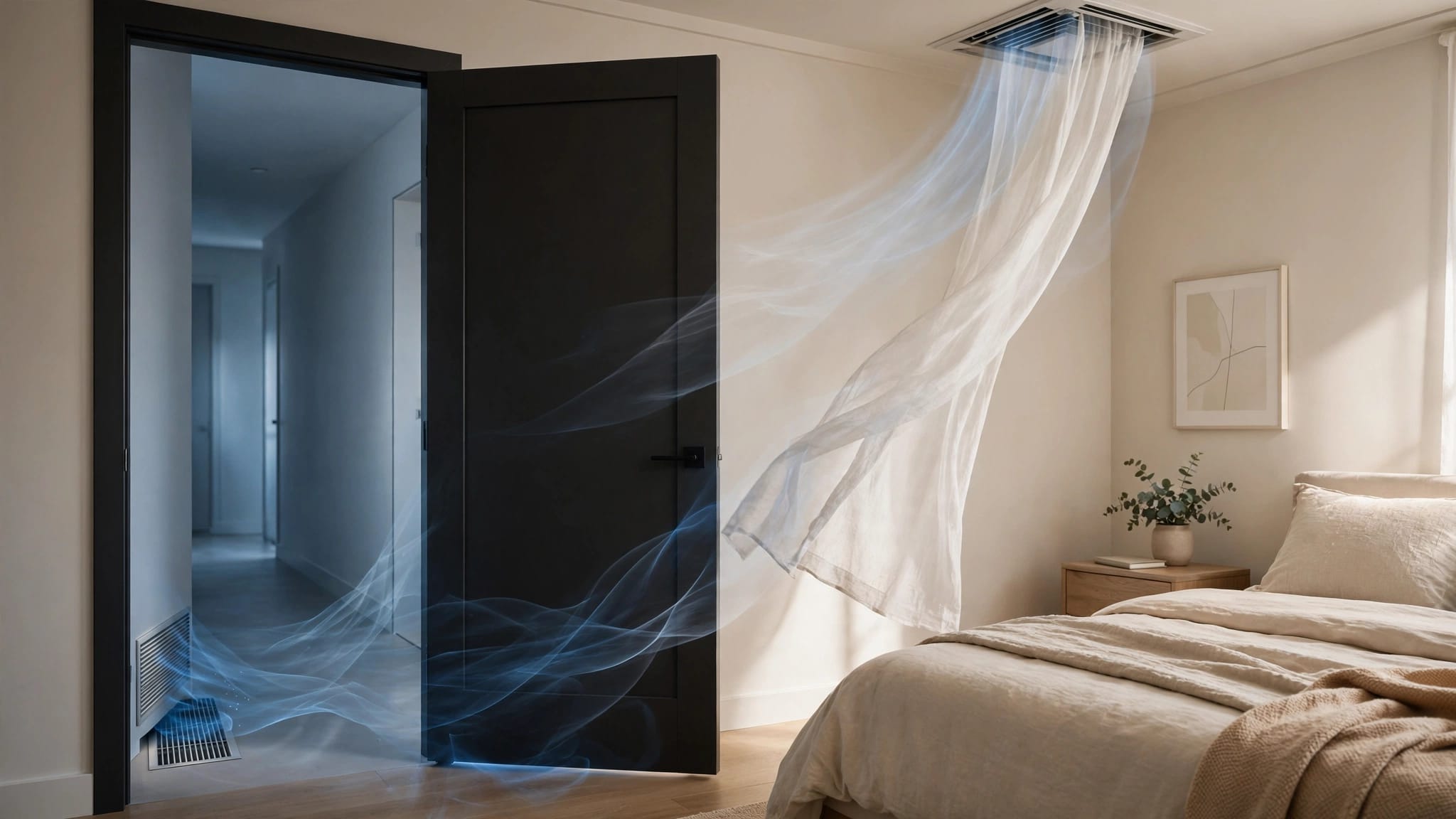
Your home can reach the thermostat's target temperature and still feel clammy. For a conventional central AC in Southwest Florida, AUTO is generally the better starting point for humidity control.
The AC fan setting controls air circulation, while the compressor drives the cooling process that removes moisture. Running the fan continuously doesn't make the system dehumidify continuously.
Start by understanding what ON and AUTO change, then check whether your equipment and indoor humidity call for a different approach.
Key Takeaways
- AUTO generally limits airflow across a wet cooling coil between cooling cycles, which can reduce moisture returning to your rooms.
- ON runs the indoor fan continuously, but fan-only operation doesn't remove moisture through the AC cooling process.
- Persistent humidity needs more than a thermostat adjustment. Airflow, cooling runtime, duct leakage, and equipment settings all deserve attention.
What the AC Fan Setting Actually Controls
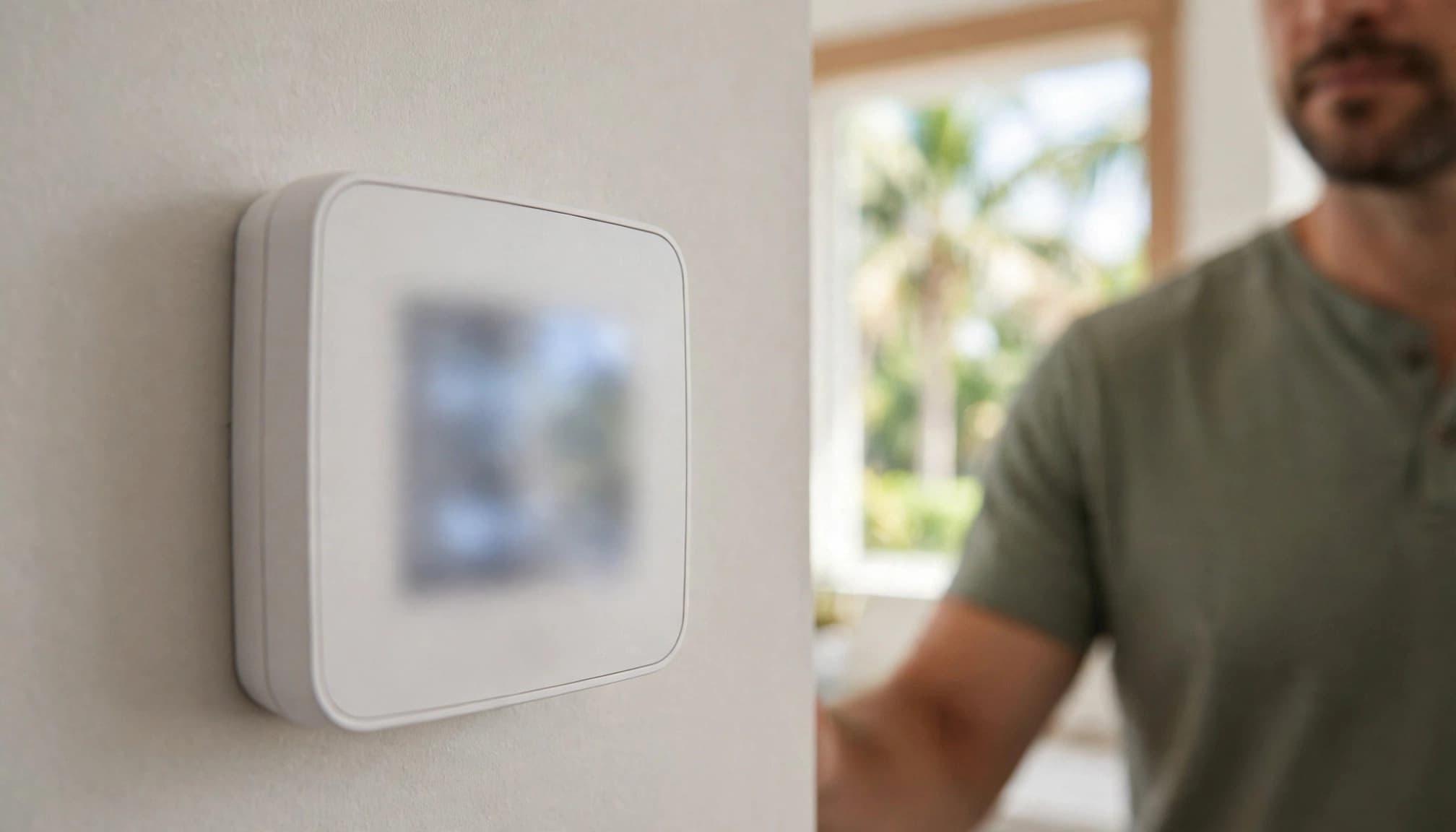
The thermostat's fan control usually manages the indoor blower inside your air handler. It doesn't directly tell the outdoor compressor to run continuously.
The blower moves air; the compressor supports cooling
The blower pushes indoor air through the system and supply ducts. Meanwhile, the compressor circulates refrigerant through the cooling circuit.
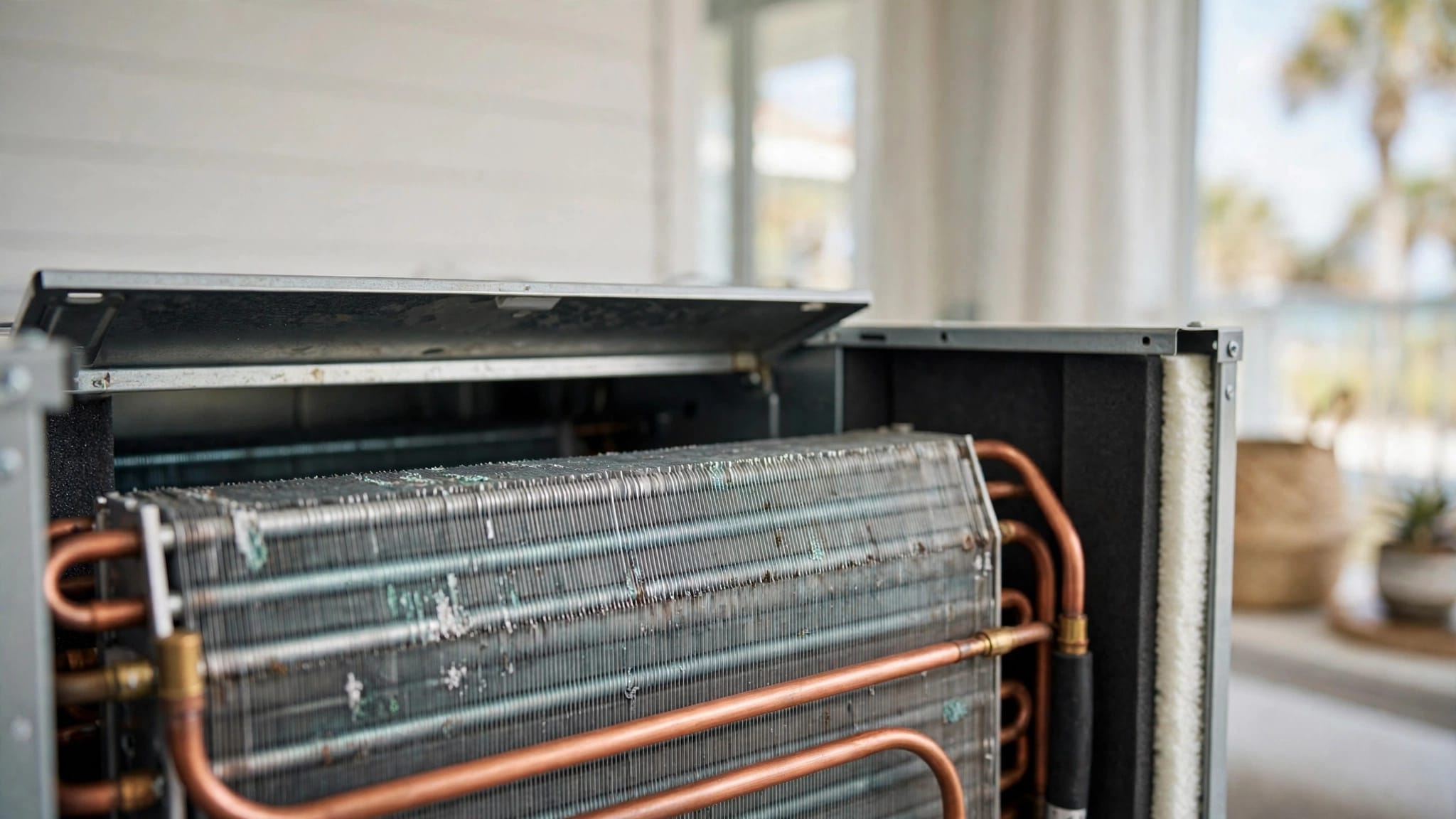
During cooling, moisture condenses on the cold indoor evaporator coil. That water collects in a drain pan and exits through the condensate drain.
The blower helps move air across that coil, but air movement alone doesn't dehumidify . Once the compressor stops, the coil gradually warms. A fan running by itself can't keep producing the cold surface needed for sustained moisture removal.
This distinction matters when your house feels sticky despite air coming through the vents.
ON and AUTO change the fan's schedule
With ON selected, the indoor blower generally runs continuously, including between cooling cycles. The compressor still responds to the thermostat's cooling demand.
With AUTO selected, the blower generally runs when the system calls for heating or cooling. Some equipment also has a programmed fan delay after the compressor stops.
Also, the fan's AUTO setting differs from a thermostat's automatic heating-and-cooling mode. Look for the setting labeled "Fan," rather than changing the system mode.
Your thermostat may also offer a circulation schedule. That setting runs the blower periodically without necessarily running the compressor.
Why AUTO Often Controls Humidity Better in Florida
AUTO gives a conventional central AC a better chance to keep collected moisture out of your living space between cooling cycles.
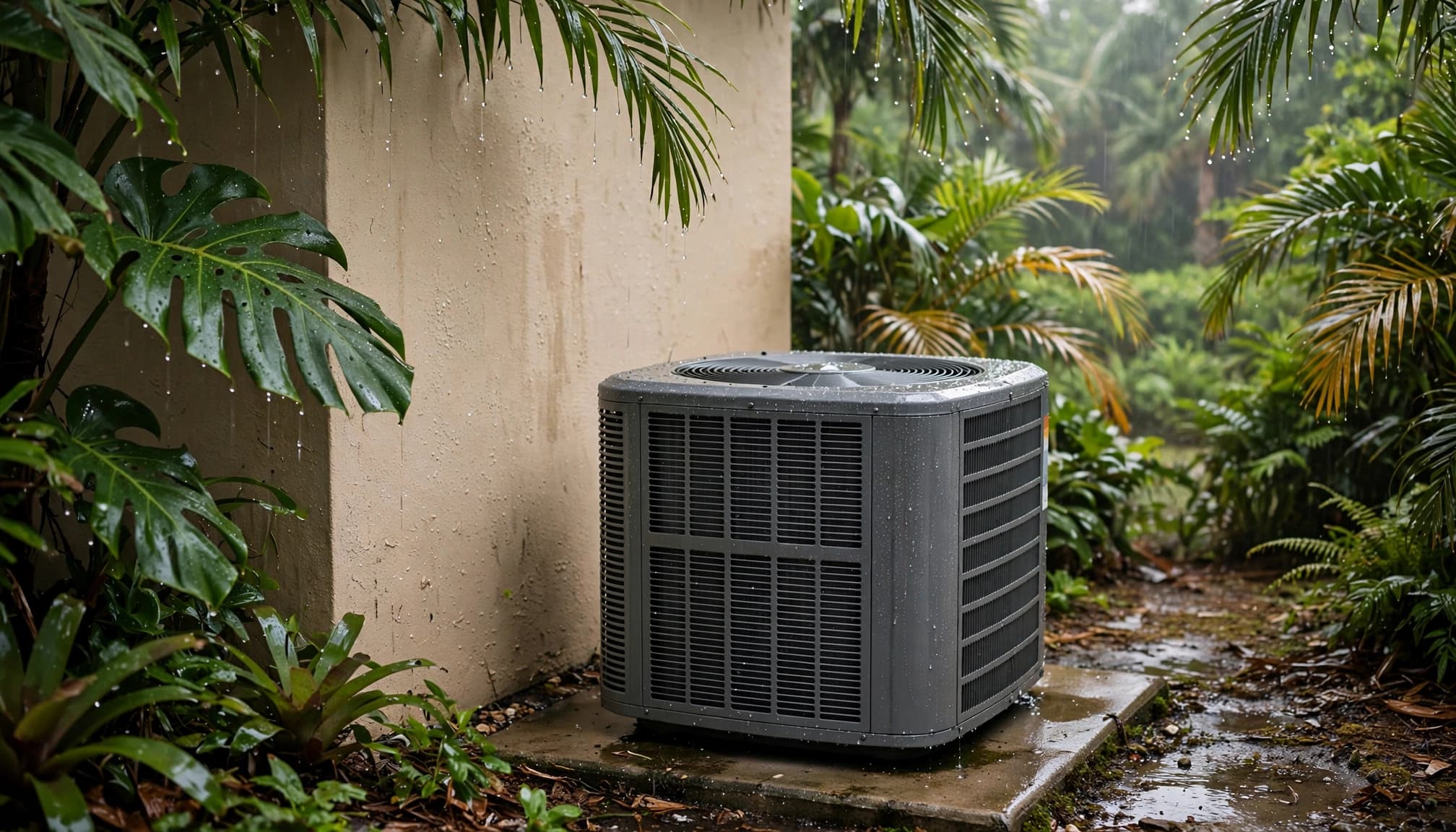
Continuous airflow can return coil moisture indoors
When a cooling cycle ends, some water remains on the evaporator coil. If the blower keeps running, air passing over that wet surface can pick up moisture through evaporation.
That moisture then returns to your rooms through the supply ducts. The amount depends on coil conditions, fan speed, runtime, and the system's controls.
AUTO limits this off-cycle airflow on many conventional systems. However, it doesn't guarantee lower humidity in every home.
Air coming from the vents doesn't prove your AC is removing moisture. The blower can run while the compressor is off.
Humid weather can outlast cooling demand
Fort Myers and Cape Coral homes often need moisture control even when they need relatively little cooling. Rainy periods and milder weather can leave outdoor air humid without keeping indoor temperatures high.
Because a conventional AC responds mainly to temperature, it may stop cooling before indoor moisture reaches a comfortable level.
ON doesn't solve that mismatch. Continuous circulation may spread air around the home, but it doesn't create additional compressor runtime.
If that describes your house, the explanation of humidity despite running the AC covers other causes worth investigating.
ON vs AUTO: What Changes Besides Humidity?
The practical differences extend beyond how the air feels.
| Factor | Fan ON | Fan AUTO |
|---|---|---|
| Indoor blower operation | Generally continuous | Generally follows heating or cooling calls |
| Moisture removal between cooling cycles | Fan alone doesn't dehumidify | Fan alone doesn't dehumidify |
| Wet-coil evaporation | Continuous airflow can encourage it | Usually limits off-cycle airflow |
| Air circulation and filtration | More ongoing circulation through the filter | Mostly occurs during system operation |
| Blower electricity use | More operating hours | Usually fewer operating hours |
For most conventional Florida systems, AUTO is the sensible default when humidity is the priority.
ON can help circulate air between rooms and move more air through the installed filter. However, filtration depends on the filter, duct layout, and airflow. Continuous operation doesn't guarantee better indoor air quality.
Electricity costs also depend on the blower motor and operating speed. There's no reliable dollar savings estimate without knowing your equipment and usage.
When System Design Changes the Recommendation
Modern equipment can manage airflow differently from a basic single-stage AC. That makes the manufacturer's instructions and installation settings important.
Variable-speed systems need compatible controls
A variable-speed indoor blower can operate at different airflow rates. However, a variable-speed blower doesn't automatically mean the compressor also has variable capacity.
Some matched systems include humidity controls that coordinate compressor operation and blower speed. Their performance depends on correct setup, suitable equipment, and the home's cooling load.
Therefore, don't assume a thermostat's ON setting improves dehumidification because the equipment is newer. Ask a technician how your system handles humidity during cooling and after each cycle.
Avoid changing installer airflow settings yourself. Incorrect airflow can impair performance or contribute to coil icing.
Circulation schedules and ventilation need review
Smart thermostats may offer minimum fan runtime or scheduled circulation. Those features can operate the blower between cooling calls even when you expect it to remain off.
Check the fan menu and any schedule before deciding whether AUTO made a difference. Also, some installations coordinate the blower with outdoor-air ventilation.
In that case, changing fan operation can affect ventilation as well as comfort. Follow the system's operating guidance rather than disabling required ventilation.
An HVAC professional can determine whether circulation settings, ventilation equipment, or fan delays are working against your humidity goals.
Check Humidity Before Chasing a Colder Temperature
A cool room isn't necessarily a dry room. Use a separate digital hygrometer if your thermostat doesn't display indoor relative humidity.
The U.S. Environmental Protection Agency recommends keeping indoor relative humidity below 60%, ideally between 30% and 50%. That's general moisture-control guidance, not a promise that switching to AUTO will reach those levels.
For a useful home check:
- Place the hygrometer away from supply vents, direct sunlight, bathrooms, and cooking areas.
- Select fan AUTO and keep your usual cooling temperature while you observe conditions.
- Record temperature and humidity at different times over several days.
- Note whether dampness follows showers, cooking, rainy weather, or long periods without cooling.
This gives a technician more useful information than "the house feels sticky." However, don't wait several days if you notice water leakage or equipment trouble.
Also, inspect the filter and keep returns and supply vents unobstructed. These safe homeowner maintenance tasks can help you check airflow without opening electrical panels or refrigerant components.
If AUTO Doesn't Help, Look Beyond the Thermostat
Persistent dampness can point to a cooling problem, an indoor moisture source, or humid air entering the house. Changing fan mode won't resolve every cause.
Cooling runtime and airflow need attention
An oversized AC may cool the house quickly and shut off before removing enough moisture. However, short cycling can also involve controls or equipment faults, so runtime alone doesn't prove oversizing.
Dirty coils, unsuitable airflow, and refrigerant problems can also impair moisture removal. A technician should evaluate these conditions rather than guessing from the thermostat setting.
For Southwest Florida homes, Valor recommends professional maintenance twice per year as a starting point. Its local AC maintenance schedule explains when equipment or household conditions may require closer attention.
Water, leakage, and moisture sources need inspection
Use bathroom exhaust fans during showers and a kitchen exhaust system that vents outdoors when cooking. Meanwhile, keep exterior doors and windows closed while cooling.
Leaky ducts or cabinet gaps can allow humid air into parts of the system. Condensate drain problems can also cause water buildup near the air handler.
If the cabinet is wet, these air handler condensation causes can help explain the symptom. An inspection is still needed to identify its source.
Call promptly for coil icing, water around the unit, repeated shutdowns, or a burning smell. Turn the system off if you notice a burning smell, and don't attempt electrical repairs.
When a Whole-House Dehumidifier Makes Sense
A dehumidifier deserves consideration when indoor humidity stays high even though the AC maintains a comfortable temperature. This can happen during mild, damp Southwest Florida weather.
Unlike conventional temperature-driven cooling, a dedicated dehumidifier responds to humidity demand. It can remove moisture when the house doesn't need much additional cooling.
However, adding equipment shouldn't replace diagnosing an AC fault or fixing a moisture source. The technician should review your home's humidity readings, ductwork, ventilation, and existing system first.
This comparison of whole-house dehumidifiers and AC explains where dedicated moisture control fits.
For persistent humidity in Fort Myers, Lee County, or nearby communities, Schedule an Estimate with Valor Heating & Cooling. A technician can evaluate whether adjustments, repairs, or dedicated dehumidification suit your home.
Start With AUTO, Then Follow the Humidity Readings
For a conventional central AC in Florida, AUTO is generally the better starting point for humidity control. It limits fan operation between cooling cycles, when airflow across a wet coil can return moisture indoors.
A home that stays clammy needs a closer look at cooling performance and moisture sources. The fan circulates air; effective moisture removal depends on the cooling process or dedicated dehumidification.
Use indoor humidity readings to judge the result, and get professional help when AUTO doesn't solve the problem.
Recent Posts