Why AC Surge Protection Matters in Southwest Florida

Valor HVAC • June 7, 2026

Share this article

A single surge can disable an air conditioner in seconds, and Southwest Florida gives your system plenty of chances to face one. Thunderstorms, lightning, utility flickers, and storm recovery all put extra stress on cooling equipment.

That matters even more here because your AC works hard for most of the year. When it fails, your home heats up fast, and the repair bill can climb just as quickly. AC surge protection is one of the simplest ways to cut that risk.

The Threat to Your Home Cooling System

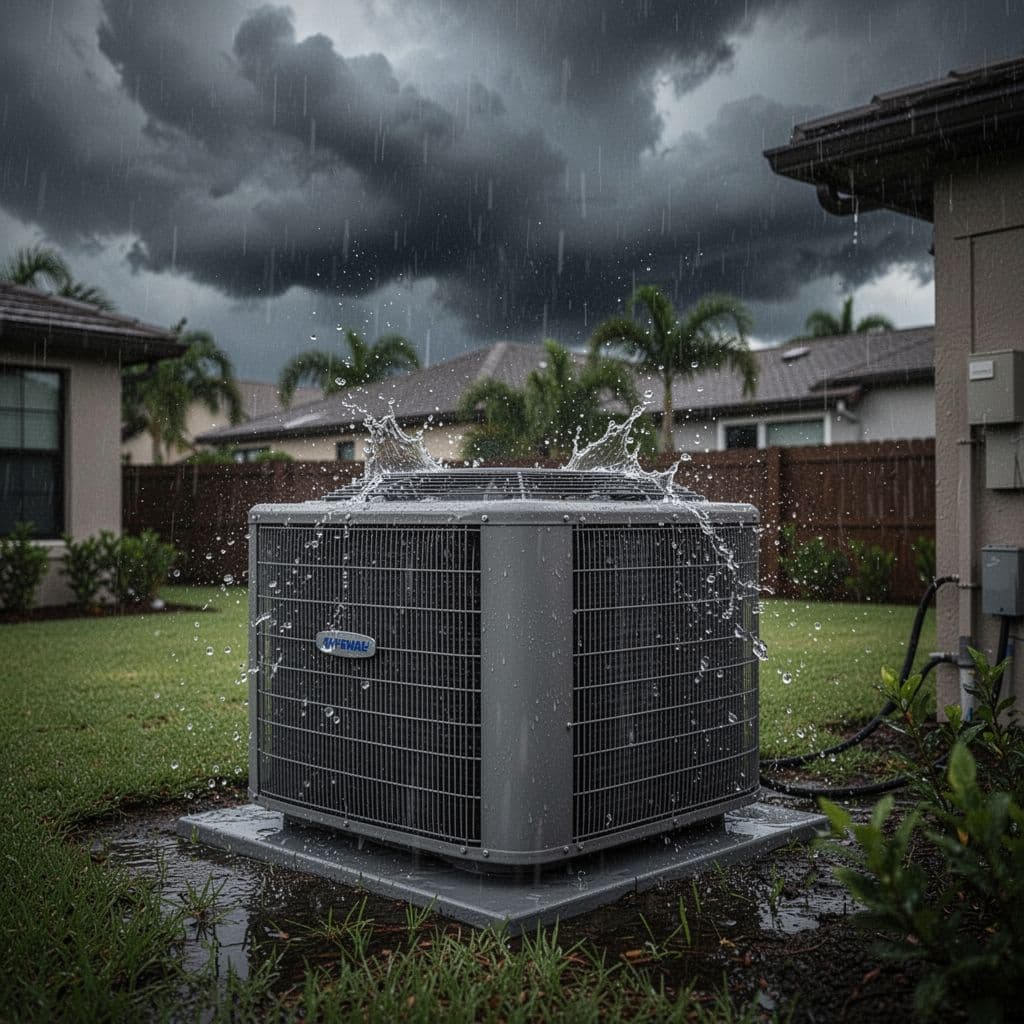
Southwest Florida weather can turn rough in a hurry. A storm may roll in with lightning, the power may blink for a second, and your AC may never recover the same way.

That kind of damage does not always look dramatic. Sometimes the system keeps running for a while, then starts acting odd days later. In other cases, the unit shuts down right away and leaves you with no cooling at all.

Your AC is vulnerable because it depends on both heavy-duty parts and sensitive electronics. The outdoor unit handles a lot of electrical load, and the indoor system depends on control signals that do not like sudden voltage spikes. A breaker can trip, but that does not mean every surge gets stopped before it reaches the equipment.

Regular HVAC maintenance in Fort Myers can catch worn parts and loose connections before storm season gets busy. Still, maintenance and surge protection solve different problems, and you need both.

Which AC Parts Take the Hardest Hit

A surge does not have to destroy the whole system to create a costly repair. Often, it hits one weak point first, and that failure can spread.

AC part What a surge can do What you may notice
Capacitor Overheat or fail from the voltage spike The fan may not start, or the unit may struggle to kick on
Contactor Pit the contacts or weld them shut The system may click oddly, stick on, or refuse to start
Control board Burn delicate circuits The thermostat may act dead, or the unit may stop responding
Compressor Stress the start components or damage internal windings Warm air, hard starts, or complete system failure
Thermostat and low-voltage controls Disrupt communication between the thermostat and the system Short cycling, blank screens, or incorrect temperature readings

When one of these parts fails, the rest of the system can keep trying to run. That often means more wear, more heat, and a bigger repair later.

A surge does not need to be huge to cause damage. A brief spike can still weaken parts enough to shorten their life.

Capacitors and contactors are common first casualties because they work hard every time the system starts. Control boards are even more sensitive, since they handle the signals that tell the system what to do. Compressors are the most expensive concern, because a damaged compressor can turn a repair into a major replacement.

Why Southwest Florida Homes Face Extra Risk

This region puts your cooling system under a different kind of pressure. It is not only the heat, although that alone is enough to keep the AC working overtime.

Summer storms are a big part of the problem. Lightning strikes can send a surge through a home's electrical system, even when the storm never hits the house directly. Power can also flicker during grid switching, equipment faults, or outages after heavy weather.

Then there is the long cooling season. In Southwest Florida, the AC is not a short-term comfort item. It runs for months at a time, and that means every electrical hit lands on equipment that is already tired.

Common local surge sources include:

  • Afternoon thunderstorms that bring lightning and quick voltage changes.
  • Utility outages and restorations after strong wind or rain.
  • Brownouts during peak summer demand.
  • Generator transfer issues or power recovery after a storm.

When a system is already running near capacity, even a small electrical problem can create a bigger one. A weak capacitor may fail sooner. A stressed contactor may stick. A control board that was already aging may burn out after the next power flicker.

That is why surge protection makes sense here in a way it might not in a milder climate. Your AC is not just another appliance. It is the system that keeps the house livable when outdoor temperatures stay high well into the night.

What AC Surge Protection Actually Does

AC surge protection gives excess voltage a safer path away from your equipment. Instead of letting the spike travel straight into the condenser, the protector reacts fast and limits the hit.

Most homes benefit from two layers of protection. A whole-home surge protector helps guard the electrical panel and the circuits in the house. A dedicated AC surge protector adds another shield for the outdoor unit and its sensitive components.

That setup matters because not every surge starts in the same place. Some come from lightning. Some come from the utility side. Others come from power returning after an outage. One device alone may not cover every case.

A good AC surge protector is small, but the savings can be large. It can help you avoid a dead control board, a failed capacitor, or compressor damage that leads to days without cooling. It also helps reduce the odds of an emergency call during the hottest part of the season.

If you are not sure what your home needs, Schedule an Estimate and have a technician look at the setup before storm season puts it to the test.

Signs Your System May Already Be Strained

Sometimes surge damage shows up right away. Other times it hides inside the system until the next hot day exposes it.

Watch for these warning signs:

  • The AC trips breakers after a storm or power flicker.
  • The thermostat screen goes blank or resets on its own.
  • The outdoor unit hums, then shuts off without cooling.
  • The fan runs, but the air never gets cold.
  • The system starts and stops too often.

These signs do not prove surge damage by themselves. They do point to a system that needs attention, especially if the problem started after bad weather.

A professional heating and air conditioning inspection can help find hidden damage before it turns into a full breakdown. That matters in Southwest Florida, where a few hours without cooling can feel much longer than it sounds.

Conclusion

In Southwest Florida, surge protection is not an extra comfort feature. It is a smart way to protect the parts that keep your home cool when the weather gets rough.

Your AC depends on fragile electronics, expensive components, and steady power. A small surge can take out a capacitor, damage a control board, or leave you with a compressor problem at the worst possible time.

A professional can check your current setup and tell you whether your home needs AC-only protection, whole-home protection, or both. Schedule an Estimate and get ahead of the next storm before your system pays the price.

Recent Posts

By Valor HVAC June 10, 2026
The 2025 refrigerant changes did not make every old air conditioner obsolete. They did change what goes into new systems, and that affects repair choices, replacement quotes, and long-term service plans for Fort Myers homes. If your AC is still running, you probably do not nee...
By Valor HVAC June 9, 2026
Fort Myers heat doesn't give your AC a break, and that matters when you're deciding whether a variable-speed system is worth the upgrade. If your current unit cools unevenly, leaves rooms sticky, or sounds like a truck starting up, the answer is rarely simple. A variable-speed...
By Valor HVAC June 8, 2026
Fort Myers homes spend most of the year asking one thing from HVAC systems, stay cool and dry. That makes the heat pump vs central AC choice more than a name on a quote. The two systems can look similar, but they don't always fit a Florida home the same way. Because Southwest...
By Valor HVAC June 6, 2026
The wrong AC size shows up fast in Fort Myers. Rooms feel sticky, bills rise, and the system may short-cycle or run forever. A quick square-foot estimate can point you in the right direction, but it cannot tell the full story. In Southwest Florida, heat, humidity, sun exposure...
By Valor HVAC June 5, 2026
An AC refrigerant leak in Fort Myers can hide in plain sight. Your system may still run, but it stops cooling the house the way it should. That matters fast in Southwest Florida. Long cooling seasons, sticky humidity, and heavy daily use put extra stress on your system, so a s...
By Valor HVAC June 4, 2026
A high AC rating looks good on paper, but it does not tell the whole story for a Fort Myers home. When your system has to fight heat, humidity, and long cooling seasons, the number on the label matters in a different way. SEER2 is the rating that now matters for new equipment....
By Valor HVAC June 3, 2026
When an AC capacitor starts to fail, your system usually gives warning signs before it quits. In Fort Myers, those warnings can show up faster because the heat never gives your cooling system much of a break. You may hear clicking, humming, or a weak startup at the outdoor uni...
By Valor HVAC June 2, 2026
Your AC can run all day and still leave one room warm, one room sticky, and the whole house a little more tired than it should be. When that happens, the problem is often hidden in the ductwork. AC duct sealing matters because leaky ducts waste cool air, pull in hot attic air,...
By Valor HVAC June 1, 2026
When one AC replacement quote looks cheap and another looks high, the difference usually hides in the details. In Fort Myers, those details matter because your system works through long cooling seasons, heavy humidity, salt air, and sudden storms. A quote that looks simple on...
By Valor HVAC May 31, 2026
Why does 76 feel fine some days and muggy on others? In Fort Myers, the answer usually has more to do with humidity, sun, and airflow than with the number on the thermostat. The right thermostat settings Fort Myers homes need in summer are usually a range, not a single magic n...
Show More