
Why Florida AC Condensate Drain Pans Crack
A small crack under your indoor AC unit can become a stained ceiling, wet insulation, or damaged flooring. In Southwest Florida, a condensate drain pan handles a steady flow of moisture for much of the year, so small drainage problems can build quickly.
Florida heat and humidity make your air conditioner work hard. Knowing what causes pan damage helps you spot a leak before it reaches the rooms below.
Why Florida Conditions Wear Down Drain Pans
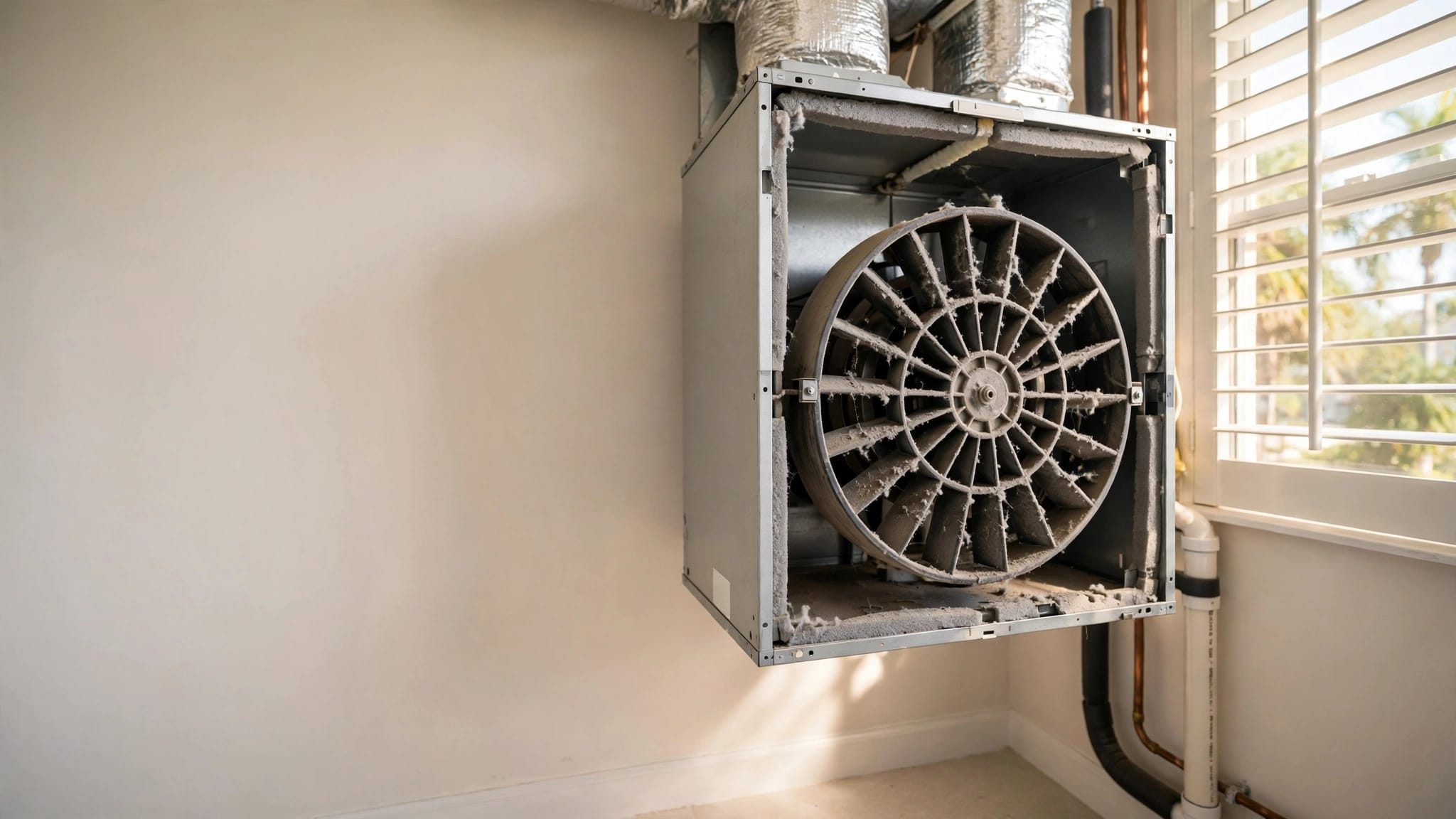
Your AC removes humidity as it cools the air. That moisture collects on the evaporator coil and drips into a pan before leaving through a drain line. Since Florida systems run often, the drainage components spend far more time wet than they might in a milder climate.
Standing water speeds up corrosion
A clear drain line lets water leave the pan promptly. However, algae, dust, pet hair, and sludge can slow or block that path. Water then sits in the pan, especially after long cooling cycles.
Metal pans may rust and eventually develop pinholes. Plastic pans can become brittle with age and crack under stress. A pan may also fail at a seam or around a drain connection.
A clogged line doesn't always mean the pan is cracked, but it often creates the conditions that expose a weak spot. If water appears near the unit, review common Fort Myers AC water leak causes before assuming the pan is the only issue.
Heat, age, and poor support add stress
Attic installations face intense Florida heat. Over time, repeated expansion and contraction can weaken an older plastic auxiliary pan. A metal pan can corrode where its protective coating has worn away.
Support matters, too. If the air handler shifts, vibrates, or rests unevenly, it can flex the pan below it. A pan isn't built to carry the equipment's weight. Improper installation or a damaged support can turn a hairline crack into a larger leak.
Primary and Secondary Condensate Drain Pan Differences
The term "drain pan" can describe two separate parts. Their jobs are connected, but they protect your home in different ways.
The primary pan carries normal condensation
The primary pan sits directly beneath the evaporator coil inside the indoor air handler. Under normal operation, it collects condensation and sends it through the main drain line.
Because this pan is inside the equipment cabinet, homeowners shouldn't attempt to remove or repair it. Accessing it may involve electrical parts, fragile coil components, or drain connections that need proper testing afterward.
The secondary pan catches overflow
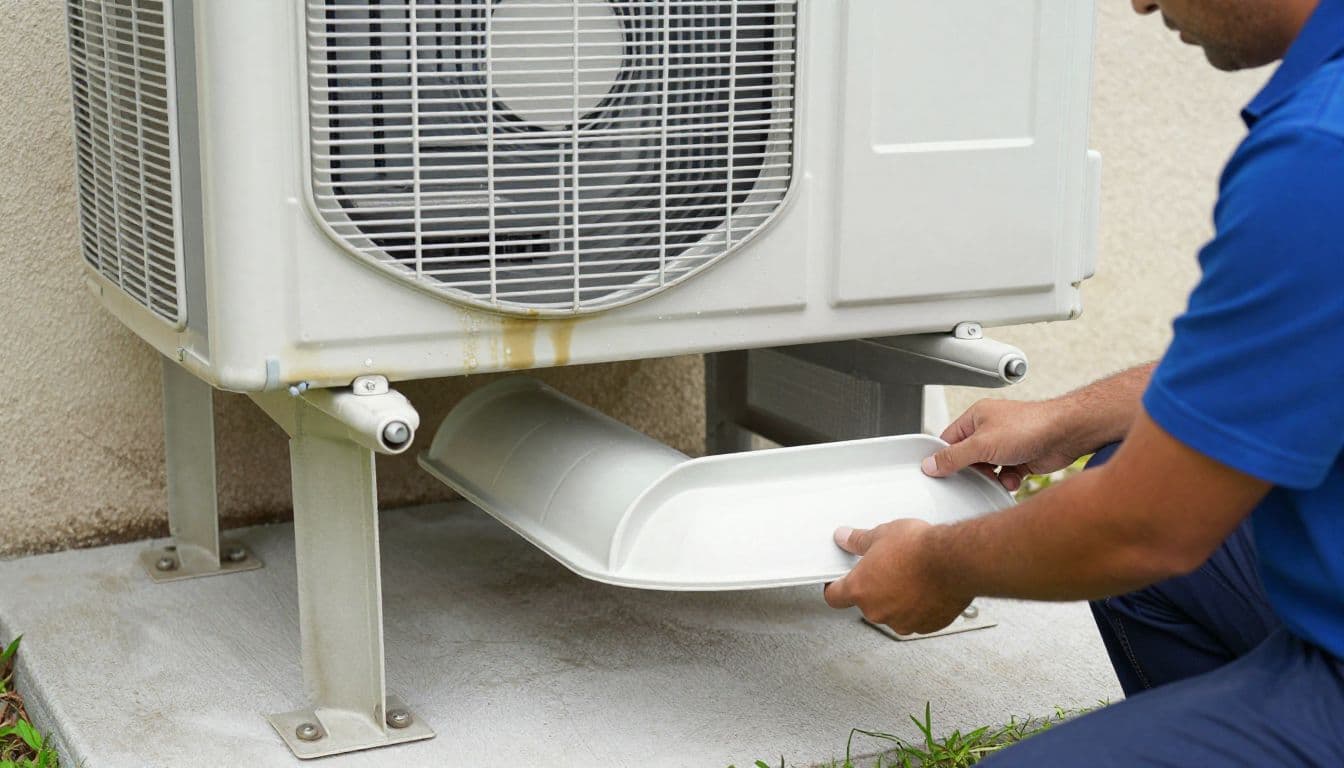
A secondary, or auxiliary, pan usually sits beneath the entire air handler. It acts as backup if the primary pan or drain line overflows. Homes with attic air handlers often rely on this pan to keep water from dripping onto the ceiling.
Water in a secondary pan means the normal drainage path needs attention. The backup pan has done its job, but it should not hold water for long.
Some secondary pans drain outdoors. Others work with a float switch that shuts the system off when water rises. If your AC stops and the pan contains water, don't bypass the switch. It may be preventing ceiling damage.
Warning Signs of a Cracked AC Drain Pan
A cracked pan can leak slowly, so the first sign may appear far from the air handler. Check around your indoor unit after periods of heavy AC use, especially if it is in an attic, closet, or garage.
Look for stains, dampness, and musty odors
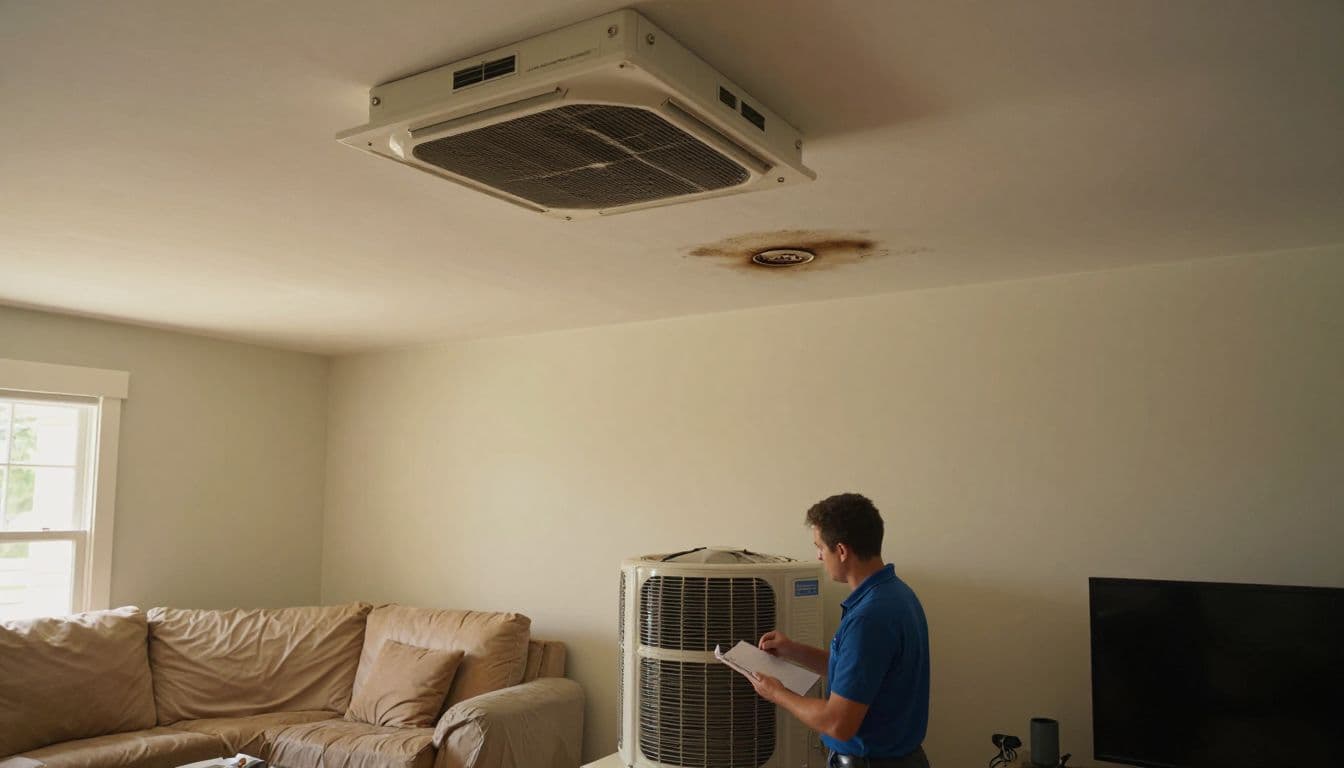
Yellow or brown ceiling marks below an attic unit deserve attention. So do damp drywall, bubbling paint, soft spots, or a musty smell near the air handler. These signs can come from roof leaks as well, so a technician needs to identify the source.
Near the equipment, watch for standing water, rust streaks, wet insulation, or a fresh drip under the cabinet. A cracked condensate drain pan may leak only while the system runs, which makes the timing of the problem useful information.
Don't ignore recurring shutdowns
A float switch may shut down the AC when it detects excess water. Repeated shutdowns, a drain outlet that stays dry during cooling, or water returning after a line clearing can point to a deeper drainage issue.
A technician can inspect the pan, test the drain path, check the float switch, and look for airflow or coil problems that create excess water. For persistent leaks or shutdowns, HVAC repair and inspection can identify the source without guesswork.
Safe Steps Homeowners Can Take
You can spot early warning signs without opening the air handler or handling AC components. Keep the area around the unit clear, dry, and easy to inspect. A flashlight is enough for a quick visual check.
Use simple maintenance habits
Replace a dirty filter with the correct size and type. Restricted airflow can contribute to coil icing and extra water when the ice melts. Also, look at the accessible drain outlet while the AC runs. Normal drainage often produces visible discharge.
Avoid bleach, harsh drain cleaners, wire hangers, and improvised tools. Those products can damage parts, create fumes, or push debris farther into the line. A professional can safely clear the line while checking the pan's condition and slope.
Regular HVAC maintenance in Fort Myers gives the entire condensate system a closer inspection before a small leak spreads.
Act quickly when water reaches the ceiling
If water is actively dripping from a ceiling or pooling around the air handler, turn the thermostat off. Then keep clear of wet electrical equipment and call for service. Don't climb into an attic near wet wiring or try to patch a pan yourself.
For a suspected crack, overflow, or recurring drain issue, Schedule an Estimate with a Valor Heating & Cooling technician.
Final Thoughts
Florida humidity puts constant demand on every AC drainage component. A clear line, a sound condensate drain pan , and a working float switch help keep moisture where it belongs.
Ceiling stains and standing water are early warnings, not cosmetic problems. Addressing them promptly protects your air conditioner and your home.
Recent Posts