
Why Your AC Is Leaking Water in Fort Myers
An AC that sweats a little is normal. An AC leaking water onto the floor, dripping through the ceiling, or shutting off over and over is not.
In Fort Myers, that problem shows up more often than many homeowners expect. Hot afternoons, high humidity, and long cooling cycles put steady stress on the drain system, coils, and filter.
If you're seeing puddles, stains, or a musty smell, the leak may be small now. The good news is that most causes are easy to spot once you know what to look for.
Why Fort Myers humidity makes AC leaks more common
Southwest Florida air carries a lot of moisture. Your AC pulls that moisture out as it cools the house, which means water is part of normal operation.
That water should move into a drain pan and then out through a drain line. When the system is clean and draining well, you may never notice it. When the line slows down, the pan cracks, or the coil freezes and thaws, the water has nowhere to go.
Fort Myers homes also run their systems hard for much of the year. Long run times mean more condensation, more wear, and more chances for a small issue to turn into a wet ceiling or a puddle by the air handler.
The drain system is a small pipe with a big job. Dust, algae, insulation bits, and a little slope problem can stop it from doing that job well.
Signs your AC water leak needs attention
The first clue is often not a flood. It's a damp patch under the indoor unit or a stain near a vent.
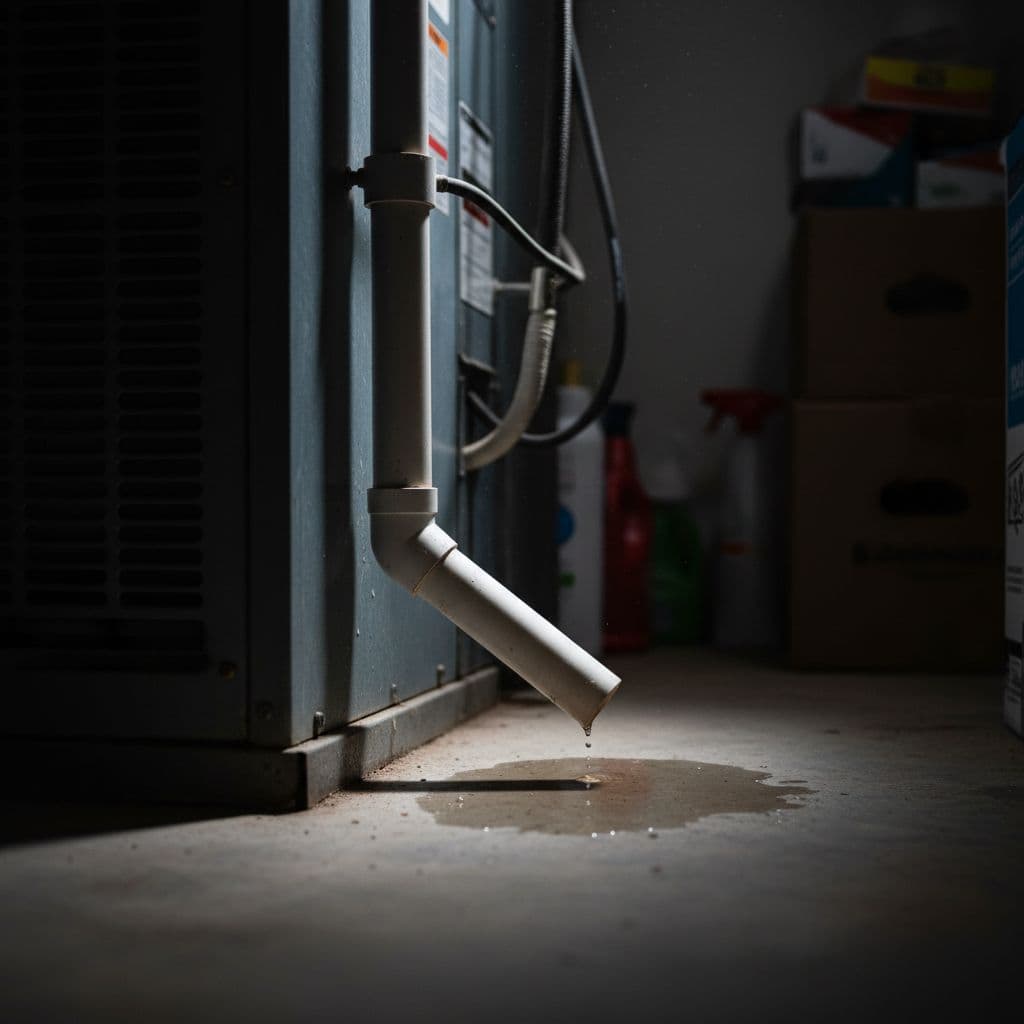
A little moisture on the coil is normal. Water pooling under the unit is a warning sign .
Watch for these signs:
- Puddles near the indoor unit
- Water stains on ceilings or walls
- A musty smell
- Weak cooling or warm rooms
- Repeated shutdowns or short cycles
A leak can also show up in a strange place. Water may travel along framing or insulation before it appears on drywall. That is why a ceiling stain can point to an AC problem even when the unit sits in the attic.
If the area smells damp or stale, don't ignore it. Moisture and dust can mix fast in a warm closet, attic, or utility room. That's when a small leak starts to look like a bigger home repair.
What usually causes AC water to show up
Several common issues can lead to AC leaking water. Some are simple. Some point to a deeper problem inside the system.
A clogged drain line is one of the most common causes. Algae, dirt, and dust can build up inside the line until water backs up into the pan.
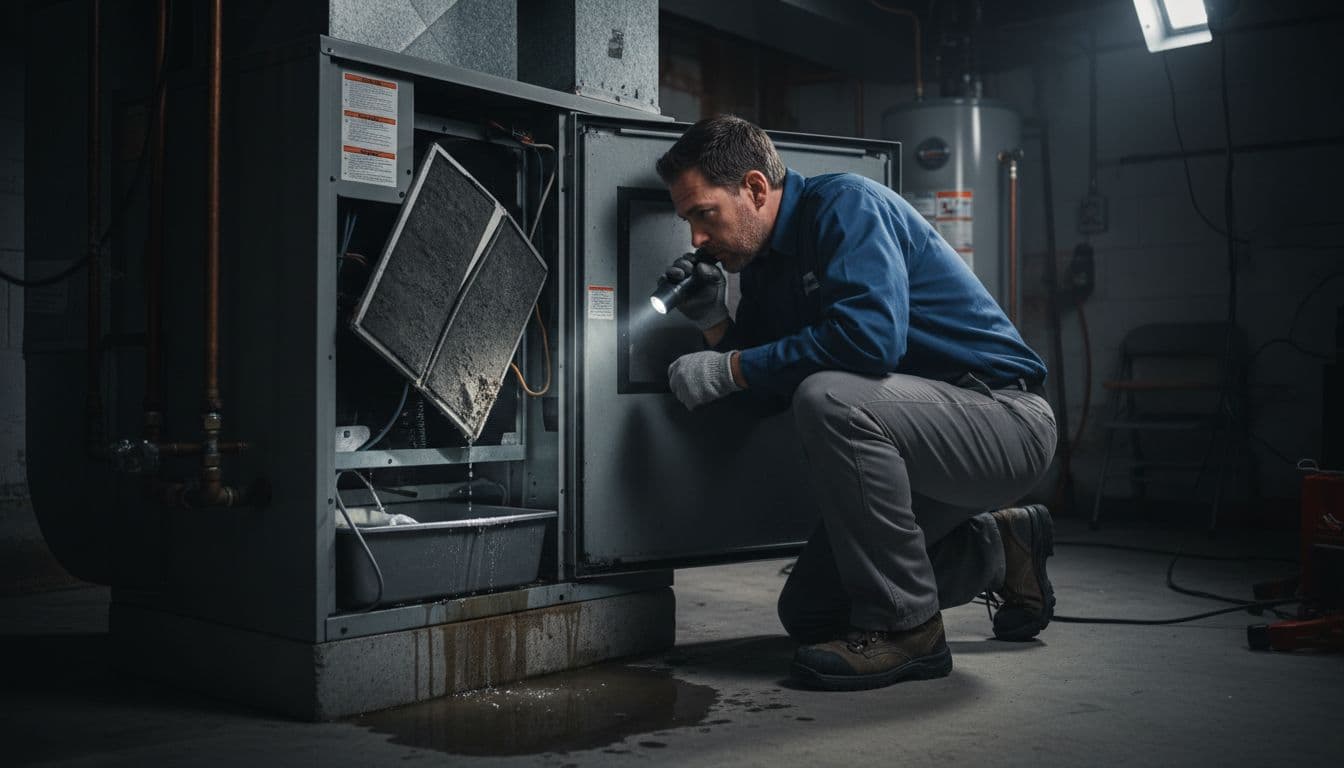
A dirty air filter can cause another problem. When airflow drops, the evaporator coil can get too cold and freeze. Later, that ice melts and water spills where it shouldn't.
A cracked or rusted drain pan can also leak. This is more common in older systems or units that have sat with standing water for a while.
A loose drain connection or failed condensate pump can send water the wrong way, especially if the indoor unit sits in an attic or upstairs closet.
Low refrigerant or poor airflow can make the coil freeze as well. When the ice melts, the water may overflow the drain pan before it can escape.
When the leak returns after a filter change or the coil has iced up, professional HVAC repair and inspection is the right next step. A tech can clear the drain, test the pan, check airflow, and find the cause before water damage spreads.
What you can safely check before calling for help
A homeowner can do a few simple checks without opening the system or touching electrical parts.
- Turn the cooling off if you see pooling water, ice on the lines, or repeated shutdowns.
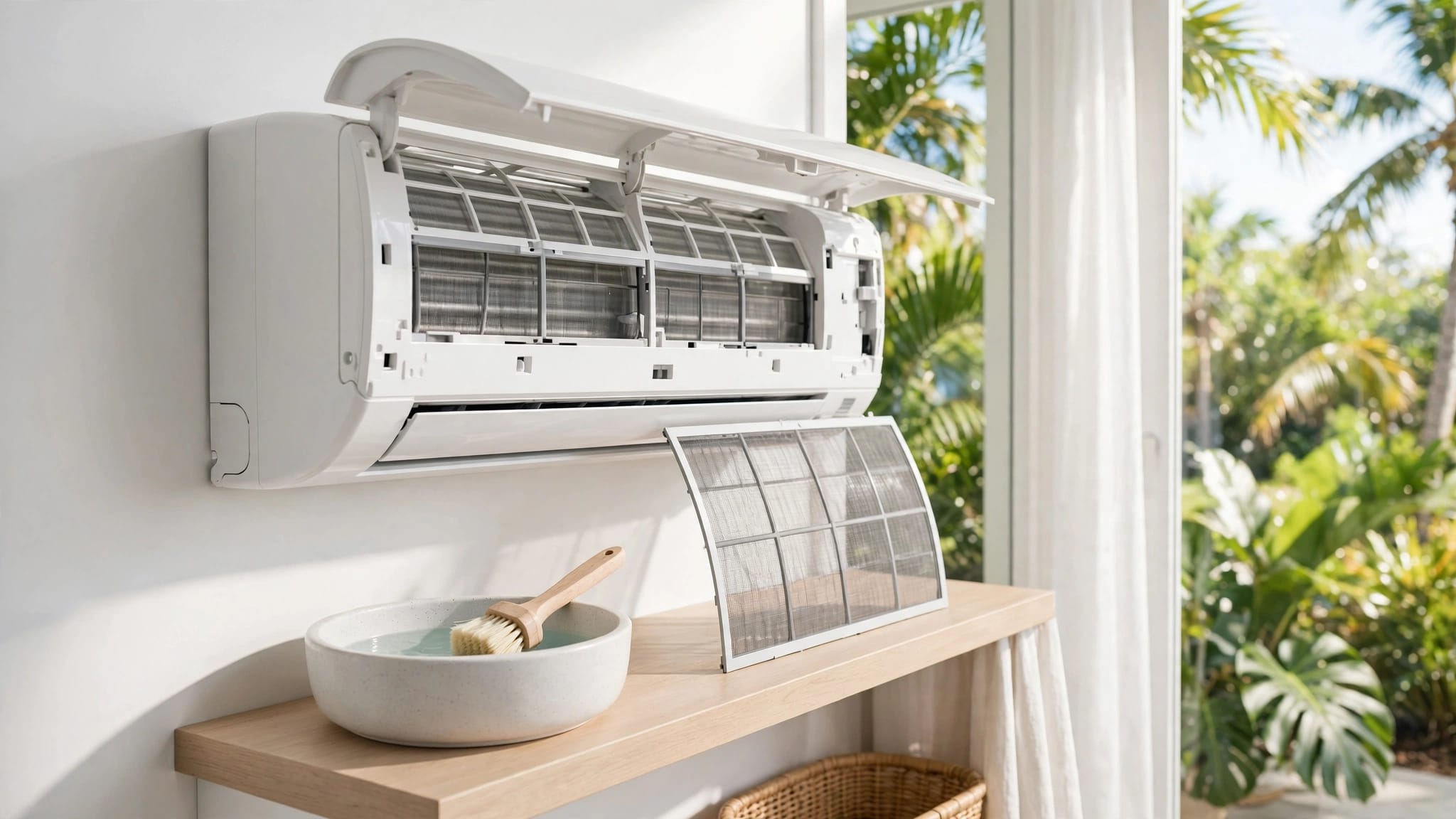
- Replace the air filter if it looks dirty or clogged.
- Look at the area around the indoor unit for a blocked drain line, loose tubing, or obvious overflow.
- Dry the floor or place towels under the leak so the water doesn't spread.
Do not poke deep into the drain line with wire or sharp tools. That can crack the pipe or push the clog farther in. Skip chemical cleaners unless a technician tells you to use them.
If the unit has ice on it, leave it off until it thaws. Running it harder won't fix the leak. It usually makes the mess worse.
If water is reaching drywall, insulation, or flooring, the AC problem is already bigger than the leak you can see.
If the system keeps leaking after those basic checks, Schedule an Estimate so the issue doesn't turn into ceiling damage or a mold problem.
How to keep AC leaks from coming back
Prevention is much easier than cleanup. In Fort Myers, that matters because the cooling system works so often.
Regular HVAC maintenance in Fort Myers helps because a technician can flush the drain line, clean the coil, and spot worn parts before they fail. That kind of service is especially useful before the hottest stretch of the year, when your AC has to run the longest.
Filter changes matter too. A dirty filter restricts airflow and raises the risk of coil freeze-up. If you have pets, recent construction, or a home that gathers dust fast, check the filter more often.
Keep the area around the indoor unit clear as well. Boxes, stored items, and loose insulation can block access to the drain line and make it harder to notice a slow leak. If your system sits in a closet or attic, a quick visual check every few weeks can save you a lot of trouble later.
It also helps to pay attention to patterns. A leak after a long, muggy afternoon may point to drainage trouble. A leak that follows weak airflow may point to a filter or coil issue. A leak that comes back after drying the floor is a sign the source is still active.
Conclusion
A little condensation is part of how your AC works. Pooling water, ceiling stains, musty smells, weak cooling, and repeat shutdowns are not .
In Fort Myers, the heat and humidity put extra strain on the drain system, so small AC problems can show up fast. Catch them early, start with the filter and drain area, and get help when the leak keeps coming back.
The sooner you deal with it, the easier it is to protect your home, your comfort, and the equipment that keeps both in check.
Recent Posts