Why Your AC Freezes Up in Southwest Florida

Valor HVAC • May 12, 2026

Share this article

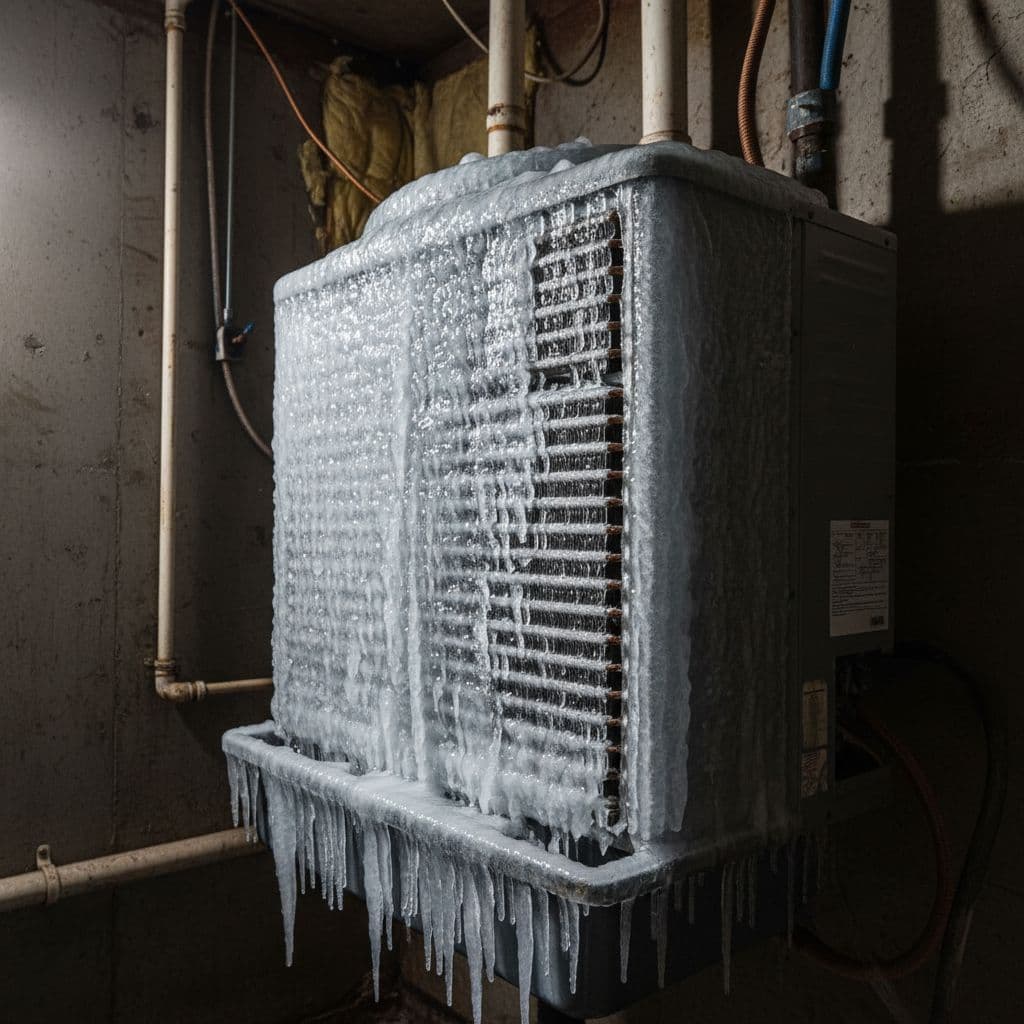
Ice on your AC in Southwest Florida is a warning sign, and it usually shows up when you need cooling the most. When the indoor coil freezes, the system is dealing with airflow trouble, a dirty part, or a refrigerant issue. The ice is the symptom, not the root problem.

Heat, humidity, salt air, and long run times all put extra strain on local systems. A small issue can turn into a frozen coil faster here than in milder climates.

Knowing what to look for can keep a small problem from turning into a bigger repair.

Why AC Freeze-Ups Happen So Often in Southwest Florida

In Southwest Florida, air conditioners work hard for most of the year. They don't get much of a break, and that constant demand matters. When a system runs for long stretches, weak airflow or dirty parts show up faster.

Humidity adds another layer of stress. Your AC does more than cool the air, it also pulls moisture out of it. If the system already has limited airflow, the coil can get too cold and start collecting ice.

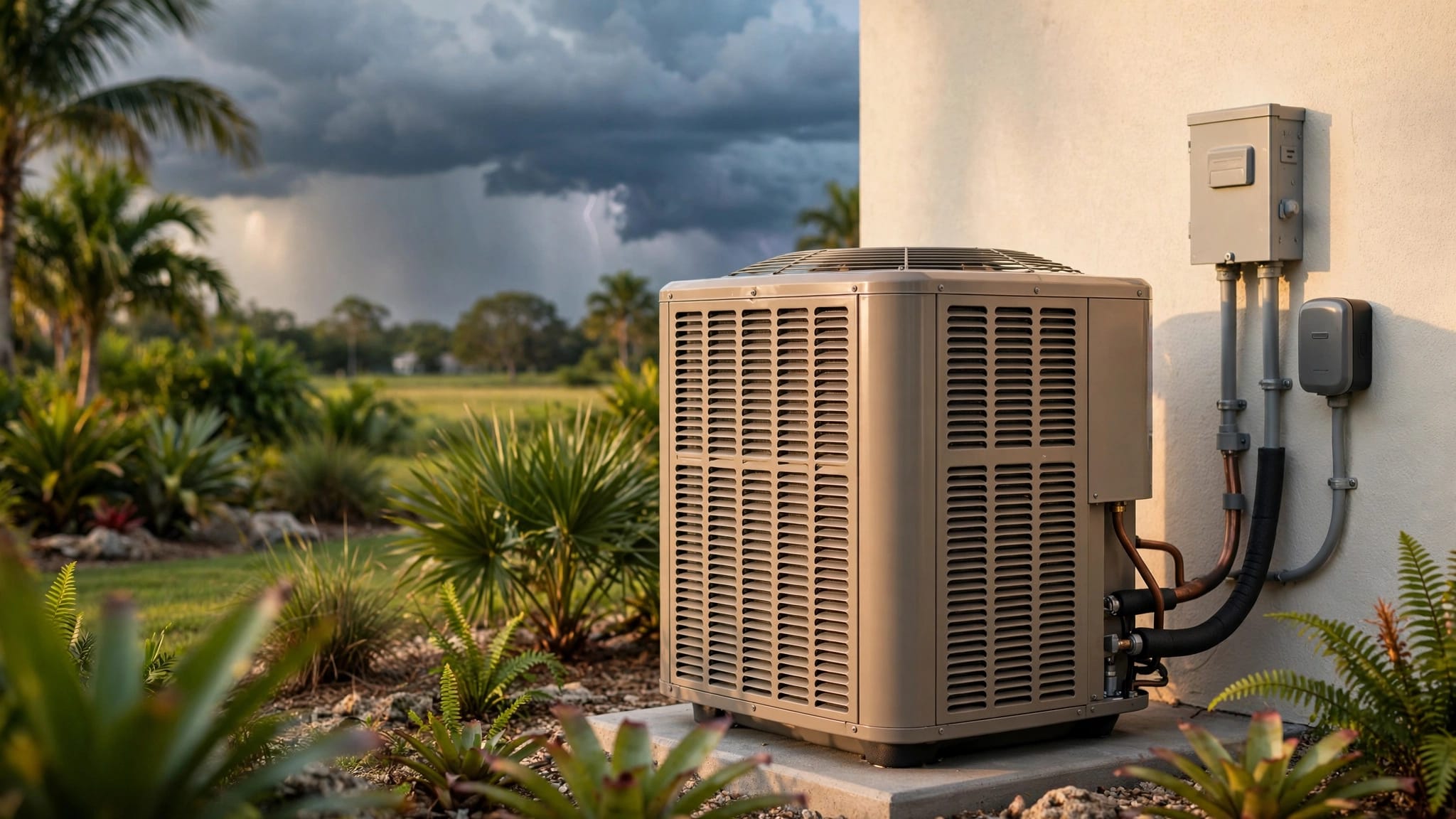
Salt air matters too, even if you live a few miles inland. It can wear on outdoor components and make corrosion worse over time. That extra wear can shorten the life of motors, coils, and electrical parts.

Ice on the unit is a signal, not the problem itself. If the freeze-up keeps coming back, something underneath still needs attention.

Because of the local climate, homeowners often notice the issue in the middle of a hot afternoon. The house feels warmer, the vents weaken, and the air handler may start looking like a block of ice. That is a sign to shut the system down and look at the basics before the damage spreads.

The Most Common Causes Behind the Ice

Most freeze-ups start with a few familiar problems. Some are easy to check safely. Others need a trained technician.

A quick look can help you narrow it down.

What you notice What it often points to Safe first move
Weak airflow from vents Dirty filter or blocked return Replace the filter and clear the return
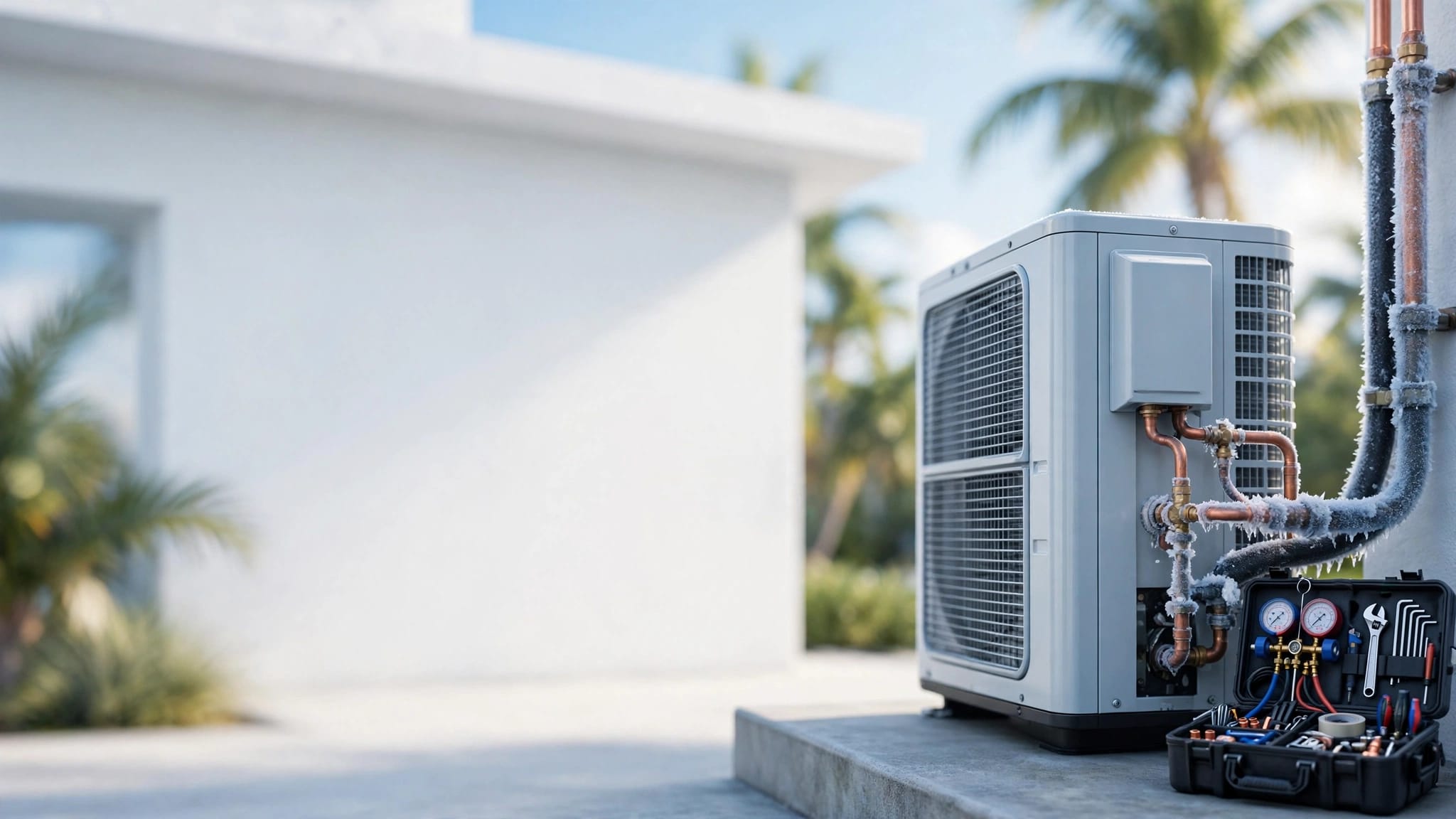
Ice on the indoor coil or copper line Restricted airflow or coil trouble Turn the system off and let it thaw
Ice returns after thawing Blower, refrigerant, or coil issue Call for service
Warm rooms and long run times System strain or low cooling performance Check the filter, then schedule help

A dirty air filter is one of the most common causes. When the filter is packed with dust or pet hair, the system cannot move enough air across the coil. The coil gets too cold, and moisture freezes on it.

Closed or blocked vents can create the same problem. Furniture, rugs, or storage boxes can block return grilles and cut down airflow. Even one closed room vent can make the system work harder than it should.

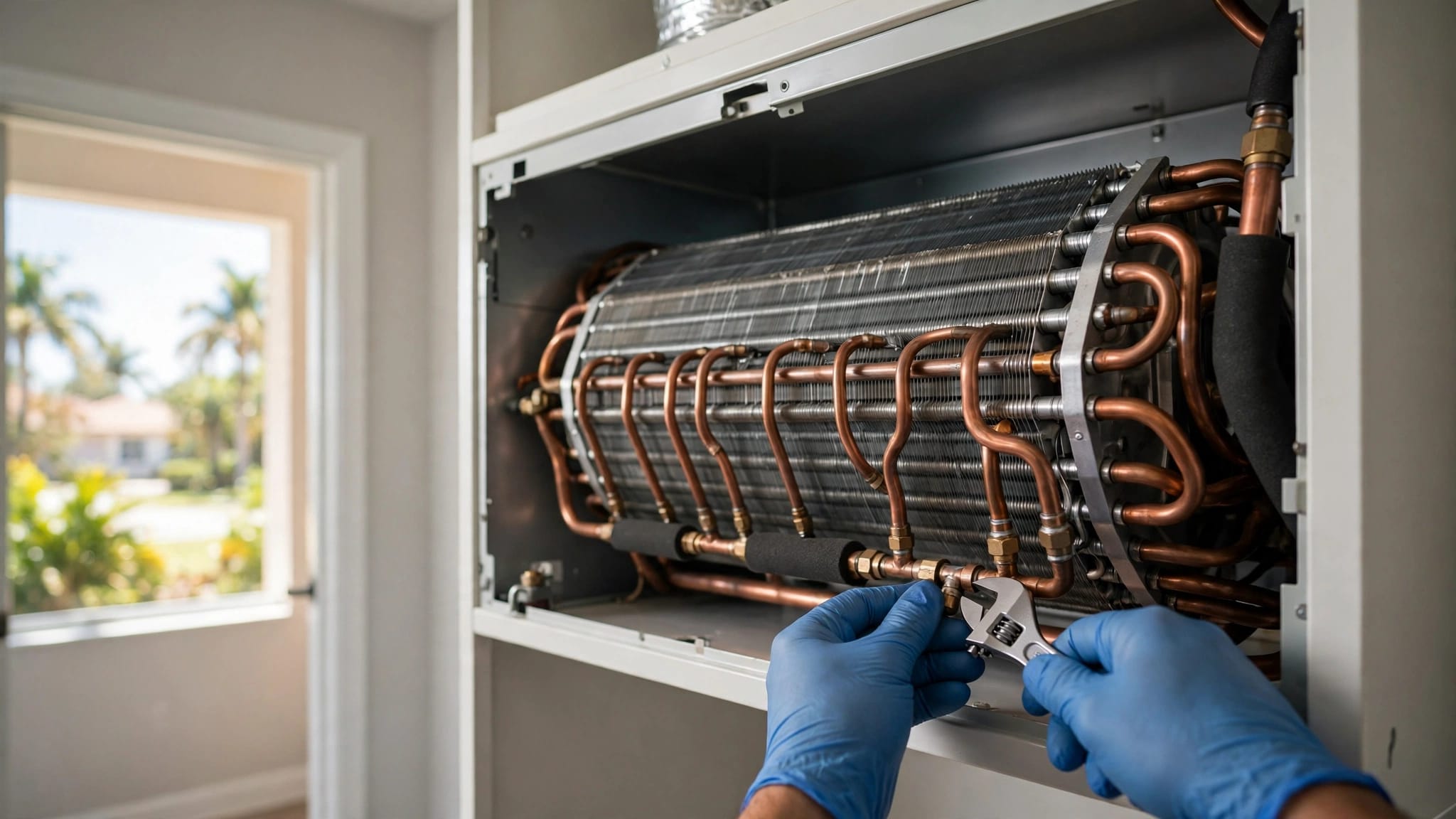
Dirty indoor coils and blower trouble also cause problems. If the coil is coated with dirt, heat cannot move through it properly. If the blower fan is weak, the air does not move fast enough to keep the coil above freezing.

Low refrigerant is another possible cause, but that is not a DIY fix. A leak or pressure problem can make the coil run too cold, and the system needs a professional diagnosis. Electrical issues can also affect how the blower and controls work, which is another job for a technician.

What You Can Safely Check Before Calling for Help

If you spot ice, don't keep the AC running. That can strain the compressor and make the problem worse. Turn the thermostat off and let the system thaw.

Then check a few simple things:

  • Look at the air filter and replace it if it's dirty.
  • Open any supply vents that were closed.
  • Make sure return grilles are not blocked by furniture, curtains, or boxes.
  • Give the indoor unit time to thaw fully before restarting it.
  • Watch for ice that returns soon after the system comes back on.

Do not chip at the ice with a tool. That can damage the coil or nearby parts. Do not open electrical panels or try to handle refrigerant lines either.

If the air filter was filthy and the vents were blocked, you may have found part of the problem. If the unit freezes again after thawing, there is likely a deeper issue inside the system.

The safest rule is simple. Handle the airflow basics, then stop there if the problem keeps coming back.

Why the Problem Keeps Coming Back

A freeze-up often returns because the root issue was never fixed. Changing a filter can help, but it won't solve a blower problem, a dirty coil, or a refrigerant leak.

Southwest Florida homes are tough on AC systems because the cooling season is long. That means more wear on belts, fans, motors, and controls. Over time, dust and salt air build up on the parts that need to stay clean.

Small airflow problems are easy to miss until they stack up. A filter gets clogged, a vent stays closed, and a dirty coil makes the system work even harder. Before long, the temperature inside the coil drops low enough for ice to form.

That's why routine care matters. Routine air conditioning tune-up services can catch dirty coils, weak airflow, and worn parts before they turn into freeze-ups. A good maintenance visit is less about guesswork and more about spotting stress before it turns into a breakdown.

If your system has frozen more than once this season, that is a sign to stop treating it like a one-time event. Repeated icing means the system is asking for a closer look.

When It's Time for Professional Service

Some signs point past basic homeowner checks. If the unit freezes again after a new filter, open vents, and a full thaw, the issue needs professional service.

Call a technician if you notice any of these:

  • Ice keeps forming even with a clean filter
  • Airflow stays weak after you clear the vents
  • The system blows warm air after thawing
  • You hear unusual noises from the indoor unit
  • The breaker trips or the unit won't start
  • Water pools around the air handler after thawing

Those signs can point to blower trouble, a dirty coil, a refrigerant issue, or a control problem. Those are not safe areas for DIY repair. They need the right tools and the right training.

If your home is heating up fast during a Southwest Florida heat wave, 24/7 emergency HVAC repair can keep a bad situation from dragging on through the night. If the issue is not an emergency but keeps returning, Schedule an Estimate so a technician can inspect the system and explain the next step.

A clear diagnosis saves time, money, and a lot of frustration. It also helps you avoid replacing parts that were never the real problem.

Conclusion

When your AC freezes up in Southwest Florida, the ice is only the warning sign. The real issue usually starts with airflow, dirty parts, or a refrigerant problem that needs attention.

The good news is that a few simple steps can help right away. Turn the system off, let it thaw, check the filter, and open any closed vents. If the freeze-up comes back, that's your cue to bring in a professional before the damage gets worse.

In a climate like ours, quick action matters. A frozen AC is often the first sign that the system is under more stress than it can handle.

Recent Posts

By Valor HVAC May 11, 2026
When your AC quits in Fort Myers, the house can heat up fast. Add Gulf Coast humidity, and even a short delay feels longer than it should. The good news is that you have a few safe steps to take while you wait for emergency AC repair in Fort Myers . Small actions can protect y...
By Valor HVAC May 10, 2026
If your AC is running but the air still feels sticky, something is off. The system may be cooling the room while missing part of the job, which is pulling moisture out of the air. That problem shows up fast in Southwest Florida. A house can stay at a decent temperature and sti...
By Valor HVAC May 9, 2026
When your AC starts acting up in Fort Myers, the hard part is not spotting the problem. It's deciding whether a repair makes sense or whether the unit is already on borrowed time. That choice gets tougher here than in many places. Long cooling seasons, high humidity, and coast...
By Valor HVAC May 8, 2026
A struggling air conditioner usually gives you warnings before it quits. The trouble is that the earliest AC repair signs often look small, so they get ignored until the house feels sticky and warm. In Southwest Florida, that delay can be costly. Heat and humidity put extra st...
By Valor HVAC May 7, 2026
In Southwest Florida, your AC doesn't get much of a break. For most homes, the right pace is professional maintenance twice per year . That baseline changes when your system works harder than average. Older equipment, coastal homes, rentals, pet-heavy households, and homes wit...