Can You Replace an Outdoor AC Unit Alone?
A failing condenser doesn't always mean you need a complete air conditioning system. However, if you need to replace outdoor AC unit equipment, the indoor components must still match the new condenser.
That decision depends on the indoor evaporator coil, air handler, refrigerant requirements, electrical setup, efficiency rating, and local rules. A professional inspection can show whether an outdoor-only replacement makes sense for your Fort Myers or Lee County home. Valor Heating & Cooling provides Fort Myers HVAC replacement services for homeowners who want a clear recommendation before approving work.
When You Can Replace Outdoor AC Unit Equipment Alone
The short answer: sometimes
A split-system air conditioner has more than one major component. The outdoor condenser releases heat from the home, while the indoor evaporator coil absorbs heat from the indoor air. The air handler moves that cooled air through the ductwork.
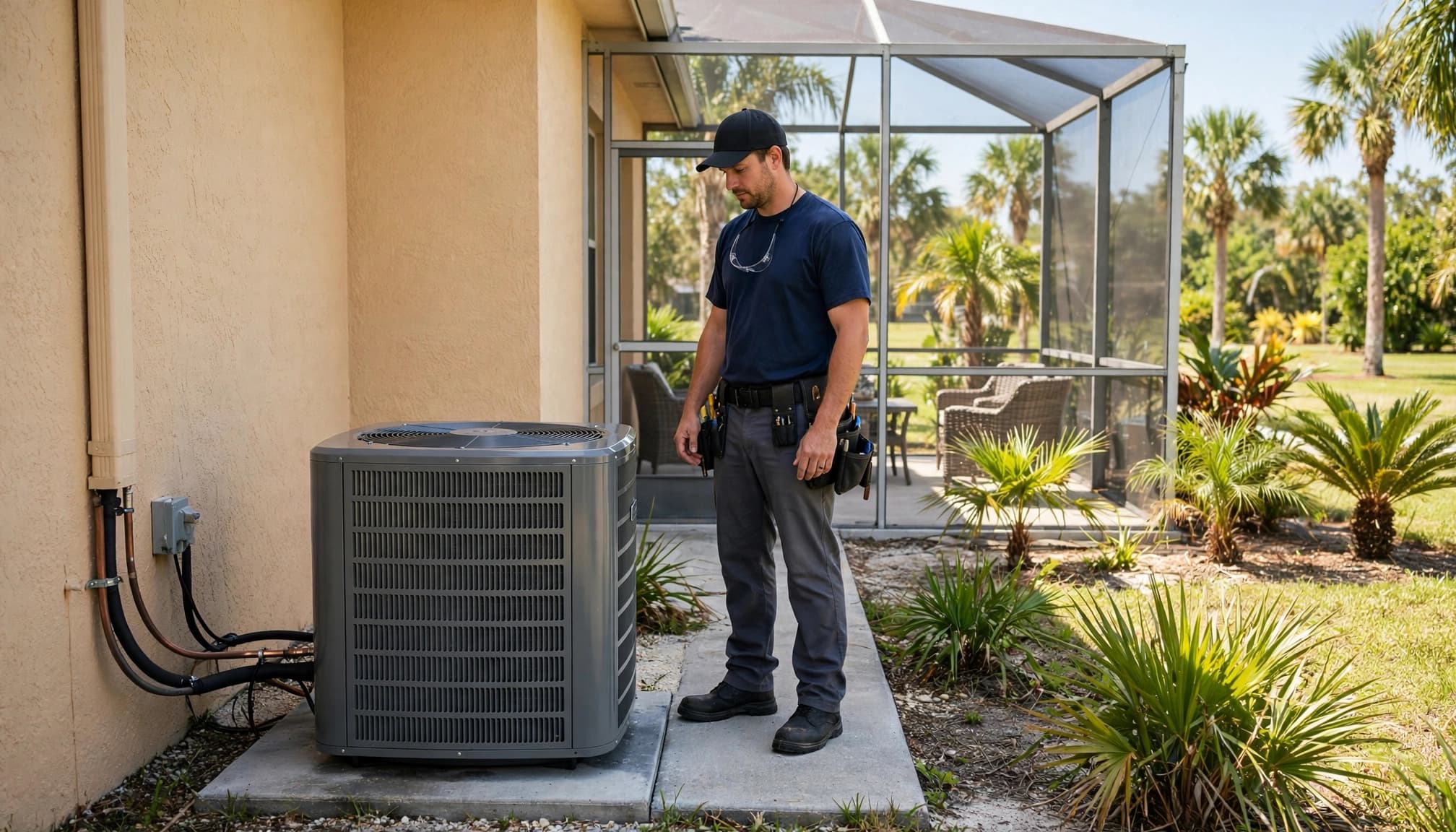
An outdoor unit may be replaceable by itself when the existing indoor coil and air handler are compatible with the proposed condenser. The equipment must also work with the existing refrigerant line set, thermostat, electrical service, and duct system.
What a contractor must verify
A contractor should never replace outdoor AC unit equipment based only on the size or brand of the old condenser. The technician should verify:
- The approved indoor and outdoor equipment combination
- The system's efficiency rating
- Refrigerant type and required charging procedures
- The condition and size of the refrigerant line set
- Breaker, disconnect, wiring, and electrical capacity
- Airflow, duct condition, and return-air design
- Condensate drainage and safety controls
- Permit and inspection requirements
The exact recommendation and cost depend on the existing system and local conditions. A low equipment price can become expensive if the new condenser requires indoor or electrical modifications.
Why the Indoor and Outdoor Components Must Match
The coil and condenser work as a pair
The indoor evaporator coil and outdoor condenser are designed to operate together. Pairing unmatched equipment can cause poor cooling, excess humidity, reduced efficiency, frequent repairs, or warranty problems.
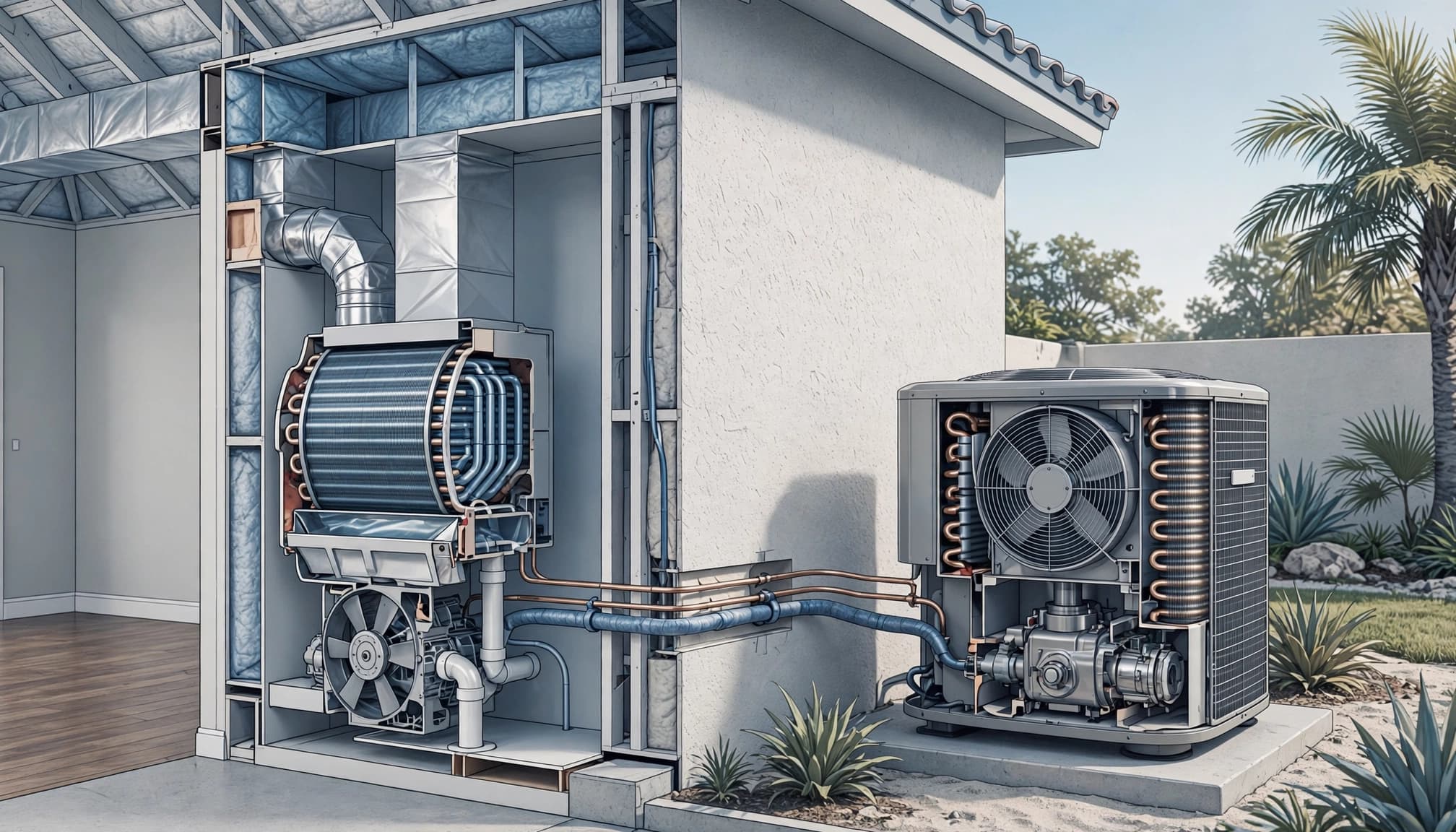
A proper evaluation should identify an approved combination using manufacturer performance data. The Manual S equipment selection guidance for Fort Myers homes also recommends asking whether the system size fits the home's cooling load and whether the indoor and outdoor components are approved as a match.
The line set and air handler matter too
The copper refrigerant line set may be reusable, but a technician must inspect its size, condition, cleanliness, and compatibility with the replacement equipment. Reusing it without verification can create installation or performance problems.
The air handler also affects airflow and comfort. The contractor should check the blower, indoor coil cabinet, drain pan, condensate drain, float switch, and return-air path. In Southwest Florida, drainage and humidity control deserve close attention because cooling systems often operate for long periods.
A written quote should identify whether these items remain, require modification, or need replacement. Understanding AHRI certificates for AC replacement can also help homeowners verify that the proposed equipment combination has the stated efficiency.
When Replacing the Full System May Be Smarter
An outdoor-only replacement may not be the best value when the indoor coil and air handler are also old, damaged, or incompatible. Replacing one component can leave another aging part responsible for the next breakdown.
Age and repair history provide useful context. A system under 10 years old with one failed capacitor or contactor may be a reasonable repair candidate. A system that is 10 to 15 years old or more, has repeated refrigerant leaks, or needs compressor work deserves a full replacement comparison.
That isn't a final rule. A technician should inspect the equipment, identify the actual failure, and explain both repair and replacement options. Home comfort, humidity, energy use, and future parts availability should all be part of the discussion.
What to Confirm Before Approving an Outdoor-Unit Swap
Get the complete scope in writing
A written estimate should explain exactly what the price includes. Ask whether it covers equipment removal, startup testing, refrigerant work, electrical changes, permits, cleanup, and warranty registration.
Also ask whether the quote includes:
- Indoor coil or air-handler modifications
- Refrigerant line-set replacement
- Condensate drain repairs or a float switch
- Thermostat changes
- Duct or return-air corrections
- Electrical disconnect or breaker work
- Manufacturer and labor warranty details
When comparing AC replacement quotes in Fort Myers, compare the written scope instead of looking only at the equipment price.
Confirm permits and code requirements
A professional must check current permit requirements before work begins. Lee County guidance indicates that a full condenser swap, air-handler changeout, complete system replacement, duct updates, and electrical work commonly require approval or inspection. Requirements can vary by job scope and local jurisdiction.
Ask who will pull the permit, schedule inspections, and correct any issue identified by the inspector. You can review Lee County AC replacement permits before the appointment, but the contractor should confirm the current requirements for your property.
Outdoor Condenser Placement in Southwest Florida
The replacement unit may not fit exactly where the old condenser stood. Walls, fences, pool equipment, landscaping, and screened enclosures can restrict airflow or technician access.
Common planning guidance allows about 12 to 24 inches around the sides and rear, roughly 5 feet above the unit, and 2 to 3 feet in front. These figures aren't universal code requirements. The equipment manual, site layout, and local rules control the final placement.
Review outdoor AC unit clearance requirements before moving fences, plants, or privacy screens. Never alter electrical connections or refrigerant piping yourself.
Key Takeaways
- An outdoor condenser can sometimes be replaced without replacing the indoor equipment.
- The evaporator coil, air handler, line set, refrigerant, and electrical system must be compatible.
- An approved equipment match helps protect performance, efficiency, and warranty coverage.
- Written estimates should include permits, startup testing, drainage, electrical work, and removal.
- Exact recommendations and prices depend on the home's existing system and local conditions.
Frequently Asked Questions
Can I install a different brand outdoors?
Possibly, but brand alone doesn't determine compatibility. The proposed condenser and indoor coil must form an approved combination, and the refrigerant, controls, line set, and efficiency rating must also work together. A technician should verify the manufacturer's data before recommending a different brand.
How much does replacing only the outdoor unit cost?
There is no reliable flat price. Cost depends on the condenser, labor, refrigerant requirements, electrical work, line-set condition, permits, equipment access, and whether the indoor coil or air handler needs changes. Request a written estimate based on an inspection.
Can I replace the condenser myself?
No. Refrigerant handling, electrical connections, startup testing, and code compliance require qualified professional work. Homeowners should not open the refrigerant circuit, charge a system, modify wiring, or install a disconnect themselves.
Conclusion
You may be able to replace outdoor AC unit equipment alone, but only after a professional confirms that the entire split system can operate safely and efficiently together. The indoor coil, air handler, refrigerant circuit, electrical service, drainage, placement, permits, and local code all matter.
A careful evaluation prevents an outdoor-only swap from becoming a second repair project. If you want a home-specific recommendation, Schedule an Estimate with a qualified HVAC technician serving Southwest Florida.
Recent Posts