AC Condensate Trap Basics for Florida Homeowners
Florida air conditioners remove moisture every time they cool your home. An AC condensate trap helps that water leave the air handler instead of backing up around the equipment.
In Fort Myers and across Lee County, long cooling runtimes can produce plenty of condensate. Understanding the trap, drain pan, and drain line helps you spot trouble early and avoid preventable water damage.
What an AC condensate trap does
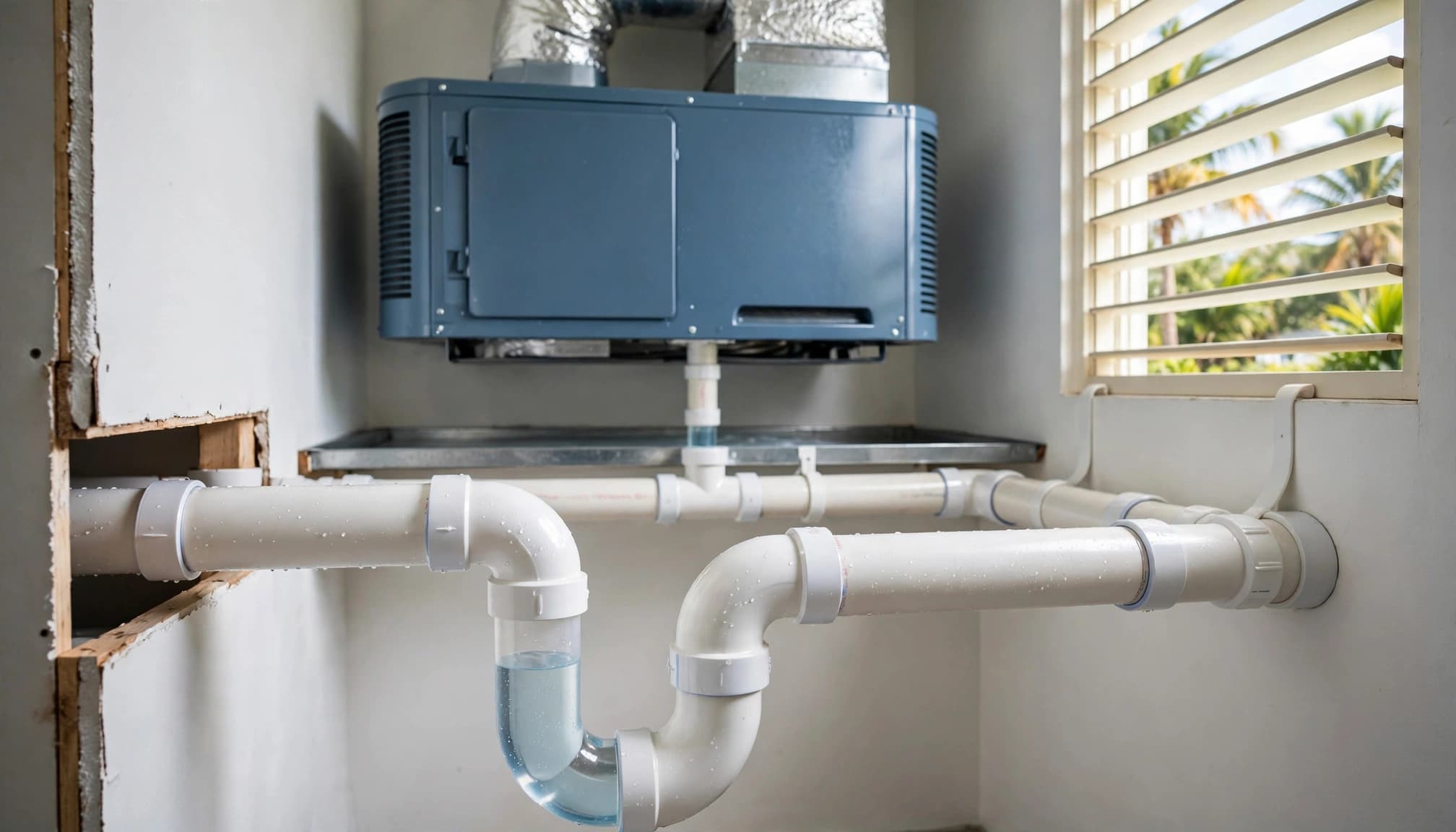
An AC condensate trap is a short section of PVC pipe, often shaped like a U, installed near the indoor air handler. It connects to part of the condensate drainage assembly.
The exact layout varies by equipment and installation. Some systems use a visible external trap, while others use a different built-in arrangement. A qualified technician should confirm what your system requires.
How the trap fits the system
The drain pan catches water that forms as warm indoor air passes over the cold evaporator coil. The drain line carries that water away from the pan and toward an approved discharge point.
The trap sits at a connection within that drainage path. It holds a small amount of water, creating a seal that helps condensate drain correctly on systems designed to use one. Without the proper trap arrangement, air movement around the air handler can interfere with drainage.
Why the trap isn't the drain line
These parts work together, but they aren't interchangeable. The trap controls the connection near the air handler, while the drain line transports water away from the equipment.
A clogged drain line can cause the pan to fill even when the trap is installed correctly. A damaged, missing, or incorrectly installed trap can also create drainage problems. That is why replacing or cleaning one part without checking the rest may not solve a recurring issue.
Why Florida humidity makes drainage important
Air conditioning systems in Southwest Florida run for long periods, especially during hot and humid weather. Each cooling cycle pulls water from the indoor air. That moisture must drain continuously.
Long runtimes create more condensate
A home in Fort Myers may need cooling for much of the year. As a result, the pan, trap, and drain line see frequent use. Dust, algae, and debris can build up inside the drainage system over time.
A clean filter supports proper airflow, but it doesn't replace condensate maintenance. During service, a technician can inspect the pan, coil, drain slope, trap, and float switch together.
A small blockage can become a leak
When buildup slows the drain line, water may remain in the pan or back up toward the air handler. You might first notice a small drip, damp spot, musty smell, or water near the indoor unit.
Read more about why condensate drains keep clogging before treating a recurring backup as a minor nuisance. Water near an air handler can eventually damage ceilings, walls, insulation, or flooring.
Safe checks Florida homeowners can make
You can look for visible warning signs without opening electrical compartments or working with refrigerant. Turn the system off at the thermostat before inspecting areas near the indoor unit.
Check the outdoor drain outlet
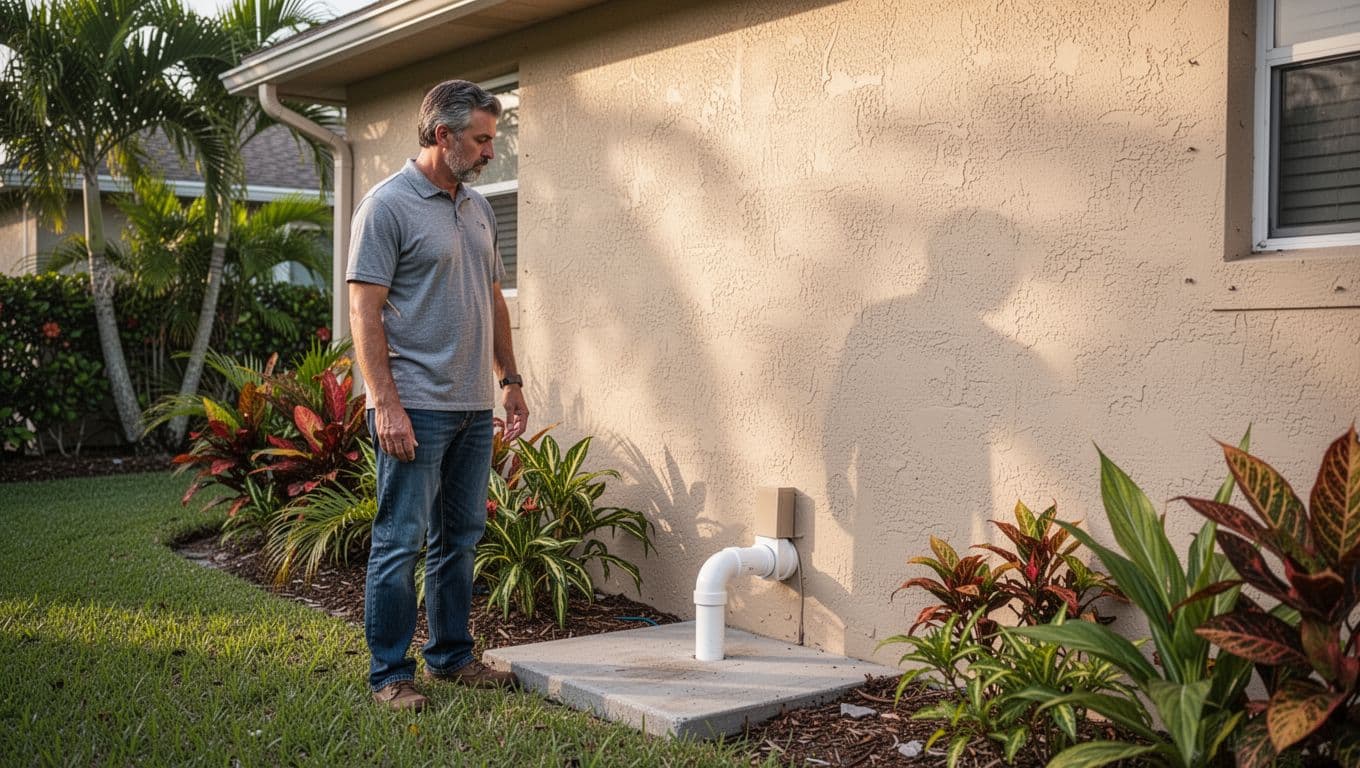
Many homes have a PVC condensate drain termination outside near the air handler or an exterior wall. During normal cooling, some water should typically leave through the outlet.
Look for standing water, a completely dry outlet during heavy AC use, or visible dirt blocking the opening. Keep plants and debris away from the termination. If your owner's manual permits it, a wet/dry vacuum may help remove a soft blockage from the outside end.
Avoid forcing wire, rods, or other objects into the pipe. Don't pour bleach, drain opener, or strong chemicals into the system unless the manufacturer specifically approves the method. More safe checks appear in this guide to checking your AC condensate drain.
Watch for indoor warning signs
Standing water in a visible pan, repeated overflow, or moisture around the air handler needs professional attention. A musty odor can also point to moisture and buildup in the pan, coil, cabinet, or drain line.
Some systems have a float switch that shuts the AC off when water rises too high. That protects against overflow, but repeated shutdowns indicate a drainage problem that still needs diagnosis. Learn more about an AC drain overflow safety switch.
When to call an HVAC professional
A professional inspection makes sense when water returns after a basic filter change, the system shuts down repeatedly, or the same drain issue keeps coming back.
Recurring problems need more than a quick flush
The cause may be a partial clog, poor drain slope, cracked pan, blocked trap, dirty coil, or failing float switch. A technician can check these components together instead of guessing at one part.
Water near the air handler also deserves prompt attention. Shut off the system if water is actively overflowing, then arrange service before the damage spreads. If you need an evaluation, you can Schedule an Estimate with a Valor Heating & Cooling technician.
Pumps and traps are different parts
Some air handlers cannot drain by gravity and use a condensate pump. The pump moves water to a suitable discharge point, while the trap remains part of the drainage design when the equipment requires one.
A pump that runs constantly without clearing water may point to a pump, line, float, or drainage issue. A technician can test the pump and inspect the rest of the assembly. That approach prevents replacing the trap when another component is causing the failure.
Key Takeaways
- The drain pan catches condensate, while the drain line carries it away.
- The AC condensate trap creates a water seal in systems designed to use one.
- System layouts vary, so not every trap looks or functions the same way.
- Standing water, musty odors, repeated shutdowns, and indoor leaks need attention.
- Homeowners can inspect visible areas, but electrical, refrigerant, and complex drainage work belongs with a qualified HVAC technician.
FAQ
Can every Florida AC system use the same condensate trap?
No. Air-handler designs and installation layouts vary. The correct trap depends on the equipment, drain connection, and how the system handles air pressure and condensate. A replacement should match the manufacturer's requirements.
Is the condensate trap the same as the drain pan?
No. The pan catches water below or around the coil. The trap is part of the pipe connection, and the drain line carries water away from the pan. A problem with any one of these parts can affect drainage.
Can I clean the trap myself?
Only perform simple checks allowed by your owner's manual. Don't remove electrical covers, cut PVC, use harsh chemicals, or work near refrigerant lines. If the trap is blocked or the problem returns, arrange professional service.
Conclusion
An AC condensate trap is a small part of a larger drainage system, but it helps the air handler remove moisture correctly. In Florida homes, frequent cooling and high humidity make that drainage work especially important.
Check visible drain areas, keep filters maintained, and treat water near the indoor unit as a warning. Early service can help identify whether the real issue is the trap, pan, drain line, pump, coil, or float switch.
Recent Posts