Can You Mix AC Brands During Replacement?
Replacing a central air conditioner often starts with a simple question: can you keep part of the old system and pair it with a different brand? In most cases, mixing AC brands isn't the best replacement strategy .
A properly matched, AHRI-certified indoor and outdoor system usually delivers better efficiency, humidity control, reliability, and warranty protection. However, certain brand combinations can work when the exact equipment models, refrigerant, controls, capacity, and local requirements all line up. Start by understanding what "mixing brands" actually involves.
Key Takeaways
- A new outdoor unit should usually match the indoor coil, air handler, or furnace according to the manufacturer's approved specifications.
- Different brands may work together only when the exact combination has a valid AHRI certification and compatible components.
- Refrigerant type, metering devices, communication controls, system capacity, and electrical requirements all affect compatibility.
- Southwest Florida homes need careful attention to humidity removal, salt-air exposure, drainage, and local permitting.
- A matched replacement system is usually a safer long-term choice than choosing equipment based only on the lowest installation price.
Why HVAC Systems Usually Need Matched Components
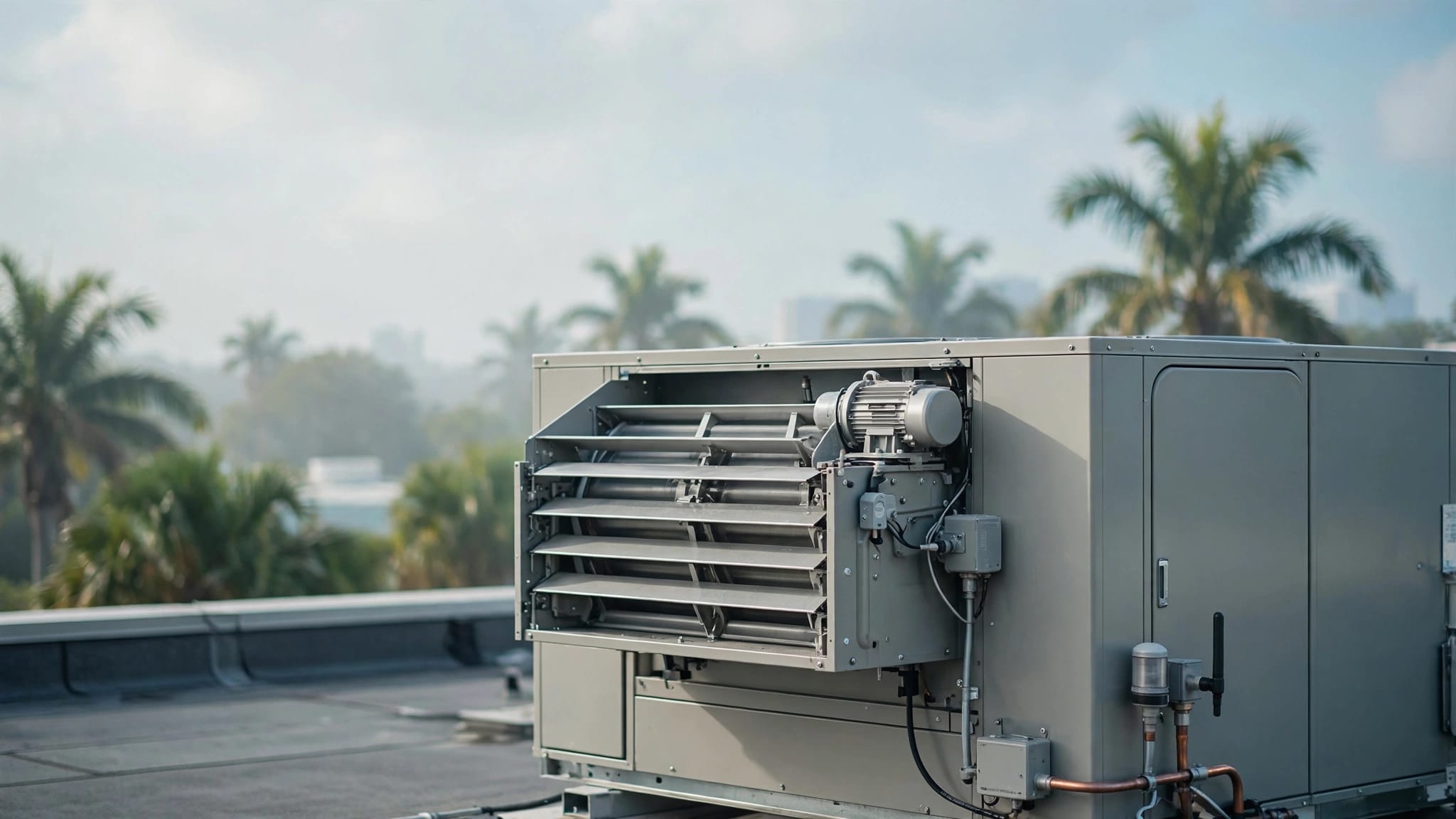
A split air conditioner has two main sections. The outdoor condenser or heat pump removes heat, while the indoor coil absorbs heat from the home's air. The system also depends on a metering device, blower, thermostat, refrigerant lines, and electrical controls.
These parts must work within a specific operating range. The outdoor unit's compressor moves refrigerant through the system, while the indoor coil transfers heat and moisture from the air. If the coil is too large, too small, or designed for a different refrigerant, the system may not cool correctly.
Brand names are only one part of the issue. A Carrier condenser may not work correctly with every Carrier coil. The same applies to Trane, Lennox, Rheem, Goodman, Amana, Bosch, and other manufacturers. Even equipment from the same brand isn't automatically compatible.
Manufacturers test selected indoor and outdoor combinations together. Those combinations receive published performance ratings, such as cooling capacity and efficiency. An HVAC contractor can check the equipment model numbers in the AHRI Directory to confirm whether the combination has been tested and certified.
A matched system can provide:
- The rated cooling capacity for the home
- The listed SEER2 or other efficiency performance
- Proper refrigerant flow
- Better moisture removal
- Correct blower and control operation
- Clearer warranty coverage
An unmatched system may still run, but running isn't the same as performing properly. It could cool slowly, short-cycle, use more electricity, or leave indoor humidity high. Those problems are especially uncomfortable during Southwest Florida's long, humid cooling season.
Can Different AC Brands Work Together?
Sometimes, yes. However, the answer depends on the exact model numbers rather than the logos on the equipment.
A contractor might replace an outdoor unit while keeping an indoor coil or air handler that is still in good condition. That combination can be acceptable if the manufacturer approves it and the AHRI Directory lists the specific pairing. A generic statement such as "these brands usually work together" isn't enough.
The following factors must match:
| Compatibility factor | Why it matters |
|---|---|
| Refrigerant type | Different refrigerants use different pressures, oils, safety controls, and charging procedures. |
| Cooling capacity | A mismatched coil or condenser can reduce comfort and increase cycling problems. |
| Metering device | The expansion valve or fixed orifice controls refrigerant flow into the indoor coil. |
| Thermostat and controls | Communicating systems may require brand-specific controls and wiring. |
| Electrical requirements | Voltage, breaker size, disconnects, and wiring must meet equipment specifications. |
| AHRI certification | The listed combination confirms tested performance and efficiency. |
A non-communicating system with standard thermostat wiring may offer more flexibility than a communicating system. Still, flexibility doesn't remove the need for an approved match.
The indoor coil also matters when replacing only the condenser. A coil designed for an older refrigerant or a different capacity may cause poor performance. The existing line set can create another concern if it is contaminated, incorrectly sized, damaged, or unsuitable for the new refrigerant.
A system that starts and blows cold air may still have an improper match. The model numbers and certification records tell you more than the brand label.
Why a Matched, AHRI-Certified System Is Usually Better
A matched replacement gives the contractor a known set of operating conditions. The equipment has a published capacity, efficiency rating, airflow target, and refrigerant charge range. That information makes installation and future service more predictable.
Humidity control is a major reason to avoid casual brand mixing in Southwest Florida. An air conditioner needs enough run time to remove moisture, not only lower the thermostat reading. Poorly matched equipment can satisfy the thermostat quickly while leaving the home damp. You may notice a clammy feeling, musty odors, or moisture around supply vents.
Efficiency ratings also depend on the complete system. A high-efficiency outdoor condenser won't necessarily deliver its advertised rating when paired with an unapproved indoor coil. The rating applies to a tested combination, not one component operating alone.
Warranty coverage can also change. Some manufacturers provide limited coverage for individual parts, but their terms may require installation with approved equipment. If a compressor, coil, or control fails in a mixed system, the manufacturer or installer may question whether the combination followed the installation instructions.
A matched system can also make service easier. Future technicians can locate the equipment data, identify the correct replacement parts, and follow the manufacturer's charging and testing procedures. A mixed system may require more research each time someone works on it.
For many homeowners, replacing both the indoor and outdoor components makes sense when the system is older. The coil may have corrosion, the blower may be worn, and the refrigerant lines may need attention. Keeping one aging component to reduce the initial price can lead to a second replacement sooner than expected.
Refrigerant Changes Make Compatibility More Important
Refrigerant type is one of the biggest reasons homeowners shouldn't mix AC equipment casually. Older systems may use R-22, while many newer systems use R-410A. Newer equipment also uses refrigerants such as R-32 or R-454B in some product lines as manufacturers follow changing federal requirements and product schedules.
These refrigerants are not interchangeable. They can have different pressure ranges, oil requirements, safety classifications, charging methods, and equipment designs. An R-410A condenser cannot be paired with an indoor coil or air handler intended for a different refrigerant unless the manufacturer specifically approves that combination.
R-22 systems also present a replacement challenge. If an old R-22 condenser fails, installing a current condenser onto the existing indoor equipment usually isn't a simple upgrade. The contractor may need to replace the coil, air handler, line set, or other components to create a compliant system.
Controls create another dividing line. Some systems use standard 24-volt thermostat wiring. Others use communicating controls that allow the indoor and outdoor equipment to share operating information. Mixing brands can disable those features or require different controls, if the equipment can communicate at all.
Local code and permit requirements also apply. In Fort Myers, Cape Coral, and nearby Lee County communities, the installation may involve electrical changes, condensate drainage, equipment tie-downs, refrigerant handling, and efficiency requirements. Coastal homes may need additional attention to corrosion because salt air can damage outdoor coils and electrical components.
A qualified contractor should verify:
- The refrigerant listed on the existing and proposed equipment.
- The AHRI certification for the complete combination.
- The manufacturer's installation instructions.
- The electrical and condensate requirements.
- Current Florida and local permit requirements.
How to Decide Whether to Keep Existing Equipment
Keeping the indoor coil or air handler may make sense when the component is relatively new, clean, correctly sized, and approved for the proposed outdoor unit. Age alone doesn't answer the question, but an older component deserves a careful inspection.
Ask the contractor to document the model and serial numbers. Those numbers reveal the equipment's capacity, refrigerant design, production date, and control type. You can then compare the proposed combination with the AHRI Directory instead of relying on a verbal compatibility claim.
A load calculation is also useful when the home's insulation, windows, ductwork, or occupancy has changed. The replacement condenser should match the home's actual cooling needs. Oversizing can reduce dehumidification, while undersizing may leave the system running continuously during the hottest weather.
Before approving a mixed-brand replacement, ask:
- Is the exact indoor and outdoor combination listed by AHRI?
- Which refrigerant will the replacement system use?
- Will the existing coil and line set meet the new equipment requirements?
- Does the thermostat support the proposed controls?
- What efficiency rating applies to the complete system?
- Which parts are covered under warranty?
- Will the installation include permits, startup testing, and airflow verification?
For a home near the Gulf Coast, ask about outdoor coil protection and maintenance access as well. Salt deposits can build up quickly, and routine cleaning helps protect the condenser from premature corrosion. A local HVAC professional can also check drainage and airflow, which affect comfort during humid weather.
If the equipment passes these checks, a different-brand combination may be acceptable. If the contractor can't verify the match, replacing the indoor and outdoor equipment as a complete system is usually the more dependable choice. You can Schedule an Estimate to review replacement options with a qualified HVAC technician.
The Cost of Choosing the Cheapest Combination
A mixed-brand installation may appear less expensive because it keeps an existing coil, air handler, thermostat, or line set. That initial saving can disappear if the system needs extra adapters, control changes, repairs, or early component replacement.
Energy costs matter as well. An unapproved combination may not reach its listed efficiency, even if the outdoor unit carries a high rating. Poor humidity removal can also lead to lower thermostat settings and longer operating hours.
Service costs can rise when replacement parts are harder to identify. A matched system gives technicians a clear equipment family and documented specifications. Mixed equipment may require additional testing before a technician can diagnose a refrigerant, airflow, or controls problem.
The quote should show more than the brand and tonnage. Look for the indoor model, outdoor model, refrigerant, efficiency rating, warranty terms, permit details, and included startup procedures. A professional installation should include refrigerant charging by measured conditions, airflow checks, thermostat testing, and confirmation that the system operates within the manufacturer's specifications.
Conclusion
You can mix AC brands during a replacement, but only certain combinations are acceptable. The exact model numbers, refrigerant, capacity, metering device, controls, AHRI certification, and local code requirements all matter.
For most homeowners, a properly matched indoor and outdoor system offers the clearest path to reliable cooling, humidity control, rated efficiency, and straightforward warranty support. In Southwest Florida, that careful match matters even more because the system works hard through long periods of heat and moisture.
Recent Posts