
How Roof Color Affects AC Cooling Loads in Florida
A lighter, more reflective roof can reduce solar heat gain and lower the cooling load your air conditioner must handle. However, roof color alone doesn't determine how much electricity a Florida home uses.
Your roof material, insulation, attic design, shade, and HVAC efficiency all affect the result. In Southwest Florida, the starting point is understanding how solar reflectance changes the heat entering your home.
Key Takeaways
- Light-colored roofing generally absorbs less sunlight than darker roofing, but product ratings offer a better comparison than appearance alone.
- Insulation, attic ventilation, roof material, shade, and duct condition determine how much roof heat affects indoor comfort.
- A cooler roof can reduce temperature-related cooling demand, but Florida homes still need moisture removal and properly sized equipment.
How Roof Color Changes Solar Heat Gain
Sunlight carries energy. When it strikes your roof, the surface reflects some of that energy and absorbs the rest.
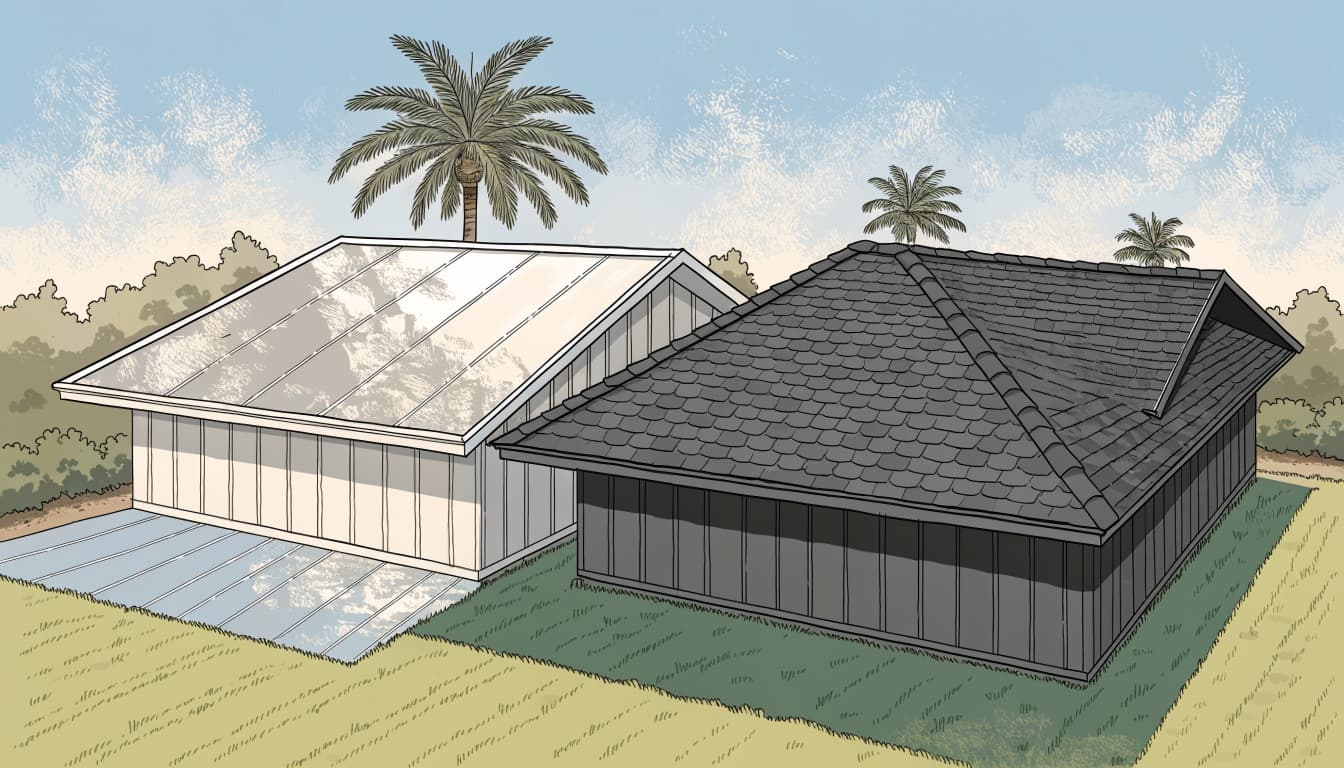
Light and dark roofs absorb sunlight differently
Within comparable roofing products, lighter colors generally reflect more sunlight. Darker surfaces usually absorb more solar energy, which heats the roofing material.
That heat can then move through the roof assembly toward the attic and living space. In an attic containing air-conditioning ducts, hotter surroundings can also warm the cooled air traveling through those ducts.
However, a hotter roof surface doesn't translate directly into the same temperature increase indoors. Insulation and the rest of the building assembly slow that transfer. This explains why two homes with similar dark roofs can have different cooling needs.
Solar reflectance matters more than appearance alone
Solar reflectance describes how much incoming solar energy a surface reflects. Visible color provides a clue, but it doesn't describe the roof's complete response to sunlight.
Some roofing products use pigments that reflect more near-infrared energy while retaining a darker appearance. Thermal emittance also matters because it describes how readily a surface releases heat as infrared radiation.
The Cool Roof Rating Council publishes these performance ratings for roofing products. Together, reflectance and emittance offer a more useful comparison than color names such as white, charcoal, or terracotta.
Roof Material Changes the Comparison
A white metal roof and a light-colored asphalt roof aren't interchangeable thermal systems. Their coatings, construction, and installation details affect how heat moves through the roof.
Likewise, tile shape and installation can create air spaces that affect heat transfer. The roof's mass also influences how quickly it heats and cools.
These distinctions matter when comparing roofing options.
| Roof material | What matters beyond visible color |
|---|---|
| Asphalt shingles | Granule formulation, reflectance, and the assembly beneath the shingles |
| Metal roofing | Surface coating, reflectance, thermal emittance, and installation |
| Concrete or clay tile | Surface finish, tile profile, mass, and the underlying assembly |
The takeaway is straightforward: compare complete roofing products , not color samples alone.
A light-colored roof often offers a cooling advantage over a darker version of the same product. However, that doesn't establish which of two different materials will produce the lowest cooling load.
Roof condition also matters. Dirt, biological growth, and weathering can change surface performance over time. When comparing products, aged reflectance information gives a more realistic picture than a newly manufactured sample alone.
What Controls Heat Transfer Below the Roof
The roof receives sunlight first, but the layers beneath it determine how much of that heat reaches your thermostat.
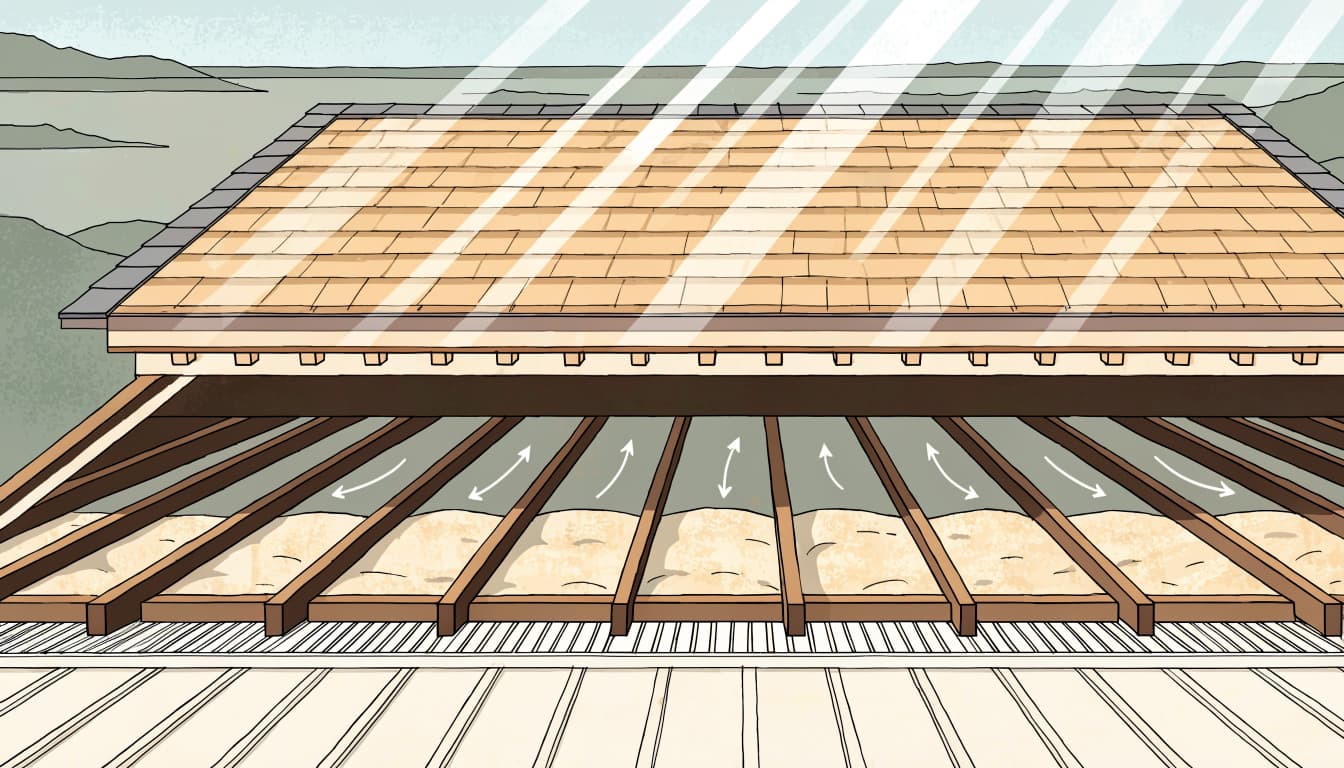
Insulation and attic design change the effect
In a conventional vented attic, ceiling insulation slows heat transfer into the rooms below. Gaps, compressed insulation, and uninsulated attic access panels can weaken that protection.
Roof color generally has a smaller indoor effect when the ceiling assembly already limits heat transfer well. Conversely, weak insulation can leave the home more exposed to attic heat.
Ventilation also influences attic conditions, but adding vents isn't a universal solution. A deliberately unvented attic requires a different approach. Our explanation of spray foam attic HVAC design covers how moving insulation to the roof deck changes the building boundary and equipment considerations.
Shade and duct location affect exposure
A roof beneath substantial shade receives less direct sunlight than an exposed roof. Therefore, changing its reflectance may offer a different benefit than changing a fully sunlit roof.
Duct location creates another distinction. Ducts inside conditioned space face less attic heat than ducts running through a hot, unconditioned attic.
Meanwhile, damaged duct insulation and leaking connections can undermine cooling performance regardless of roof color. Supply leaks lose conditioned air, while return leaks can pull hot attic air into the system. A reflective roof won't repair either problem.
Florida Humidity Changes the Cooling Equation
In Fort Myers and Lee County, an air conditioner must lower indoor temperature while removing moisture. Roof improvements mainly affect the temperature-related portion of that work.
Sensible and latent loads are different
Sensible cooling lowers air temperature. Latent cooling removes moisture.
Reducing heat transfer through the roof can reduce sensible demand, but it doesn't directly stop humid outdoor air entering through leaks or open doors. Occupants, cooking, and bathing also add indoor moisture.
As a result, a home can need less temperature cooling while still needing substantial dehumidification. This distinction matters because the thermostat responds mainly to temperature. It can reach the set point while the air still feels damp.
Reduced heat gain can change runtime
When less heat enters, an existing air conditioner may run less. That can reduce electricity use, but shorter cycles can also affect moisture removal.
An oversized system may cool the thermostat area quickly and shut off before it removes enough moisture. Reducing roof heat gain doesn't automatically correct that mismatch.
A roof improvement can lower the sensible load without lowering the moisture load by the same amount.
This doesn't make reflective roofing a poor choice. It means equipment capacity, airflow, and humidity control deserve attention alongside improvements to the building.
Comparing Roof Options Without Overstating Savings
A cooler roof can reduce one source of heat gain, but cooling load and electricity use are different measures . Cooling load describes the heat the system must remove. Electricity use also depends on how efficiently the equipment removes it.
A poorly maintained system, restricted airflow, or leaking ducts can consume extra energy even after a roof improvement. Thermostat settings and operating schedules also affect consumption.
For that reason, a roof-color change doesn't justify a universal energy-bill reduction claim. The result depends on the whole home.
Timing matters financially, too. When a roof already needs replacement, reflectance can be one factor in selecting the new material. Replacing a sound roof solely to reduce AC consumption is a much larger investment.
Other heat sources deserve equal attention. For example, strong afternoon sun through west-facing glass can create a room-specific comfort problem that roof color won't solve. Our comparison of window film and solar screens explains options for reducing that separate source of solar heat.
The useful comparison considers roof performance, project cost, and the home's other weaknesses together. Spending on the largest documented problem offers a clearer path than assuming the darkest surface is always the main cause.
When a Roof Change Should Trigger an HVAC Review
A roof-color change alone doesn't establish that your home needs a different air conditioner. However, a major reroof combined with insulation, window, or attic changes can alter the home's cooling requirements.
Before replacing equipment, an ACCA Manual J load calculation should account for the current building. Relevant inputs include roof construction, insulation, window exposure, air leakage, occupancy, and duct conditions.
Our guide to proper AC sizing in Fort Myers explains why square footage alone can't determine capacity. Manual S procedures then help match equipment performance to the calculated load and local conditions.
If your current system struggles during sunny afternoons, the diagnosis should also include airflow, coil condition, duct leakage, and indoor humidity. Roof heat may contribute without being the only cause.
We provide HVAC inspection, repair, and replacement services across Southwest Florida. You can Schedule an Estimate with our team to evaluate the equipment and ductwork alongside planned home improvements.
Frequently Asked Questions
Will a white roof keep my Florida home cool without AC?
A reflective roof can reduce solar heat absorption, but it doesn't remove heat or moisture already inside. Outdoor temperatures, humid air leakage, windows, and indoor activities still create cooling demand. A white roof therefore supports the AC system rather than replacing its cooling and dehumidification functions.
Does a dark roof mean I need a larger air conditioner?
Roof color is one input among many. A dark roof over a well-insulated attic may contribute less indoor heat than expected. Equipment sizing should follow a whole-home load calculation that includes sensible and latent demand, rather than a capacity increase based only on roof appearance.
Can I paint an existing roof to reduce cooling demand?
Some roof systems accept compatible reflective coatings, but coating suitability depends on the roofing material and assembly. Improper treatment can create durability or warranty problems. A roofing professional should handle that decision. Cooling performance alone doesn't establish whether a coating is suitable for an existing roof.
A Cooler Roof Is One Part of a Comfortable Home
Roof color affects solar heat absorption, but its impact depends on the complete roof assembly and the home beneath it. Reflectance matters most when considered alongside insulation, shade, and duct conditions.
For Southwest Florida homes, the goal is balanced cooling and moisture removal . A suitable roof can reduce heat gain, while correctly sized, well-maintained HVAC equipment handles the remaining load.
Recent Posts