Why Black Dust Appears Around AC Vents in Fort Myers
Black dust around AC vents is easy to brush off at first. Then it starts showing up on ceilings, walls, and fresh paint, and the pattern gets hard to ignore.
In Fort Myers, this problem often shows up sooner because air conditioners run for long stretches, humidity stays high, and tiny leaks or dirty components can spread residue through the house. Sometimes the cause is harmless enough, like soot from candles or a clogged filter. Other times, it points to duct leakage, moisture, or HVAC parts that need attention.
The good news is that the stain usually tells a story. Once you know what to look for, you can narrow down the cause without guessing.
Key Takeaways
- Fort Myers homes notice vent stains faster because AC systems work harder and humidity helps dust stick.
- Black residue near vents is not always mold. It can also come from soot, dirty filters, or duct leakage.
- If the dust comes back soon after cleaning, the source is usually inside the HVAC system.
- Basic homeowner checks are fine, but persistent buildup needs a professional inspection.
- Preventive maintenance helps catch the problem before it spreads to other rooms.
Why Fort Myers Homes See Black Dust Around AC Vents More Often
Southwest Florida puts air conditioners to work. Many homes run the system for most of the year, so air moves through the same ducts again and again. When a small amount of dust, soot, or moisture gets into that path, it does not stay hidden for long.
Humidity plays a big part too. Moist air helps fine particles cling to cool vent covers and painted ceilings. If the supply air is cold and the room air carries dust, the edge of the grille can become a collection point. The result looks like a dark shadow, even when the source is somewhere else.
Fort Myers homes also deal with the usual indoor dust from pets, cooking, candles, and normal daily life. When the AC runs often, those particles circulate more. If a return duct has a leak, the system can also pull dusty air from an attic or another unconditioned space. That is why a stain around one vent can be a clue, not just a cosmetic issue.
What the Dark Residue Near Vents Usually Means
Black residue can come from several sources, and color alone does not identify it. A vent that looks dirty may be collecting ordinary dust. Another vent in the same house may be showing soot or a moisture problem.
The table below shows some common causes and the clues that often go with them.
| Possible source | Clues you may notice | What it can mean |
|---|---|---|
| Dust mixed with humidity | Light residue, no smell, slow buildup | Normal dirt is sticking to cool vent surfaces |
| Candle or cooking soot | Black film near ceilings and vents | Fine combustion particles are settling out of the air |
| Mold or mildew | Musty odor, past leaks, visible moisture | Moisture is helping growth near the vent or inside the system |
| Duct leakage | Dust in the grille, uneven airflow, attic dust nearby | The system may be pulling dirty air from unconditioned spaces |
| Dirty blower or filter | Weak airflow, dirty filter, buildup in several rooms | The air handler may be spreading debris through the house |
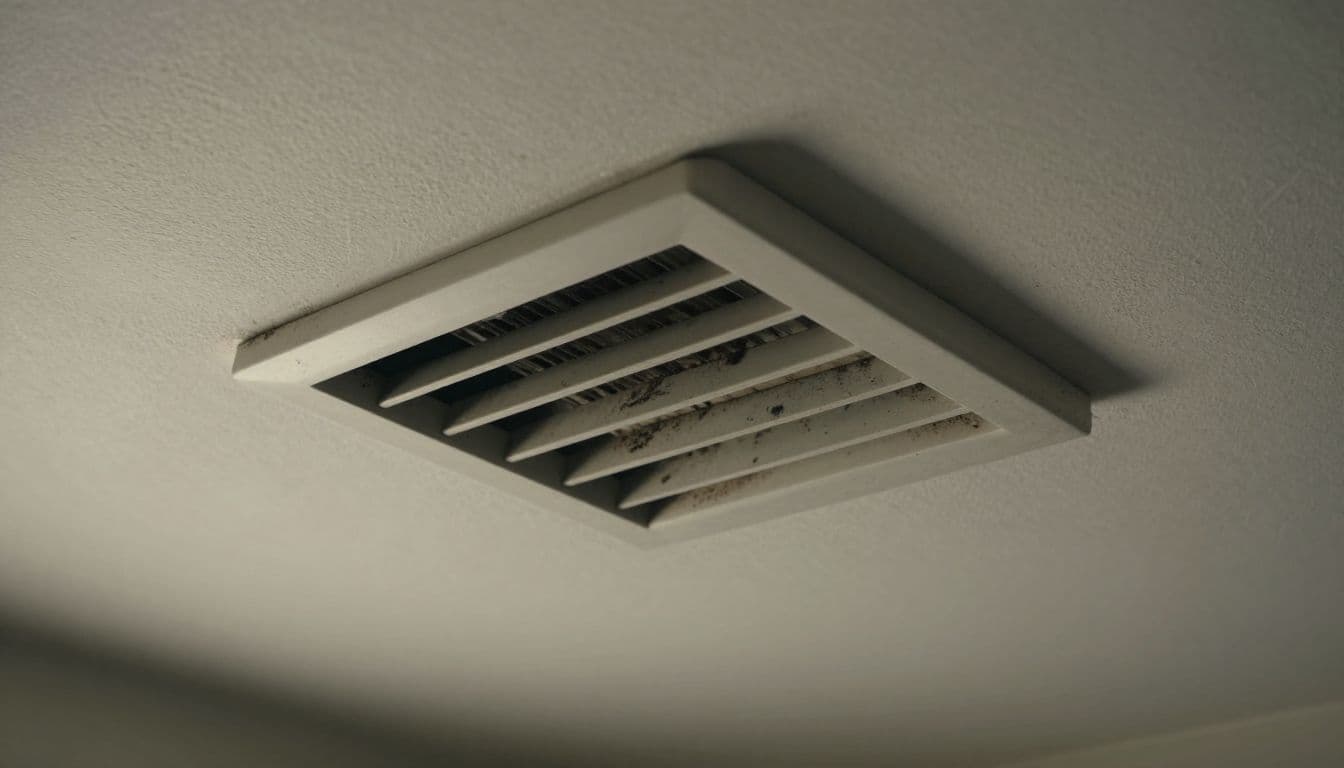
A key detail is whether the residue stays local or spreads. If it shows up on one vent, the issue may be tied to that room or grille. If several vents look the same, the HVAC system itself deserves a closer look.
Black residue around a vent is a clue, not a diagnosis. The source can be inside the room, inside the ductwork, or inside the air handler.
Safe Checks You Can Do Without Opening the Ducts
A few simple checks can help you gather useful information before you call for service. Start with the filter. If it looks loaded with dust, replace it and note how quickly the next one gets dirty. A filter that clogs fast can point to heavy indoor dust, poor fit, or airflow problems.
Next, wipe the vent grille with a white cloth and watch what happens over the next few days. If the black film comes back quickly, the source is still active. That often means the problem is upstream, not just on the surface.
It also helps to look at what the room has been exposed to. Candles, incense, frying oil, smoking, recent painting, and construction dust can all leave dark residue. In some homes, the pattern is worse near rooms that sit close to an attic, garage, or older duct run.
A quick moisture check matters too. Look for condensation, rust, stained drywall, or soft spots around the vent. Those clues can point to a damp area that needs attention.
If you want a deeper look, professional HVAC repair and inspection in Fort Myers is the right next step.
How a Technician Tracks Down the Source
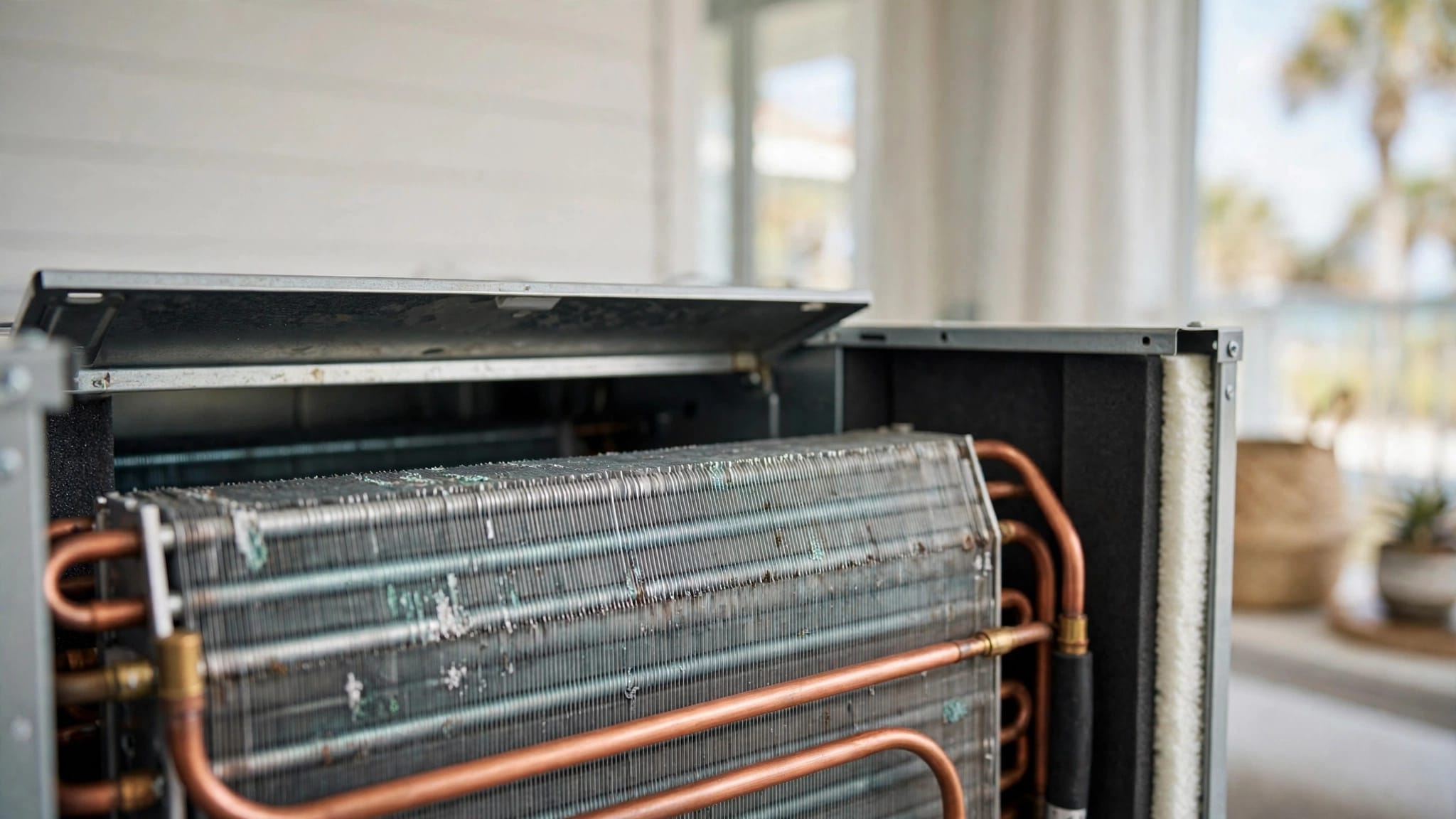
A technician starts where the clues are strongest. That usually means the air handler, the filter slot, the blower compartment, the evaporator coil, the drain pan, and the accessible duct joints. Each part can add dust, moisture, or pressure problems to the system.
A guide to air conditioning maintenance visits shows the kind of checks that help identify buildup before it becomes a bigger mess. The tech may also look for loose connections, damaged insulation, or gaps that let attic air enter the ductwork. In Fort Myers homes, that matters because hot attics and long cooling cycles can move a lot of debris through small openings.
If the dark residue has a musty smell, the technician may also check for moisture on the coil, in the drain line, or around the return side of the system. If the residue looks more like soot, they may ask about candles, cooking, fireplaces, or nearby combustion sources. The right answer depends on the whole system, not just the vent cover.
The point of a professional inspection is simple. It separates surface dirt from the real source.
How to Keep It from Coming Back
Once the source is known, prevention becomes much easier. Start with regular filter changes and make sure the filter fits properly. A loose or undersized filter lets dust slip around the edges. A filter that is too restrictive can hurt airflow, so the right match matters.
Routine care also helps. Preventative HVAC maintenance in Fort Myers gives a technician a chance to catch dirty coils, weak blower performance, loose panels, and small duct problems before they create visible stains. In a climate like this one, that kind of maintenance is not optional for long.
A few homeowner habits help too:
- Keep supply and return grilles clean on the outside.
- Leave furniture and curtains clear of return vents.
- Reduce indoor soot from candles and heavy cooking.
- Watch for condensation or water stains near vents.
- Replace filters on schedule, not only when they look bad.
If the dust returns after those basics, do not keep scrubbing the vent and hoping it disappears. Schedule an Estimate if you want a technician to check for duct leakage, blower contamination, or moisture issues.
Conclusion
Black dust around AC vents in Fort Myers usually means the system is carrying more than cooled air. It can be ordinary dust, but it can also point to soot, moisture, dirty blower parts, or leaking ductwork.
The fastest way to handle it is to look for patterns. Check the filter, note where the residue appears, and pay attention to smell, airflow, and moisture. If the marks keep coming back, the problem is likely deeper in the HVAC system, and that is where a professional inspection pays off.
Recent Posts