Best Thermostat Settings for Fort Myers Summer Heat

Valor HVAC • May 31, 2026

Share this article

Why does 76 feel fine some days and muggy on others? In Fort Myers, the answer usually has more to do with humidity, sun, and airflow than with the number on the thermostat.

The right thermostat settings Fort Myers homes need in summer are usually a range, not a single magic number. A setting that works in a shaded, well-sealed home may feel too warm in an older house with big west-facing windows.

Start with a sensible range, then adjust for how your home holds cool air and moisture.

A good starting range for most Fort Myers homes

A simple starting point helps more than a hard rule. For most homes, 75 to 78°F works well when people are home and active.

When the house is empty, 80 to 82°F usually gives a better balance between comfort and energy use. At night, many people sleep better around 74 to 77°F , especially if bedding is light and the room holds humidity.

Situation Good starting range
Someone home during the day 75 to 78°F
Sleeping at night 74 to 77°F
Empty for several hours 80 to 82°F
Away for a full day or more 82 to 85°F, if humidity stays controlled

The lower end of each range makes sense when the home gets strong afternoon sun or has weaker insulation. The higher end fits homes that stay sealed up well and hold cool air longer. The goal is comfort without making the AC run harder than it needs to.

A colder setpoint does not cool a room faster. It usually just keeps the system running longer.

Why humidity changes the number on your thermostat

Fort Myers heat feels different because the air often holds a lot of moisture. That moisture makes a room feel warmer, even when the thermostat looks reasonable.

If indoor humidity stays near 45% to 55% , a setting like 76 or 77 can feel comfortable. If humidity climbs much higher, the same room can feel sticky, heavy, and warm. That is when people keep lowering the thermostat, even though the real problem is moisture control.

Set the fan to Auto during summer. That lets the system remove moisture during cooling cycles instead of pushing damp air around the house. A constant fan can make the home feel more humid between cycles.

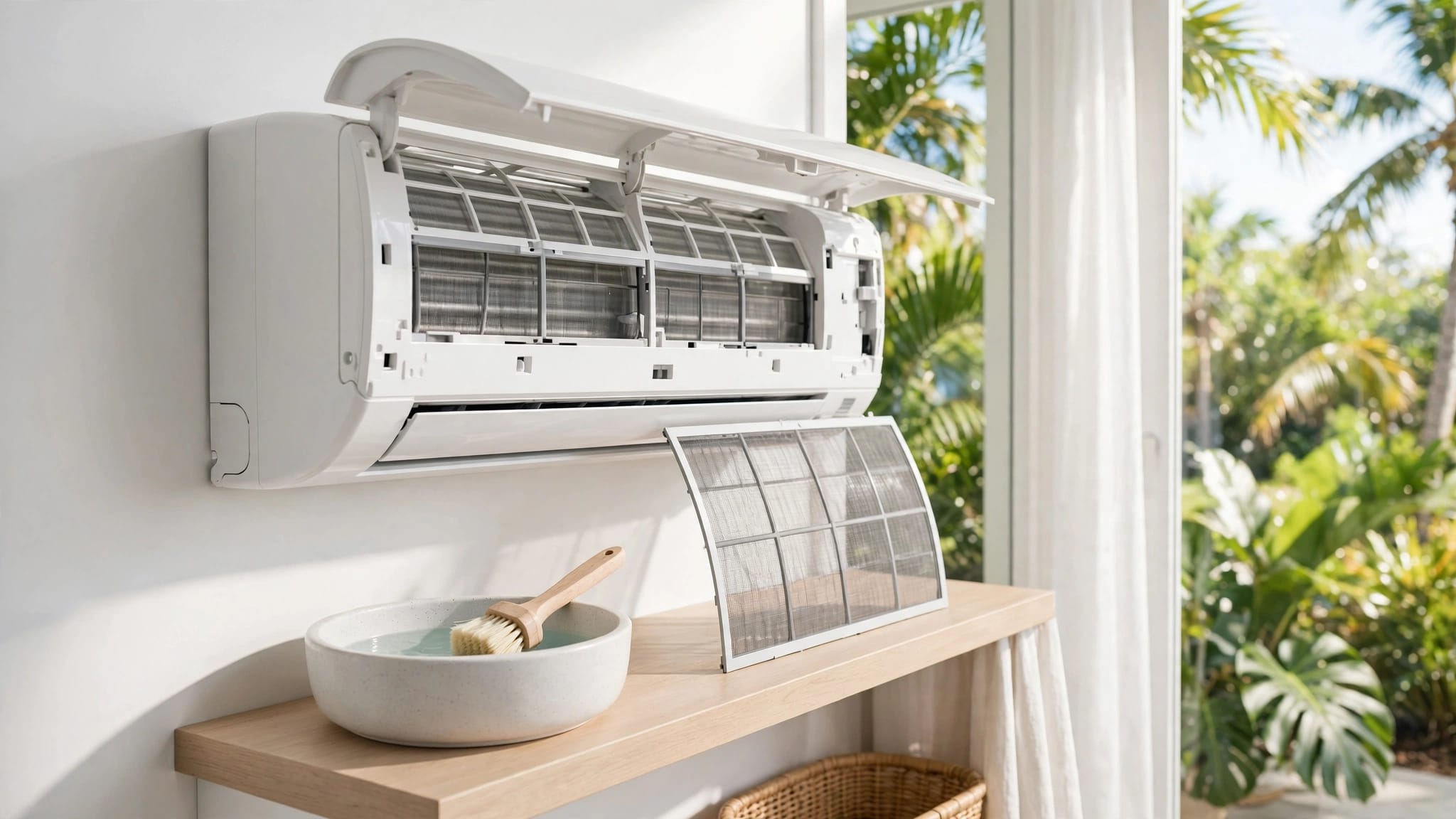
A clean filter and routine heating and cooling tune-ups also matter here. Dirty coils, a clogged drain, or restricted airflow can make a house feel clammy even when the temperature number looks right.

How occupancy, pets, and home age affect the right setting

A house that stays full all day needs a different setting than a house that sits empty until evening. If no one is home from morning to late afternoon, 80 or 81 can save money without letting humidity climb too far.

Pets change the picture too. Dogs and cats do better when the house stays in a moderate range, especially during long summer days. For many pet owners, staying closer to 78 to 80°F feels safer than letting the house drift much higher.

Older homes often need cooler settings because they leak more air and hold heat longer. Thin attic insulation, older windows, and sun-baked walls can all push the thermostat lower than you might expect. A newer home with better insulation may feel fine at the same setting that feels warm in an older block house.

Use this as a practical guide:

  • Homes with people inside all day usually feel best around 75 to 77°F.
  • Homes with pets inside often do better around 76 to 80°F.
  • Older homes with weak insulation may need 75 to 76°F to feel steady.
  • Bedrooms with light sleepers often need 74 to 76°F at night.

West-facing rooms can also change the answer. If afternoon sun hits one side of the house hard, that side may need more cooling than the rest. In that case, one thermostat setting has to work harder than it should.

Small thermostat habits that save money without making the AC struggle

A lot of summer comfort comes from consistency. Big swings in temperature make the system work longer and can leave rooms feeling uneven.

Raise the setpoint a few degrees when you leave for the day. A 2 to 4 degree change is often enough to cut run time without turning the home into a sauna. When you get back, the AC can recover without a huge strain.

Close blinds or curtains on the sunniest side of the house during the hottest part of the day. That simple step can reduce the heat load more than another small thermostat change. Ceiling fans also help because they move air across skin and make the room feel cooler without dropping the actual temperature.

Keep doors closed in rooms that do not need cooling. Open doors let cooled air drift away, which makes the thermostat work harder to satisfy the whole house.

If you notice long run times, weak airflow, or rooms that never quite cool down, the thermostat may be telling you about a bigger problem. A system in good shape should hold a steady setting without fighting for hours.

When the house still feels hot

Sometimes the setting is fine, but the house still feels warm or damp. That usually means the AC needs attention, not another drop in temperature.

Watch for signs like uneven room temperatures, short cycling, ice on the refrigerant line, or air that feels sticky even when the system runs. Those problems can point to duct leaks, low refrigerant, a weak blower, or another airflow issue. When that happens, professional heating and cooling inspection is a better next step than chasing a lower number.

Thermostat placement matters too. A unit near a sunny wall, supply vent, lamp, or kitchen heat can read the room wrong. The AC then runs based on a bad signal, which wastes energy and leaves the house uncomfortable.

If your system still cannot keep up after a few thermostat adjustments, Schedule an Estimate before the strain gets worse. That gives you a clearer picture of whether the issue is the setting, the system, or both.

Conclusion

Fort Myers summers usually call for a steady setting, not a dramatic one. For most homes, 75 to 78°F when occupied and 80 to 82°F when empty is a smart place to start.

Humidity, pets, windows, insulation, and system health can move that range a little in either direction. When the home feels sticky or uneven even with a reasonable setting, the AC may need service more than the thermostat needs another nudge.

The best number is the one your home can hold comfortably without making the system work overtime. That balance saves money, reduces strain, and makes summer feel a lot more manageable.

Recent Posts

By Valor HVAC May 30, 2026
Storms can knock an AC offline without destroying it. A lightning strike, power outage, or flooded yard can leave the system silent even when the rest of the house seems fine. The tricky part is that the problem may be simple, like a thermostat setting, or serious, like surge...
By Valor HVAC May 29, 2026
If your AC fan stays on after the house reaches the set temperature, that isn't always a problem. A short post-cycle run can help clear extra cool air from the coil and smooth out the room temperature. But if the AC fan keeps running for a long time, or never seems to stop, so...
By Valor HVAC May 28, 2026
Fort Myers storms can turn a healthy AC system into a repair bill fast. Wind, flying debris, salt spray, and floodwater all hit the outdoor condenser first. A few simple steps before hurricane season can lower the risk. The goal is to keep the unit clear, keep the power safe,...
By Valor HVAC May 27, 2026
A Fort Myers electric bill can climb fast once summer heat settles in. Your AC runs longer, works harder, and fights sticky indoor air all day. That jump can feel sudden because the weather changes before your habits do. The good news is that most of the cost drivers are easy...
By Valor HVAC May 26, 2026
Low airflow can make a Fort Myers home feel sticky even when the AC is running nonstop. The thermostat may say the house is cooling, but weak air from the vents tells a different story. In Southwest Florida, that problem shows up fast. Heat, humidity, dust, and seasonal debris...
By Valor HVAC May 25, 2026
A blank thermostat can turn a normal day into a frustrating one fast. One minute the house feels fine, then the screen goes dark or the buttons stop working. Most of the time, the cause is simple. Sometimes the problem starts at the thermostat, and sometimes it comes from the...
By Valor HVAC May 24, 2026
A musty AC smell can show up fast in Fort Myers homes, especially after a rainy stretch. In a humid climate, your system moves a lot of moisture, and that moisture can leave behind a stale odor if something is off. Sometimes the smell fades after the system runs for a bit. Oth...
By Valor HVAC May 23, 2026
Most air conditioners in Southwest Florida last about 10 to 15 years . With solid maintenance and a good installation, some systems make it to 15 to 20 years, but coastal air, heavy use, and skipped service can shorten that window fast. If your unit is already near the 10-year...
By Valor HVAC May 22, 2026
A rattling AC noise can start as a small annoyance, then turn into a bigger repair if you ignore it. Buzzing is just as important, because it often points to a loose part or an electrical issue. In Southwest Florida, air conditioners work hard for months at a time. Heat, humid...
By Valor HVAC May 21, 2026
One bedroom stays sticky while the rest of the house feels fine. In Fort Myers, that usually has a clear cause, and it often shows up in the same few rooms. Strong sun, attic heat, humidity, and weak airflow can all turn a comfortable house into one with hot rooms in Fort Myer...
Show More