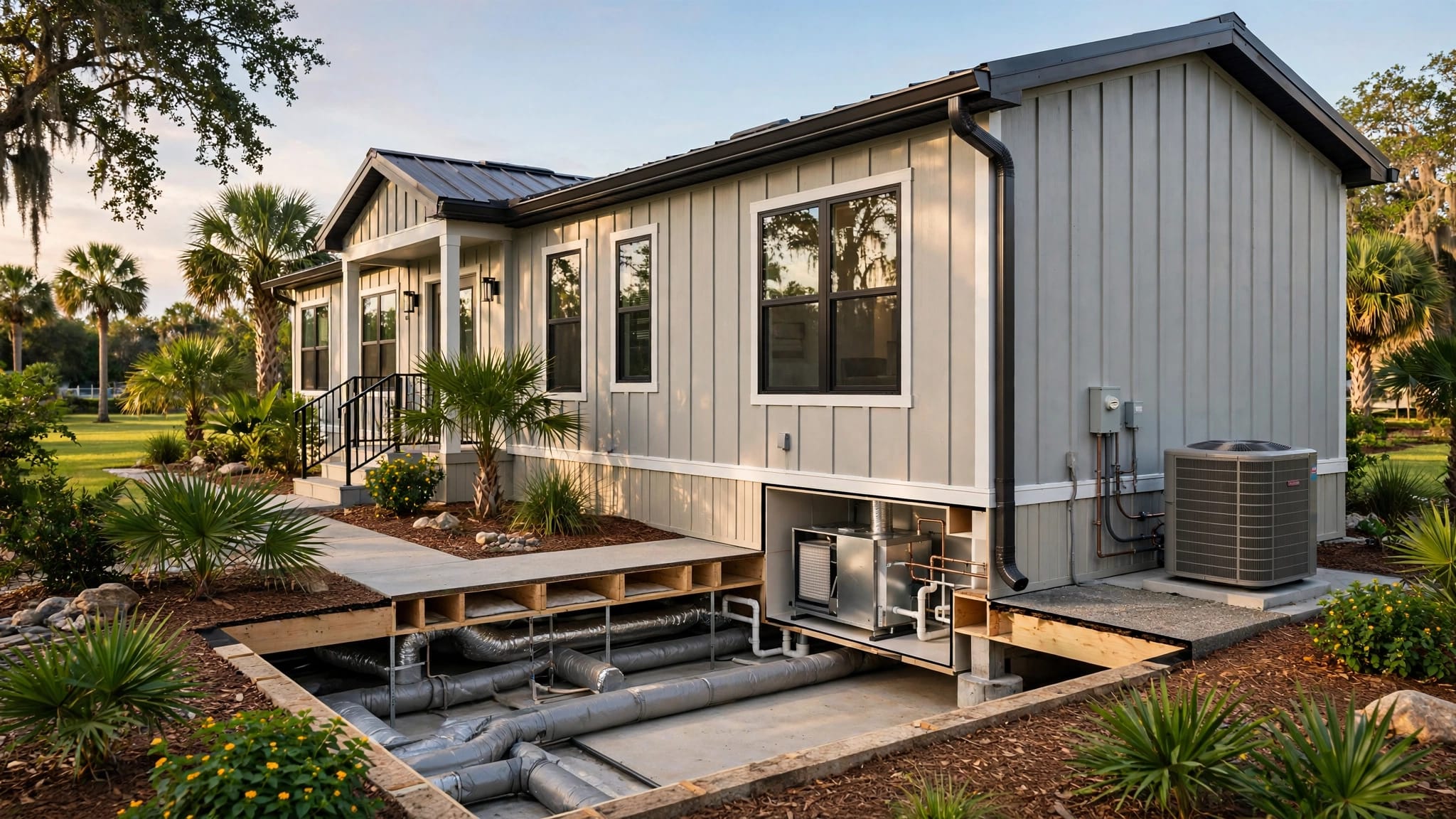
Why Your AC Won't Turn On After a Storm
Storms can knock an AC offline without destroying it. A lightning strike, power outage, or flooded yard can leave the system silent even when the rest of the house seems fine.
The tricky part is that the problem may be simple, like a thermostat setting, or serious, like surge damage in the air handler or outdoor condenser. The safest move is to start with a few quick checks and avoid anything that requires opening panels or touching wiring.
Here's how to tell what happened and when it's time to call for help.
Why a storm can stop an AC from starting
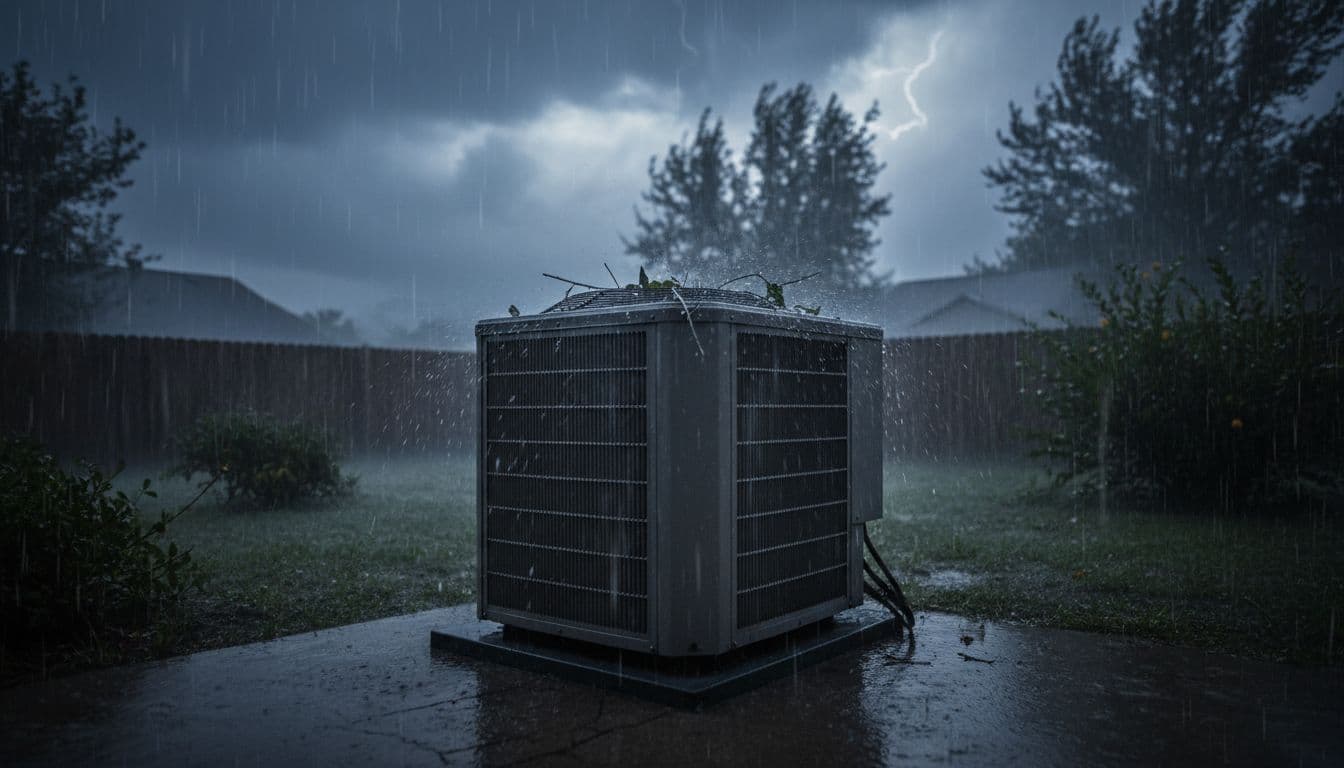
A storm can shut an AC down in several ways. Lightning can send a surge through the home, even if the strike hits nearby instead of the unit itself. Power outages can leave the thermostat blank or push the system into a short delay before restart. Flooding can wet controls, trip safety switches, or damage the outdoor condenser.
In Southwest Florida, that mix shows up often after a heavy afternoon storm. Wind can also throw branches, palm fronds, or debris into the condenser, which blocks airflow or bends the fan guard. Some problems show up right away. Others appear hours later when wet parts cool down and fail to restart.
If the system tries to start and then quits, a built-in safety device may be protecting it from more damage.
That protection is helpful, but it also means the AC won't turn on until the root cause is fixed.
Start with the thermostat and home power
The thermostat is the first place to look because it can fail without any visible damage. Make sure it is set to Cool, not Heat or Fan Only, and lower the setting below the room temperature. If your thermostat uses batteries, replace them if the screen is blank or weak.
After a power outage, give the system a few minutes. Some units pause before restarting. If the thermostat still does not light up, the trouble may be upstream, such as a tripped breaker, a blown low-voltage fuse, or a safety switch that cut power to the equipment.
A blank display can feel like a major failure, but it often points to a small control issue. Still, if the thermostat looks normal and the house had a surge or outage, the system may need a technician.
Storm damage often leaves clues you can spot from the ground
Storm damage does not always look dramatic. Sometimes the signs are small and easy to miss. A wet cabinet, a bent fan grille, or a dark mark near a wire connection can tell you a lot before a pro arrives.
Here's a quick way to connect the warning signs with the most likely storm-related issue.
| Warning sign | What it may point to | Safe next step |
|---|---|---|
| Burnt smell, scorch marks, or melted plastic | Surge damage or an electrical fault | Turn the system off and call for service |
| Water in the drip pan or around the air handler | Flooding, a clogged drain, or a tripped float switch | Leave the unit off until it dries and is inspected |
| Debris, bent fins, or a damaged fan guard | Wind damage or blocked airflow | Clear loose yard debris from around the unit only |
| Repeated clicking, buzzing, or short starts | A failing relay, capacitor, or safety lockout | Stop trying to restart it |
The biggest warning sign is moisture near electrical parts. If floodwater reached the indoor air handler or outdoor condenser, don't keep testing the system. Water can damage controls long after the storm has passed. A unit can look fine on the outside and still have damaged electrical parts inside.
When the air handler or condenser is the real problem
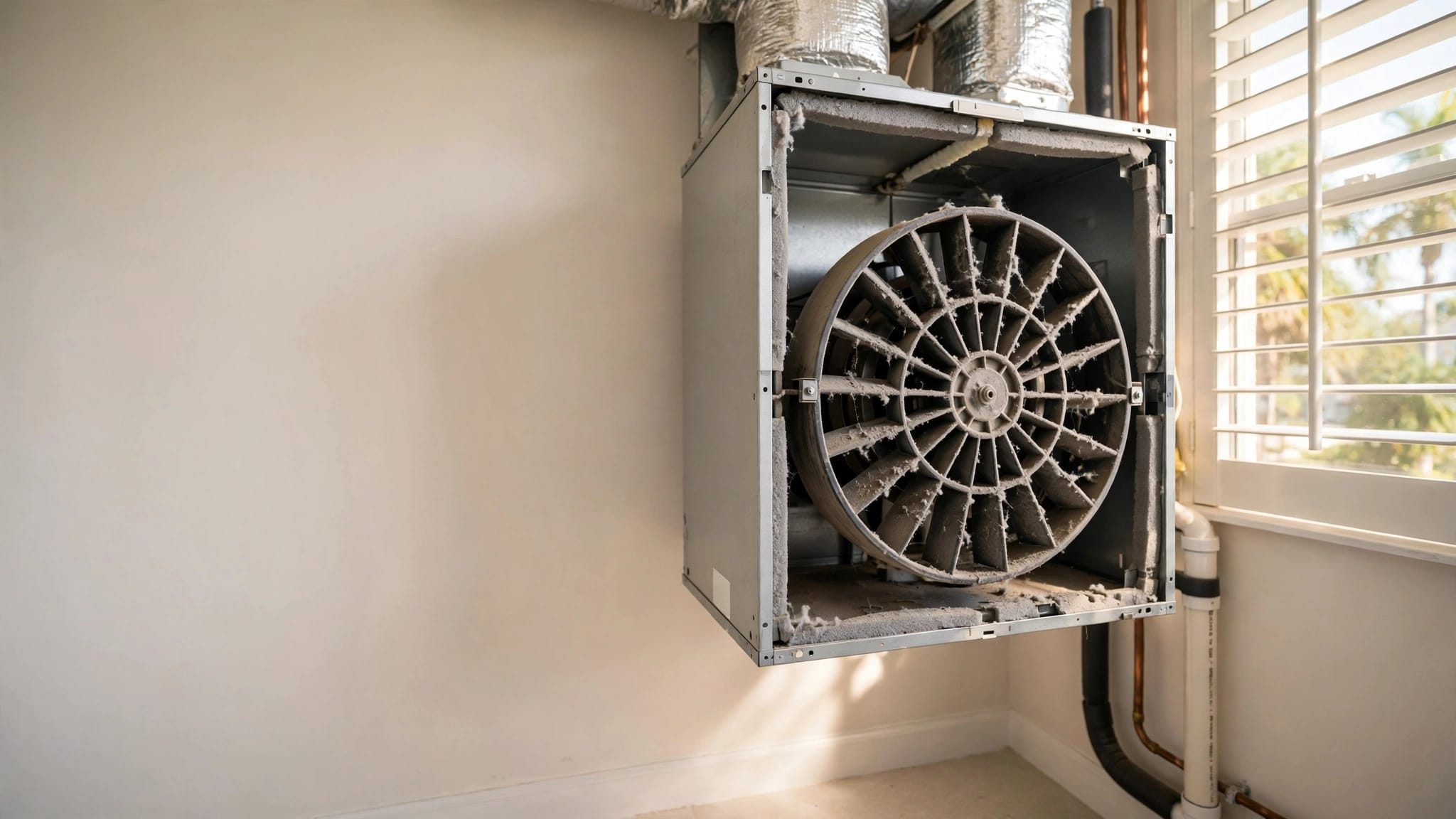
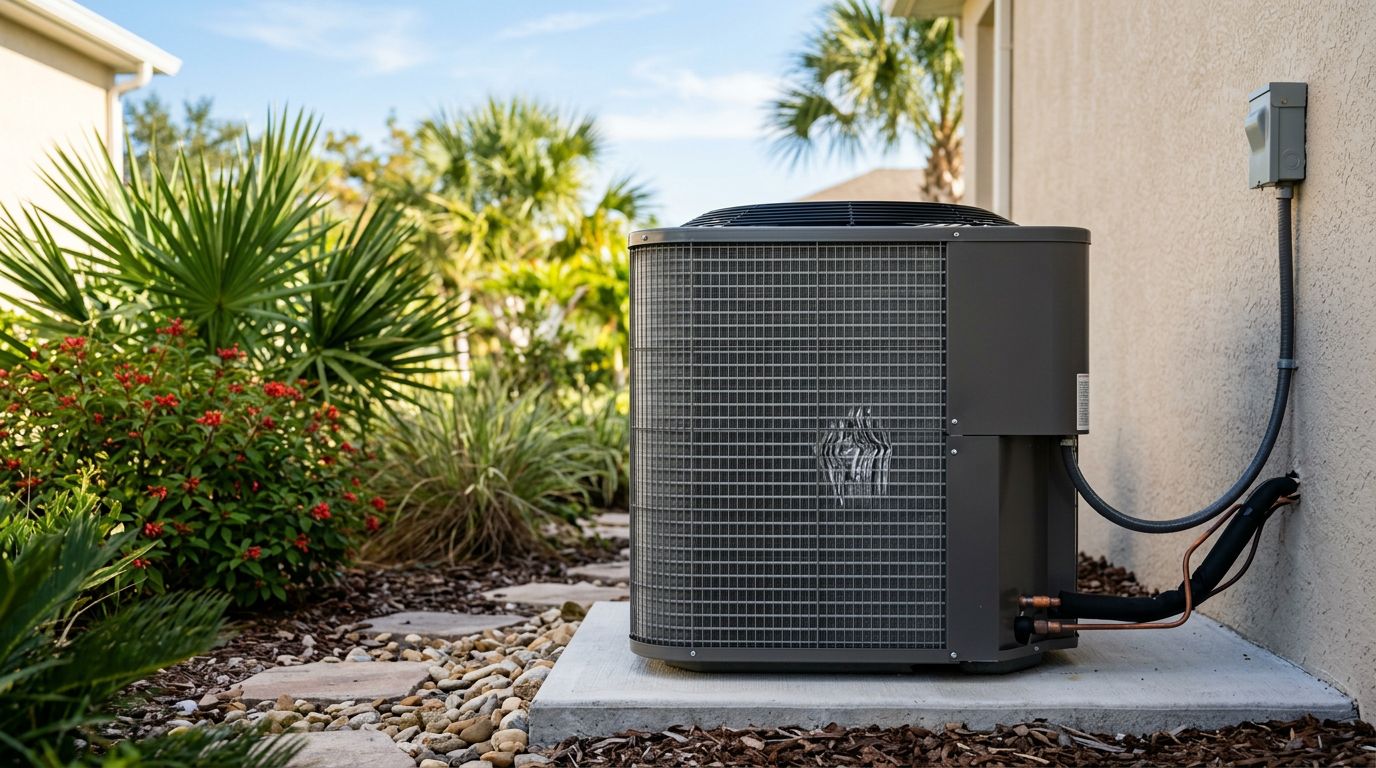
The indoor air handler and the outdoor condenser play different roles, so a storm can affect one without touching the other. If the blower runs but the outdoor unit stays quiet, the problem may sit in the condenser, the contactor, or another low-voltage part. If the indoor cabinet has a float switch, overflow in the drain pan can shut the system down on purpose.
That shutdown is common after long periods of rain. In many homes, the switch saves the equipment from overflowing water or hidden leaks. It is also a clue that the drain line, the pan, or the pump needs attention. If the outdoor unit is silent after lightning or a surge, the controls inside the condenser may have taken the hit.
If the unit hums, clicks, or starts and stops fast, schedule a professional HVAC system inspection. A technician can test the control circuit, check the condenser, and look for surge damage without guessing.
After the repair, routine HVAC maintenance can help catch weak parts, clogged drains, and loose connections before the next storm season.
What not to do while the system is down
After a storm, it is tempting to keep trying the thermostat. That habit can turn a small electrical issue into a larger repair. Leave the system off if you smell burning, hear buzzing, or see water around the air handler or condenser.
Don't remove panels, lift covers, or reach into wet equipment. Don't hose down debris while the unit is powered. Don't assume a reset will fix repeated shutoffs. If lightning struck nearby, hidden damage can sit in the contactor, capacitor, or board even when the outside case looks fine.
If you have flooding in the yard, watch the outdoor unit as the water recedes. Dirt, salt, and standing water can corrode parts fast in Southwest Florida. A quick cleanup around the unit is fine, but electrical damage needs a pro.
A safe checklist before you call for service
Before you call, note what changed right before the AC stopped. The details help a technician narrow the problem faster.
If floodwater touched the indoor unit or the outdoor condenser, leave the system off until a technician inspects it.
- Confirm the thermostat is on Cool and set below room temperature.
- Replace thermostat batteries if the screen is dim or blank.
- Look for standing water, mud, or branches around the outdoor unit.
- Check for burnt smells, rust, or visible discoloration near the air handler.
- Notice whether other parts of the home lost power, which can point to the breaker, the utility supply, or a wider surge.
- Listen for clicking, buzzing, or repeated start attempts.
- Do not keep cycling the system on and off if it keeps failing.
- If the storm was severe, note whether lightning, flooding, or a long outage came first.
If these checks do not explain the failure, the next step is service. For storm-related issues in Fort Myers and the surrounding area, you can Schedule an Estimate and get a technician on the job before a small fault turns into a bigger repair.
What to remember after a storm
When your AC won't turn on after a storm, the cause is often one of a few familiar problems. The thermostat may have lost power, the breaker or control circuit may have tripped, or a safety switch may have shut the system down after water entered the equipment.
The safest path is simple. Check the thermostat, look for visible storm damage, and stop if you see signs of surge or flooding. If the unit still stays silent, the issue may sit inside the air handler or outdoor condenser, and that calls for a trained set of hands.
A storm can leave behind one small clue that changes everything. Find that clue first, and you save time, stress, and extra damage.
Recent Posts