Should You Cover Your Outdoor AC Unit in Florida?

Valor HVAC • August 22, 2026

Share this article

If you searched "cover AC unit Florida," the short answer is usually no. A full cover around an outdoor condenser can trap Florida's moisture, encourage mold, and give insects or rodents a sheltered place to nest. It can also hide corrosion and debris until the system starts struggling.

A breathable, manufacturer-approved top cover is different. It shields the top from leaves while the open sides let air move. However, you must remove it before running the air conditioner or heat pump. For Southwest Florida homeowners, the safest choice depends on the equipment manual, exposure to salt and debris, and how long the property will sit empty.

A practical answer to "cover AC unit Florida"

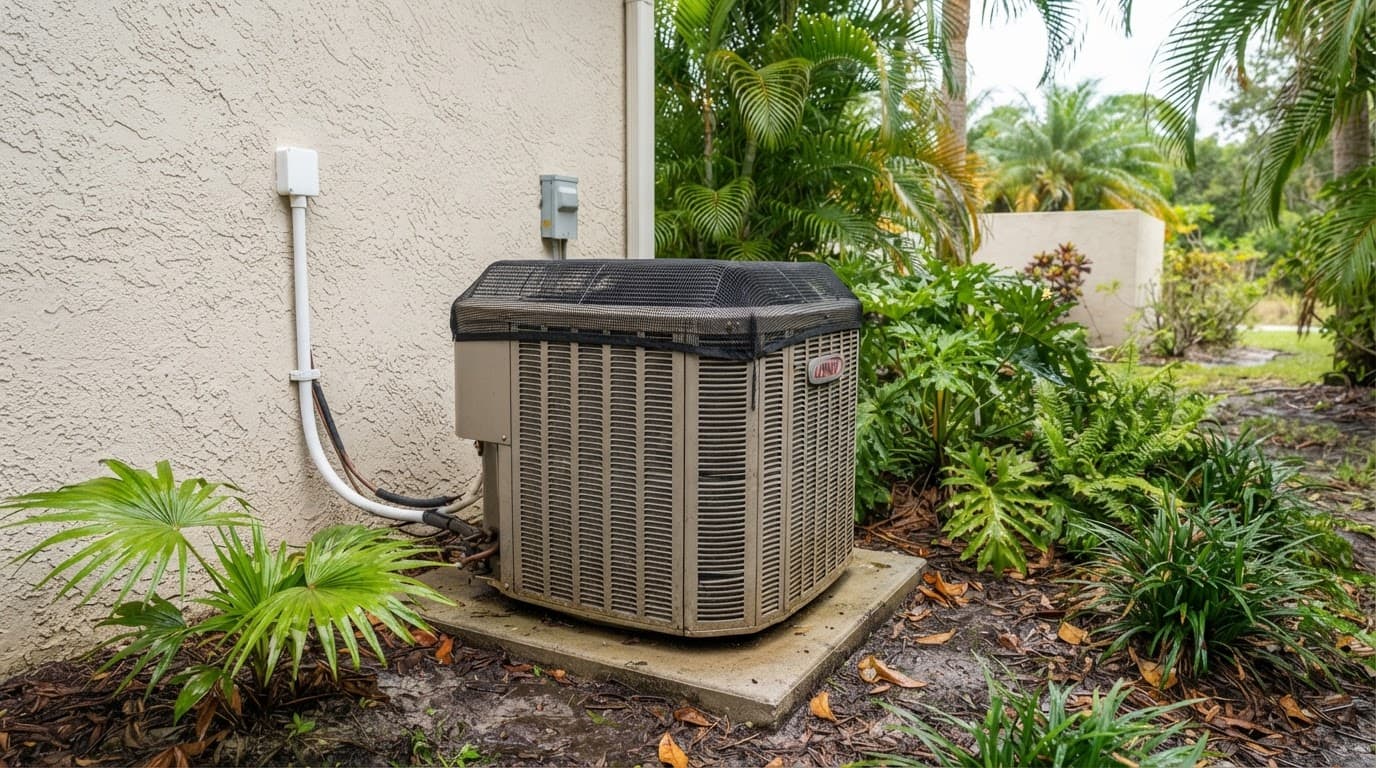
An outdoor condenser is built for normal weather. Rain, humidity, and sun are part of its operating environment, so an occupied Florida home usually doesn't need a cover. The cabinet protects internal components, but the coil and fan still need open airflow.

Florida homes may need cooling in January. Heat pumps can use the outdoor unit for heating, too. If a cover stays on, it can restrict airflow, overheat the system, or interfere with the fan.

If the unit might run, leave it uncovered. Before turning it on after storage, remove the cover completely and check the grille and area around the base.

Never operate an AC condenser or heat pump while any cover is installed. A tarp, plastic sheet, or loose fabric can block airflow and get pulled toward the fan.

Why a full AC cover can hurt in Florida

A full vinyl or plastic enclosure seems to protect the condenser from rain and salt air. In a humid climate, however, sealing the cabinet can create the same moisture problems the cover was meant to prevent. The "cover AC unit Florida" question needs a moisture-first answer, not a winter-storage answer.

Trapped moisture encourages corrosion

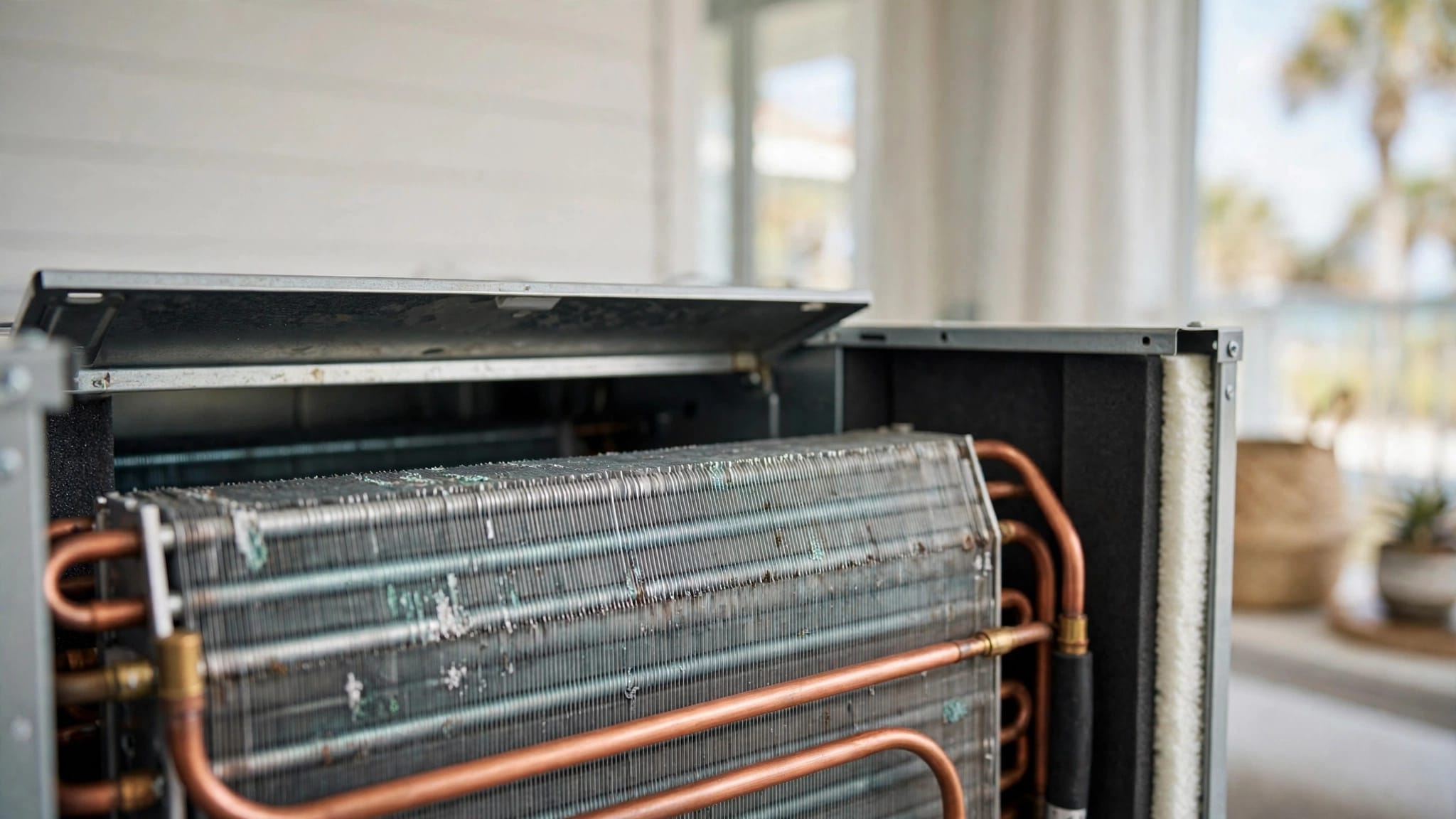
After a storm or humid night, water can remain inside an airtight cover longer than it would in open air. Condensation around the coil, base pan, fasteners, and electrical areas can encourage mildew and rust. Near the Gulf Coast, salt residue adds another source of corrosion.

A cover can't wash salt off the coil or stop wind-driven rain. It can hold damp, salty air against metal instead. Regular inspection and cleaning are more useful than sealing the unit. Valor's twice-yearly AC maintenance is a practical starting point for many Southwest Florida homes.

Covered units attract pests

A dark enclosure can appeal to lizards, roaches, wasps, and rodents. Nests or droppings around the fan and electrical compartment can create airflow issues and possible electrical damage. Leaves and grass clippings can also collect underneath.

Because the enclosure hides the equipment, you may miss a corroded wire, loose panel, or damaged coil. Keep shrubs, stored items, and debris away from the unit according to the manufacturer's clearance instructions.

When a breathable top cover makes sense

A top-only cover can help when a condenser sits under a tree or when a seasonal property will remain unused. It should be breathable, properly sized, and approved for that model. Open sides allow air circulation and help moisture escape.

This type of cover only limits falling leaves and light debris. It isn't hurricane protection, a salt-air barrier, or a reason to skip maintenance. The "cover AC unit Florida" advice remains simple: protect the top only when the manufacturer allows it, and remove it before operation.

Check the manual before buying

Manufacturer instructions come first. Some systems have an approved accessory, while others should remain fully exposed. Look for model-specific guidance in the owner's manual, or ask a technician to identify a safe option.

Avoid tarps, plastic wrap, trash bags, and tightly strapped covers. They can hold water, flap against the cabinet, and sag into the fan grille. A proper cover shouldn't block the sides, vents, disconnect, or service access.

Leave it off if the system stays active

If you live in the home year-round, leaving the condenser uncovered is usually best. You can still reduce risk by trimming vegetation, clearing leaves by hand, and keeping sprinklers from spraying the coil. For safe homeowner tasks, use this Fort Myers AC care guide.

Don't cover a unit that already has weak cooling, unusual noises, rust, or frequent breaker trips. Covering a fault only delays diagnosis. A technician can inspect the system and recommend the right fix, and you can Schedule an Estimate if you're unsure whether the issue is weather exposure or equipment wear.

Preparing an outdoor condenser for storms and vacancy

Hurricanes require a different plan. A fitted cover won't hold the unit in place during high winds, and an improvised tarp can become airborne or damage the cabinet. Follow local emergency guidance and the equipment manufacturer's storm instructions.

If a professional recommends shutting off power before severe weather, use the outdoor disconnect as directed. Don't restart the system until the area is safe. Afterward, look for standing water, shifted panels, bent coil fins, fallen branches, salt residue, and exposed wiring.

Turn the system off if you see damage. Don't reach inside the cabinet or test a flooded condenser. Arrange an inspection before restoring operation.

Extended vacancy needs humidity control

If you leave a Florida home for several weeks, clean leaves from around the condenser and check that vegetation hasn't grown into the coil. A breathable top cover may help in a tree-heavy yard, but only if the manual permits it and someone can remove it before the next service call.

Indoor humidity also matters while the property is empty. Many owners leave the AC running at a moderate thermostat setting instead of shutting it off completely, but the right setting depends on the home, system, and security plan. A property manager or HVAC professional can help create a vacancy plan for the indoor space and outdoor equipment.

Conclusion

For most occupied homes, don't fully cover an outdoor AC unit in Florida. The condenser is made for outdoor exposure, while an airtight cover can trap moisture, encourage mold, attract pests, and hide damage. A breathable, manufacturer-approved top cover can make sense for limited debris protection during an extended vacancy, but it must come off before the system runs.

The best "cover AC unit Florida" decision starts with your owner's manual and the unit's actual exposure. Keep the area clear, prepare separately for hurricanes, and call an HVAC professional when corrosion, flooding, electrical damage, or uncertainty enters the picture.

Recent Posts

By Valor HVAC August 22, 2026
When your AC smells like vinegar , the odor can spread through a Fort Myers home within minutes. A sour smell often points to moisture, organic buildup, or a drainage problem inside the indoor unit. It doesn't always mean a major failure, but you shouldn't ignore it. Southwest...
By Valor HVAC August 21, 2026
An air conditioner can stop cooling after a storm, power event, or sudden water leak. However, the same symptom can also come from age, corrosion, poor maintenance, or mechanical failure. If you need to document AC damage , start with evidence before arranging permanent repair...
By Valor HVAC August 21, 2026
One sunny wall can make your air conditioner run longer than it should. A search for thermostat location Florida advice often starts with a simple question: where should the wall control go? In Southwest Florida, the answer depends on sunlight, humidity, airflow, and the room...