Why Your AC Smells Like Vinegar in Fort Myers
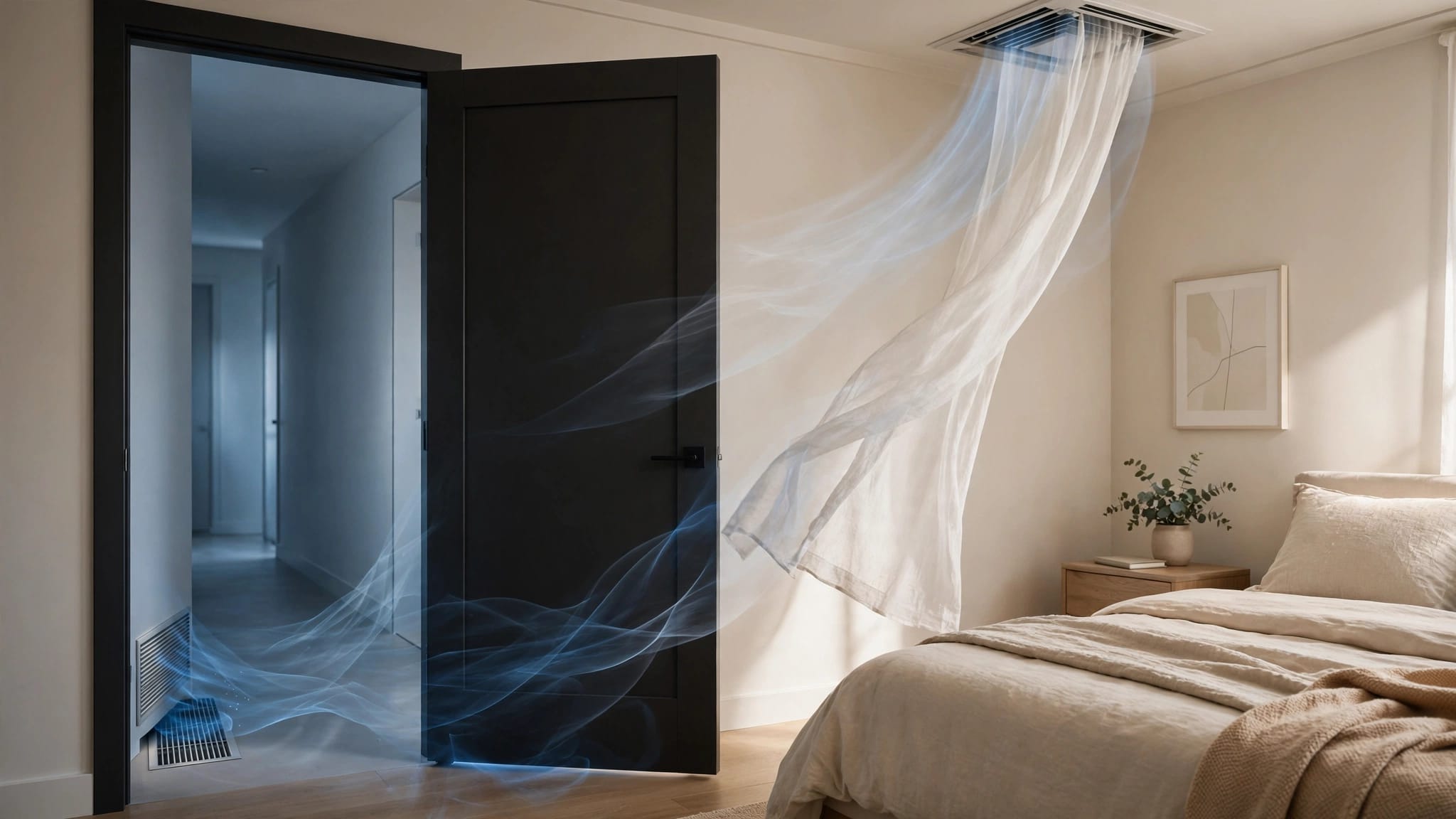
When your AC smells like vinegar , the odor can spread through a Fort Myers home within minutes. A sour smell often points to moisture, organic buildup, or a drainage problem inside the indoor unit. It doesn't always mean a major failure, but you shouldn't ignore it.
Southwest Florida's heat and humidity give air conditioners a heavy workload. The system pulls water from indoor air as it cools, and trapped moisture can make odors worse. Start by noting where the smell begins and whether it appears only while the blower runs.
Why an AC smells like vinegar in Fort Myers
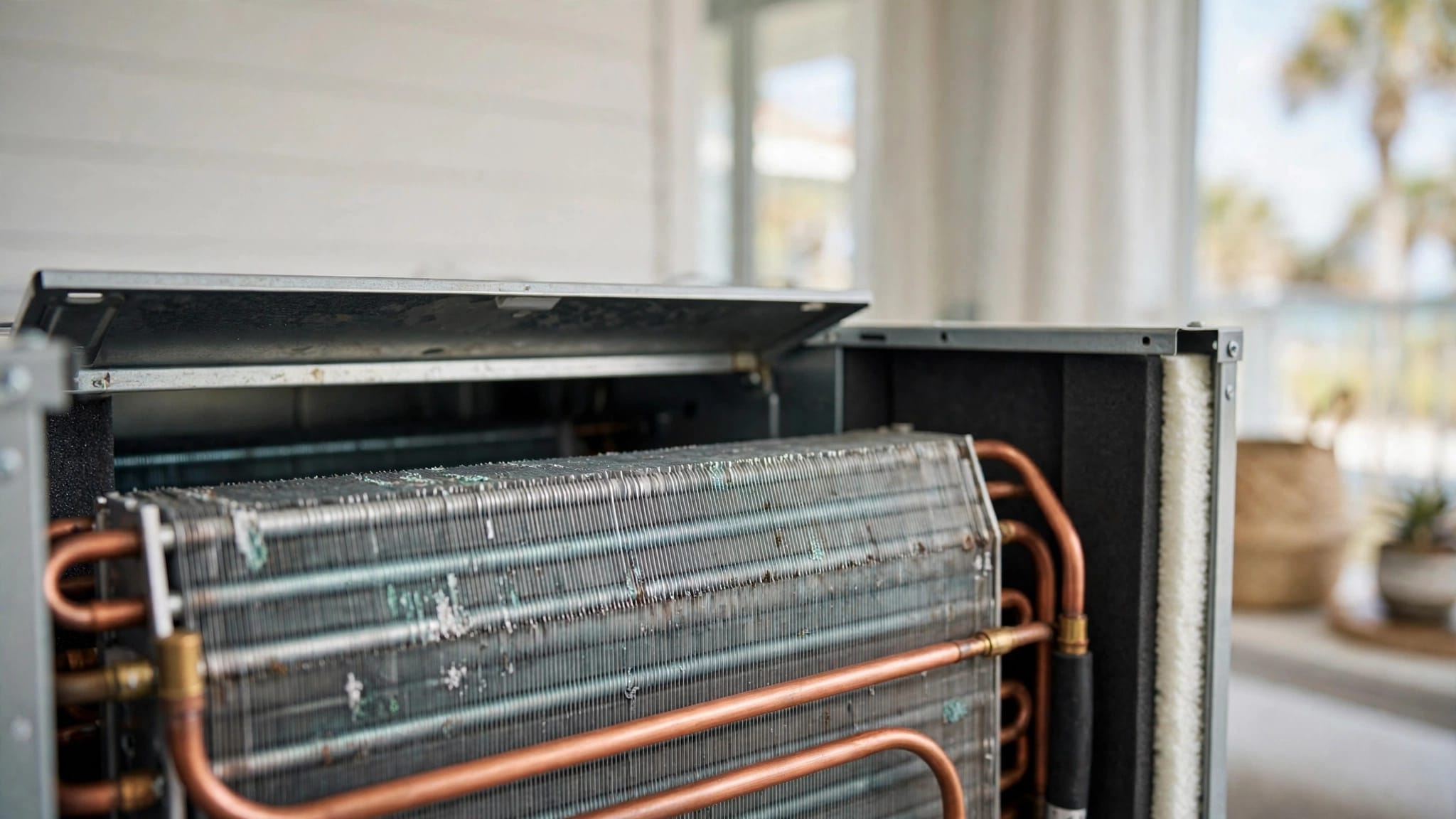
Most vinegar-like AC odors begin near the evaporator coil, drain pan, condensate line, filter, or ductwork. As warm indoor air crosses the cold coil, water forms and should drain away. If moisture lingers, organic residue can develop and release a sharp smell when the blower runs.
That pattern is common in Fort Myers because AC systems operate for long stretches, including during humid nights. High moisture loads can keep pans and drain components damp. However, the odor alone can't identify one failed part, so these causes are possibilities rather than a certain diagnosis.
Moisture around the coil or drain pan
The evaporator coil sits inside the air handler or a nearby cabinet. Dust on the coil can mix with condensation and create residue. A partially blocked drain pan or line can also hold water longer than it should.
You may notice the odor after the system starts, along with dampness near the air handler, a full drain pan, or a float switch that shuts the unit off. Don't remove access panels to reach the coil. The area can contain sharp metal, electrical parts, and refrigerant components.
A dirty filter can add to the smell
A loaded filter restricts airflow and lets dust collect where moisture is present. That doesn't prove the filter caused the vinegar smell, but it can make the system work harder and leave damp areas less able to dry.
Check the filter monthly during heavy use and replace it with the correct size and type when it's dirty. If the odor returns after a new filter, the source may be deeper inside the system.
Safe checks you can make before calling
Keep the inspection simple. Set the thermostat to off before looking around the equipment, and use a flashlight without opening sealed panels.
Check the filter and nearby area
Look for a clogged filter, water stains, puddles, or damp insulation around the indoor unit. Check whether the smell is strongest at one supply vent or near the air handler.
You can replace the filter and wipe up small amounts of accessible surface moisture, but don't take apart the cabinet. Keep children and pets away from standing water around the equipment.
Watch for drainage warning signs
Look at the accessible end of the condensate drain, if your setup has one. Slow dripping during cooling, standing water, repeated float-switch trips, or a system that shuts down can point to a drainage issue.
Fort Myers homeowners can review these common causes of clogged AC drain lines for more context. Avoid poking the line with a wire or pouring products into it.
Never pour bleach, vinegar, drain opener, or another chemical into the condensate system unless a qualified technician gives you specific instructions. Don't mix cleaning chemicals. The wrong product can damage components, create dangerous fumes, or push a blockage farther into the line.
When an AC odor needs professional attention
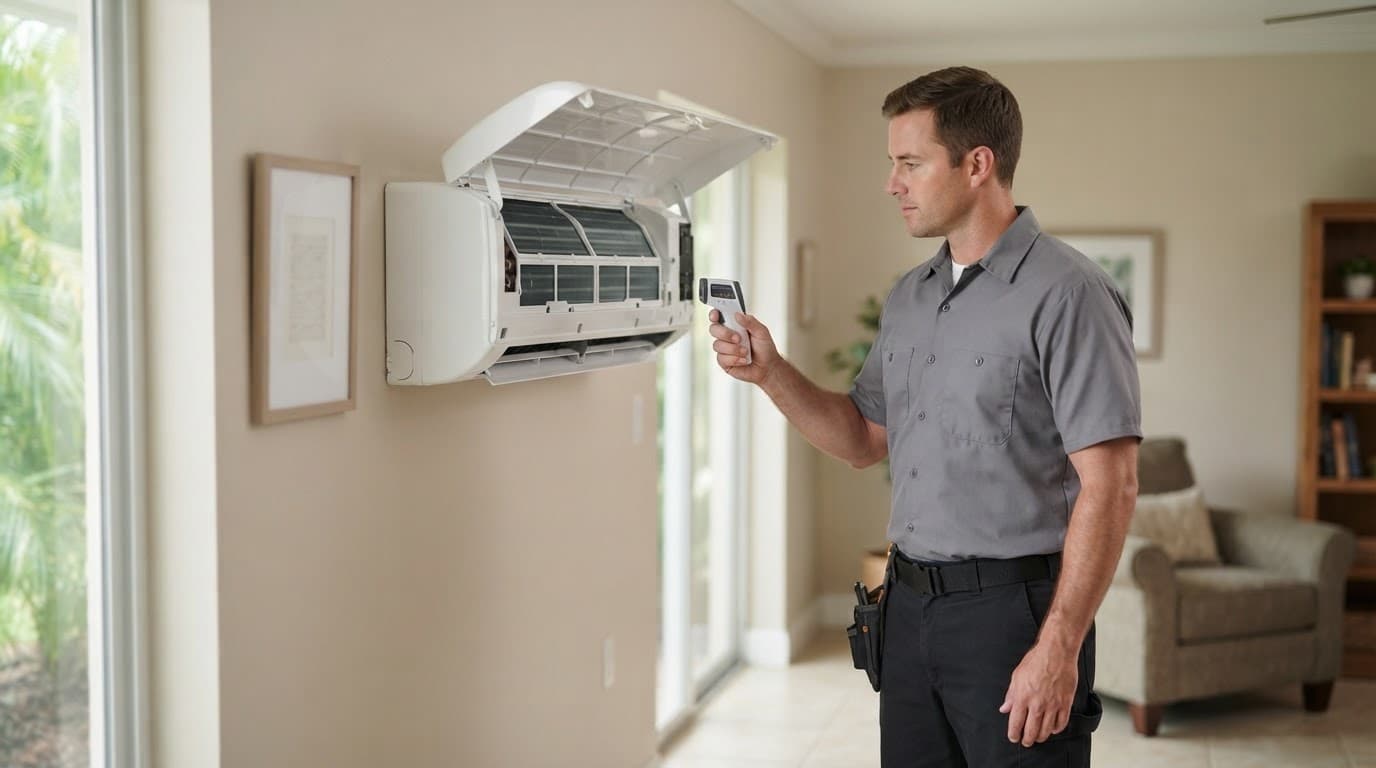
Schedule service when the smell persists after a filter change, returns every time the system runs, or comes with water, weak cooling, high indoor humidity, unusual noise, or repeated shutdowns. A technician can inspect the coil, drain pan, condensate line, blower area, duct connections, and electrical components.
Persistent sour odors need a closer look
The buildup may be in a place you can't safely see. A professional can test drainage, inspect the air handler, check airflow, and determine whether cleaning or repair makes sense.
If water is involved, this guide to Fort Myers AC odor troubleshooting covers related moisture and drainage signs. Recurring problems may also involve a condensate pump or float switch, rather than the visible end of the drain line.
The signs of a failing AC condensate pump can overlap with other drainage faults. A technician can test the pump, switch, pan, and line during the same visit.
Treat dangerous odors as urgent
Turn the system off and call promptly if the smell is electrical, burning, or gas-like. The same applies if you see smoke, scorching, sparks, or a tripped breaker.
Move away from equipment that appears unsafe. Don't reset the breaker repeatedly or spray cleaner into the unit. If you suspect a gas leak, leave the home and contact the gas utility or emergency services from a safe location.
How to reduce repeat AC odors in Southwest Florida
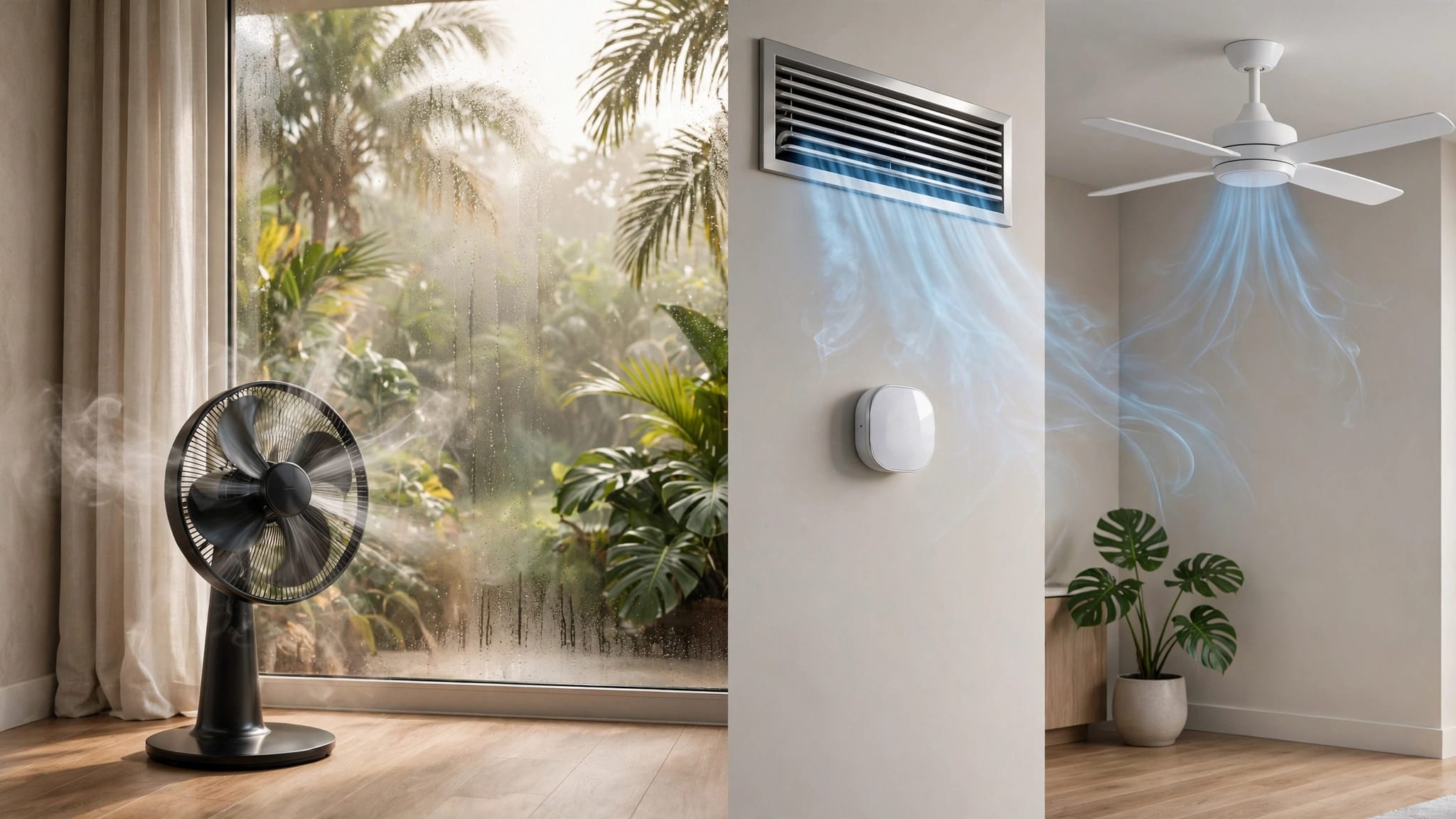
Odor control starts with moisture control. Replace filters on schedule, keep supply and return vents unobstructed, and avoid running the system with a visibly wet or leaking indoor unit. A dehumidifier or improved humidity control may help some homes, but a technician should first find out why moisture remains.
Routine maintenance can include coil and blower inspection, condensate drain service, electrical checks, and airflow testing. A tune-up before the hottest part of the year can expose drainage or wear issues before they cause a shutdown. This Fort Myers AC maintenance planning guide offers a practical service-frequency reference for Southwest Florida homes.
Also check the outdoor unit area for leaves and debris, but don't spray cleaners into the indoor cabinet or outdoor equipment. If your AC smells like vinegar and the odor keeps returning, arrange a professional diagnosis instead of masking it with fragrance.
For a home-specific evaluation, Schedule an Estimate with Valor Heating & Cooling.
Conclusion
An AC smells like vinegar for several possible reasons, including moisture around the coil, residue in the drain system, restricted airflow, or buildup in an area you can't safely inspect. Southwest Florida humidity can intensify these conditions, but the odor alone can't confirm the cause.
Start with the filter and accessible signs of water. Skip bleach and mixed chemicals, and leave internal cleaning, pump testing, and electrical work to an HVAC professional. Persistent, strong, burning, electrical, or gas-like odors deserve prompt attention.
Recent Posts