
Why Your AC Smells Musty in Fort Myers Homes
A musty AC smell can show up fast in Fort Myers homes, especially after a rainy stretch. In a humid climate, your system moves a lot of moisture, and that moisture can leave behind a stale odor if something is off.
Sometimes the smell fades after the system runs for a bit. Other times, it points to mold, drainage trouble, or indoor air quality issues that need attention.
The good news is that the cause is often easy to narrow down once you know what to look for.
Why Fort Myers humidity makes musty AC smells more common
Southwest Florida weather gives your AC a harder job than systems in drier places. The unit cools your home, but it also pulls water out of the air. That water has to drain away cleanly.
When humidity stays high, the system works longer and collects more condensation. If anything slows that process, moisture can sit inside the unit. That creates the perfect setting for mildew, algae, and sour odors.
Frequent use adds to the problem. Many Fort Myers homeowners run the AC most of the year, so dust, skin cells, and moisture keep moving through the system. Those tiny bits may not sound like much, but they feed buildup on coils, drain pans, and filters.
The smell can also get stronger when a home has been closed up for a while. Warm, damp air can settle in ductwork and around the air handler. Then the smell hits the room the moment the system starts.
In other words, the weather here gives the problem more chances to grow. That is why a stale smell is so common in coastal and inland Lee County homes alike.
Where the smell usually starts in the system
A smell rarely comes from nowhere. Most of the time, it starts in a part of the system that holds moisture or traps debris.
The most common trouble spots are:
- The evaporator coil . This part gets cold and collects condensation. If dust sticks to it, mold can grow on the damp surface.
- The drain pan . Water should flow out of this pan. If it sits still, it can turn into a breeding spot for algae and mildew.
- The condensate drain line . A partial clog slows drainage. Then water backs up and smells start to spread.
- The air filter . A dirty filter traps moisture and dirt. It can also let more debris pass into the system if it stays clogged too long.
- Ductwork or returns . Dust, insulation fibers, pet hair, and moisture can settle there over time.
Sometimes the smell is strongest right when the AC turns on. That often means the odor is sitting on a surface inside the system and gets pushed into the air with the first blast of cooling.
If the smell gets worse after a storm, after a long weekend away, or after the thermostat has been set higher than usual, moisture is probably part of the story. That does not always mean a major repair. It does mean the system needs a closer look.
When the odor is temporary and when it points to trouble
Not every smell means mold is spreading through the house. Some odors are short-lived and harmless. The key is how long they last, how often they return, and what else you notice.
| What you notice | What it may mean | What to do |
|---|---|---|
| Musty smell at startup that fades quickly | Dust or stale air in the system | Run the system and monitor it |
| Odor returns every day | Moisture or buildup inside the AC | Check filter and drain line |
| Smell gets stronger in humid weather | Condensation is lingering too long | Schedule inspection |
| Damp smell plus visible water near the unit | Drain issue or overflow | Turn off the system if needed and call for service |
| Musty smell plus allergy flare-ups | Indoor air quality may be affected | Have the system inspected |
A short dusty smell after the system has sat unused is common. That smell usually clears once the air moves.
A smell that sticks around is different. So is an odor that shows up in more than one room. Those signs often point to a problem inside the equipment, the ductwork, or both.
If the smell keeps coming back after a filter change, treat it as a warning sign.
Keep an eye on other clues too. Water around the air handler, weak airflow, higher indoor humidity, or a unit that cycles on and off too often can all go with the odor. When those signs show up together, the issue is usually bigger than a dirty filter.
What you can do before the smell gets worse
A few simple steps can help if the odor is mild and recent. Start with the easiest checks first.
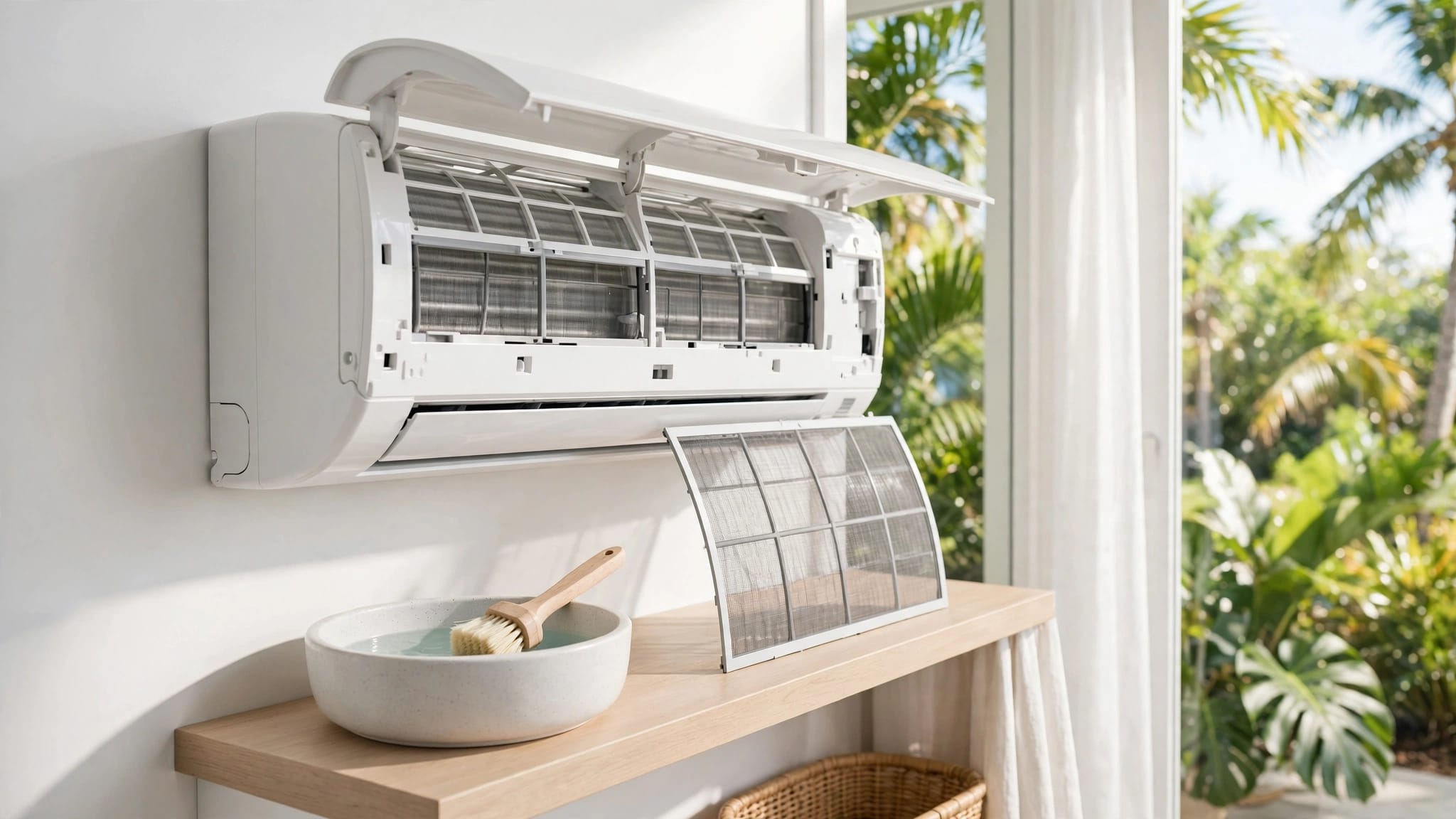
Change the air filter if it looks dirty. In Fort Myers homes, filters often load up faster than people expect because the AC runs so often. A clogged filter can hold moisture and reduce airflow.
Next, look at the area around the indoor unit. If you see standing water, rust, or a wet spot near the drain pan, stop and make a note of it. That can help narrow the cause later.
You can also check the thermostat setting. If the house has been extra cool all day, the system may be running long enough to collect more condensation than usual. A stable temperature can help reduce excess moisture.
Keep supply vents open and unblocked. Rugs, furniture, and closed registers can change how air moves through the home. Poor airflow makes it easier for damp spots to linger.
If your home feels sticky even when the AC runs, use a portable hygrometer to check humidity indoors. A comfortable home in Southwest Florida should not feel damp all the time. If it does, the system may not be removing enough moisture.
For recurring odor problems, regular service matters. Routine HVAC maintenance in Fort Myers can clean moisture-prone parts, improve drainage, and catch small issues before they spread through the system.
When to bring in a technician
Some problems need more than a filter change and a visual check. If the smell keeps returning, a technician can test the parts that are hard to reach and clean safely.
Professional help makes sense when:
- the smell lasts more than a day or two
- you notice visible mold, slime, or dirt near the air handler
- the drain line backs up or drips
- the AC is cooling poorly at the same time
- family members notice coughing, headaches, or stuffy air indoors
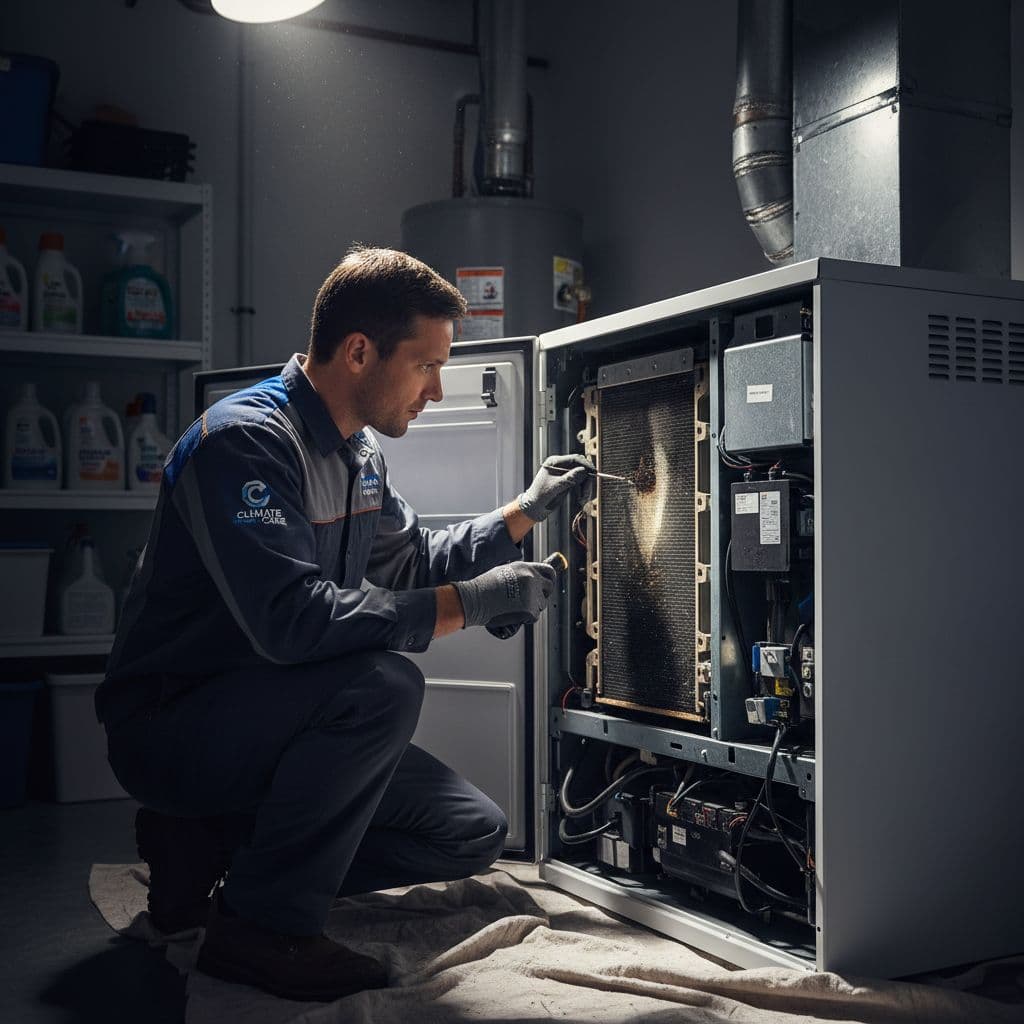
A technician can inspect the coil, drain pan, drain line, and cabinet for buildup or water damage. That matters because mold often starts where you cannot see it.
If the odor seems tied to a deeper problem, professional HVAC repair and inspection in Fort Myers can help sort out whether the unit needs cleaning, repair, or a bigger fix. For homeowners who want clear next steps, Schedule an Estimate with a technician who can look at the system and explain what is happening.
This is especially helpful after heavy rain, a power outage, or a long stretch of high humidity. In those cases, water may have pooled in the wrong place, and the smell is only one part of the issue.
A good inspection does more than remove the odor. It helps protect the air you breathe and keeps the system from working harder than it should.
Conclusion
A musty smell from your AC in Fort Myers usually points to moisture, not mystery. High humidity, long run times, and poor drainage give mold and mildew a place to grow.
If the odor fades quickly, it may be temporary. If it returns, grows stronger, or comes with water or airflow problems, the system needs attention.
The safest move is to pay attention early. A clean, dry AC is easier to maintain than one that has been fighting moisture for months.
Recent Posts