
How Salt Air Affects Outdoor AC Units in Southwest Florida

Valor HVAC • May 17, 2026

Share this article

Salt air can age an outdoor AC unit faster than most homeowners expect. A system may cool fine in spring, then start showing rust, noise, or weak airflow after a few salty seasons.

If you live near the coast in Southwest Florida, the outdoor unit faces constant moisture, heat, and salt. That mix is rough on metal, wiring, and coils. The good news is that salt air AC units can last longer with the right cleaning, inspections, and small repairs.

Why coastal air is hard on outdoor AC units

Salt does not need a direct ocean spray to cause trouble. Wind carries tiny salt particles inland, and those particles settle on the cabinet, coil, fan parts, and screws. Once moisture lands on that salt film, corrosion starts faster.

That is why two homes with the same AC model can have very different results. The house near the shore may see rust and wear sooner, even if the unit looks fine from a distance. The problem starts small, often as a dull patch, a faded spot, or a light coating on metal.

For salt air AC units, the hardest part is that damage can hide in plain sight. The system may still run, but it works harder to move heat out of the home. As a result, you may pay more for cooling before you notice anything is wrong.

A salty climate also shortens the life of smaller parts. Fasteners loosen, protective coatings break down, and electrical connections can corrode. That does not always mean the whole system is failing, but it does mean the outdoor unit needs more attention than an inland home.

The parts that wear out first

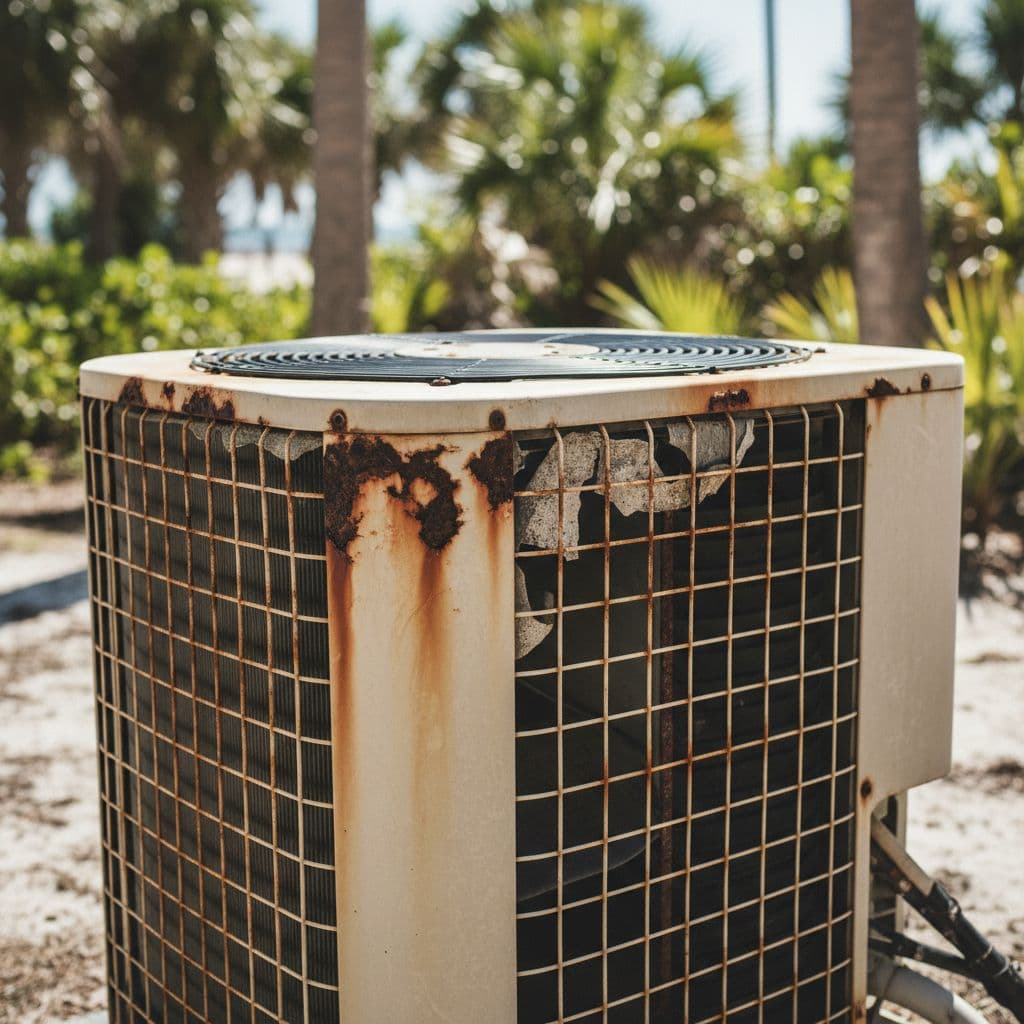
The outdoor cabinet usually shows the first signs. Paint can bubble, screws can rust, and the metal edge around the access panels may stain. Over time, those small spots can spread if the unit stays exposed to salt and humidity.

Inside the unit, the coil is a big concern. The thin fins on the coil help move heat away from your home. When salt builds up or corrosion starts, the fins lose shape and the coil loses efficiency. That is where coil deterioration becomes a real problem, because the system can no longer cool as well without working longer.

Fan parts and electrical connections also take a beating. Salt air can corrode terminals, weaken wires, and create extra wear on the fan motor housing. If that happens, the unit may start to hum, rattle, or struggle to start.

When the damage moves from the outside shell to the working parts, repair costs rise. A rusty panel is annoying. A corroded coil or failing motor is a much bigger issue. That is why early care matters so much in coastal homes.

Warning signs your unit is taking damage

Salt air problems rarely show up all at once. Most homeowners notice a slow slide first, then a clear sign later. A close look at the warning signs can help you catch trouble before the system quits on a hot day.

Sign What it can mean Why it matters
Rust on the cabinet or screws Corrosion has started The damage can spread to other parts
Reduced cooling Coil buildup or airflow loss The system runs longer and uses more power
Unusual noises Loose parts, worn fan pieces, or corroded hardware Small mechanical issues can get worse fast
Dirty, bent, or flaky coil fins Coil deterioration Heat leaves the system less easily

A little rust does not always mean the unit is near the end, but it should not be ignored. If you also hear buzzing, rattling, or grinding, the unit needs a closer look. Those sounds often point to parts that are loose, worn, or starting to fail.

If your system is already showing these signs, Schedule an Estimate before the next stretch of heavy heat makes the problem harder to ignore. For a deeper look at what a technician checks, professional HVAC inspection and repair can help sort out surface corrosion from a real mechanical problem.

Rust is often the first clue, not the last. By the time cooling drops, the unit may already be fighting hidden damage.

How to protect salt air AC units in Southwest Florida

Regular care makes a real difference. Coastal homeowners do not need fancy equipment, but they do need consistent upkeep. A little attention each season can slow corrosion and help the unit breathe easier.

A few simple habits help more than most people think:

  • Keep shrubs, fences, and debris away from the outdoor unit so air can move freely.
  • Rinse off salt film if the manufacturer allows it, using a gentle flow of water.
  • Change indoor filters on schedule so the system does not strain to pull air through the house.
  • Check for rust, loose screws, and bent coil fins after storms or long humid stretches.

Those steps help, but they do not replace service. That is why routine HVAC system tune-ups matter so much in coastal homes. During a maintenance visit, a technician can clean key parts, tighten connections, clear buildup, and spot early corrosion before it turns into a bigger repair.

A good inspection should also check how the coil is holding up, whether the fan runs smoothly, and whether the cabinet has any weak spots. In salty air, small problems move faster than they do inland. A year without service can be enough for rust to spread.

Some homeowners also ask about protective coatings or corrosion-resistant parts. Those can help in the right setup, but they need to match the unit and the manufacturer's guidance. The best first step is still regular cleaning and inspection.

What a realistic lifespan looks like near the coast

An outdoor AC unit in a coastal area can still last a solid number of years, but it usually does not age as slowly as one farther inland. Salt, humidity, and sun all work on it at the same time. That means the unit needs more care if you want it to reach a normal service life.

The biggest mistake is waiting until cooling fails. By then, rust may have reached more than one part, and the repair bill can grow fast. Sometimes the cabinet needs work. Other times the coil, fan, or electrical parts are too far gone to justify patching one problem at a time.

Regular inspections help you plan instead of react. You get a better sense of whether the unit needs a repair, a major part replacement, or a future upgrade. That matters in Southwest Florida, where a working AC is not a luxury. It is part of daily life.

If you stay ahead of the corrosion, the system has a much better chance of serving you well. If you let salt buildup sit for years, the coast starts making the decisions for you.

Conclusion

Salt air does not usually kill an AC unit overnight. It wears the system down in small steps, starting with rust, then reduced efficiency, then noises, and sometimes coil damage.

The best defense is simple, steady care. Watch for early signs, keep the outdoor unit clean, and schedule regular inspections before the heat gets heavy. In a coastal home, that kind of attention is what keeps a small salt problem from becoming a big AC repair.

Recent Posts

By Valor HVAC May 30, 2026
Storms can knock an AC offline without destroying it. A lightning strike, power outage, or flooded yard can leave the system silent even when the rest of the house seems fine. The tricky part is that the problem may be simple, like a thermostat setting, or serious, like surge...
By Valor HVAC May 29, 2026
If your AC fan stays on after the house reaches the set temperature, that isn't always a problem. A short post-cycle run can help clear extra cool air from the coil and smooth out the room temperature. But if the AC fan keeps running for a long time, or never seems to stop, so...
By Valor HVAC May 28, 2026
Fort Myers storms can turn a healthy AC system into a repair bill fast. Wind, flying debris, salt spray, and floodwater all hit the outdoor condenser first. A few simple steps before hurricane season can lower the risk. The goal is to keep the unit clear, keep the power safe,...
By Valor HVAC May 27, 2026
A Fort Myers electric bill can climb fast once summer heat settles in. Your AC runs longer, works harder, and fights sticky indoor air all day. That jump can feel sudden because the weather changes before your habits do. The good news is that most of the cost drivers are easy...
By Valor HVAC May 26, 2026
Low airflow can make a Fort Myers home feel sticky even when the AC is running nonstop. The thermostat may say the house is cooling, but weak air from the vents tells a different story. In Southwest Florida, that problem shows up fast. Heat, humidity, dust, and seasonal debris...
By Valor HVAC May 25, 2026
A blank thermostat can turn a normal day into a frustrating one fast. One minute the house feels fine, then the screen goes dark or the buttons stop working. Most of the time, the cause is simple. Sometimes the problem starts at the thermostat, and sometimes it comes from the...
By Valor HVAC May 24, 2026
A musty AC smell can show up fast in Fort Myers homes, especially after a rainy stretch. In a humid climate, your system moves a lot of moisture, and that moisture can leave behind a stale odor if something is off. Sometimes the smell fades after the system runs for a bit. Oth...
By Valor HVAC May 23, 2026
Most air conditioners in Southwest Florida last about 10 to 15 years . With solid maintenance and a good installation, some systems make it to 15 to 20 years, but coastal air, heavy use, and skipped service can shorten that window fast. If your unit is already near the 10-year...
By Valor HVAC May 22, 2026
A rattling AC noise can start as a small annoyance, then turn into a bigger repair if you ignore it. Buzzing is just as important, because it often points to a loose part or an electrical issue. In Southwest Florida, air conditioners work hard for months at a time. Heat, humid...
By Valor HVAC May 21, 2026
One bedroom stays sticky while the rest of the house feels fine. In Fort Myers, that usually has a clear cause, and it often shows up in the same few rooms. Strong sun, attic heat, humidity, and weak airflow can all turn a comfortable house into one with hot rooms in Fort Myer...
Show More